
Chef Graziella
Coccoli Fiorentini
Golden puffs of fried dough from Florence, served warm with creamy stracchino cheese and thin slices of Tuscan prosciutto. The kind of antipasto that disappears before you can set down the platter.
A cooking platform built around craft, culture, and the stories behind what we eat.
Created by
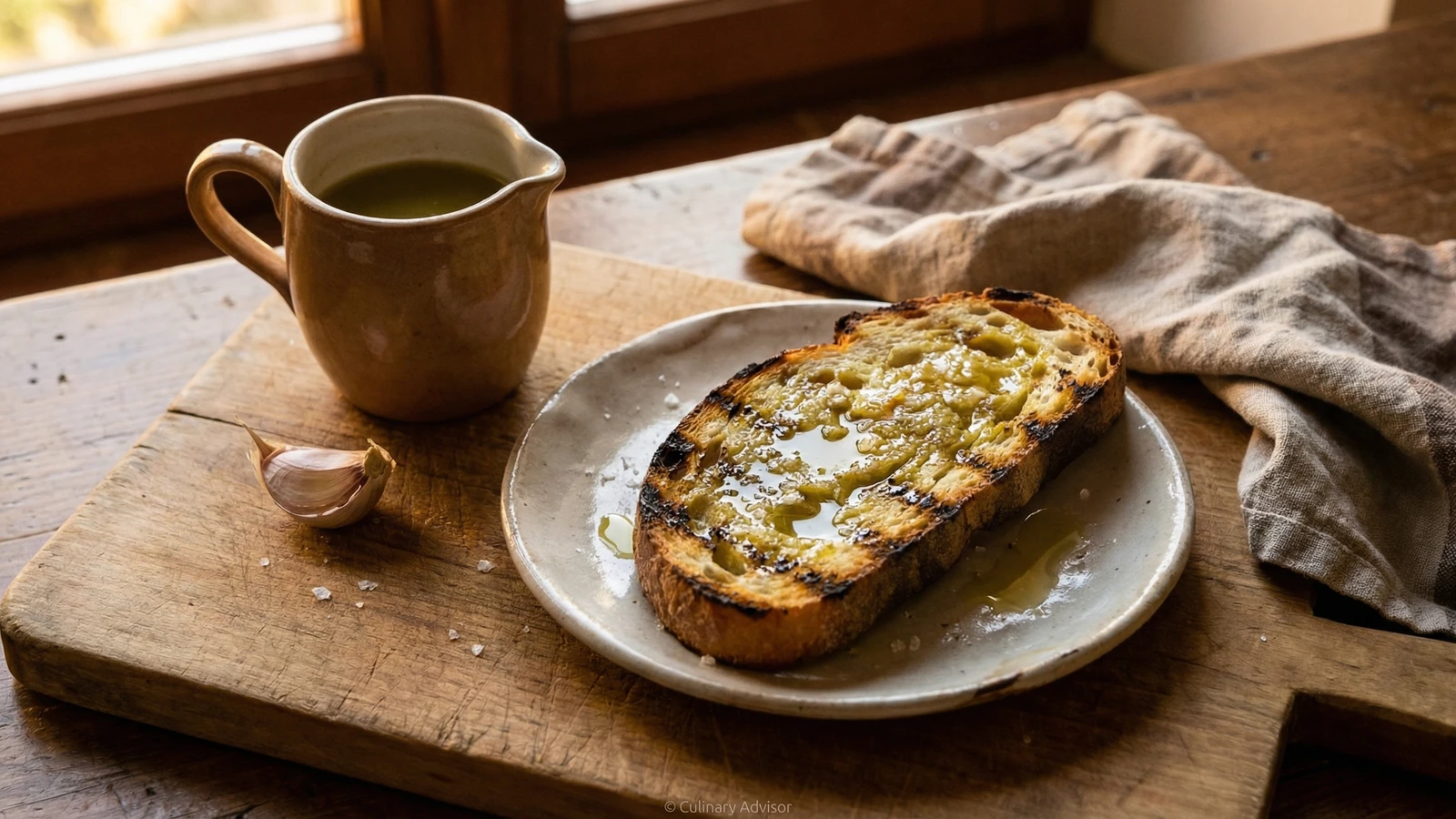
The Tuscan ritual of November, when farmers bring bread to the frantoio and baptize it with oil still cloudy from the press. Four ingredients. No room to hide.
Fettunta means 'oiled slice' in Tuscan dialect. The name tells you everything. This is bread, garlic, oil, salt. Nothing else. It is what Tuscan farmers have eaten for centuries in November when the new oil comes from the press, and it remains the purest way to taste olive oil.
Americans call this bruschetta and pile tomatoes on top. Tuscans shake their heads. The tomatoes came later, a summer addition when there was no new oil to celebrate. True fettunta exists to showcase the oil and nothing else. If your oil does not deserve to be the star, do not make this dish.
Olio nuovo, the oil of November, is different from the olive oil in your pantry. It is cloudy, unfiltered, intensely green, with a peppery bite that catches in the back of your throat. Tuscans call this quality 'pizzicore,' and they prize it. The oil mellows within weeks. This fleeting moment, when the oil tastes almost aggressive, is when fettunta reaches its highest purpose.
Fettunta predates the word bruschetta by centuries. At the frantoio, where olives were pressed into oil, workers and farmers would bring bread to taste the new vintage. The ritual continues today in Tuscan olive-growing regions each November, when frantoio owners host tastings and the first oil of the season commands the highest prices.
Quantity
4 thick slices (about 3/4 inch thick)
Quantity
1 large clove
halved
Quantity
1/2 cup
Quantity
to taste
| Ingredient | Quantity |
|---|---|
| Tuscan bread | 4 thick slices (about 3/4 inch thick) |
| garlichalved | 1 large clove |
| olio nuovo | 1/2 cup |
| flaky sea salt | to taste |
If you have a fireplace or wood-fired grill, use it. This is how Tuscans make fettunta, and the smoke adds character. Otherwise, heat a grill pan over high heat or set your broiler to high. The bread must toast quickly and develop char marks. A toaster will not do.
Place the bread slices directly on the grill grates, grill pan, or under the broiler. Toast until deep golden with charred spots, about 2 minutes per side. The bread should be crisp on the outside but not dried through. Watch carefully. The difference between perfect and burnt is measured in seconds.
While the bread is still hot, rub one side vigorously with the cut face of the garlic clove. The rough, warm surface of the toast acts like a grater. You will see the garlic disappear into the bread. One or two passes per slice. The garlic should whisper, not shout.
Place the bread on a plate, garlic side up. Drizzle generously with olio nuovo. Be generous. The oil should pool slightly on the surface before soaking in. This is not the moment for restraint with the oil. The oil is the entire point.
Scatter flaky salt over the surface. Serve at once, while the bread is still warm and the oil has not completely soaked in. Fettunta waits for no one. The moment it leaves your hands, the eating should begin.
1 serving (about 95g)
Culinary guides, cultural storytelling, and the editorial depth that makes cooking meaningful.
Discover Culinary ExplorerChef Graziella
Golden puffs of fried dough from Florence, served warm with creamy stracchino cheese and thin slices of Tuscan prosciutto. The kind of antipasto that disappears before you can set down the platter.

Chef Graziella
The spread that begins every proper Tuscan meal, where humble chicken livers transform into something silky and profound through sage, vin santo, and the patience to cook them correctly.

Chef Graziella
Tuscany's simplest and most honest antipasto: raw vegetables dipped in pools of excellent olive oil, seasoned with salt and pepper. A celebration of what restraint can achieve.

Chef Juliette
Tiny éperlans, lightly floured and fried until their tails stand crisp, arrive in a generous heap on a napkin with fried parsley and grooved lemon, a weeknight lesson in heat and restraint.