Culinary Explorer
A cooking platform built around craft, culture, and the stories behind what we eat.
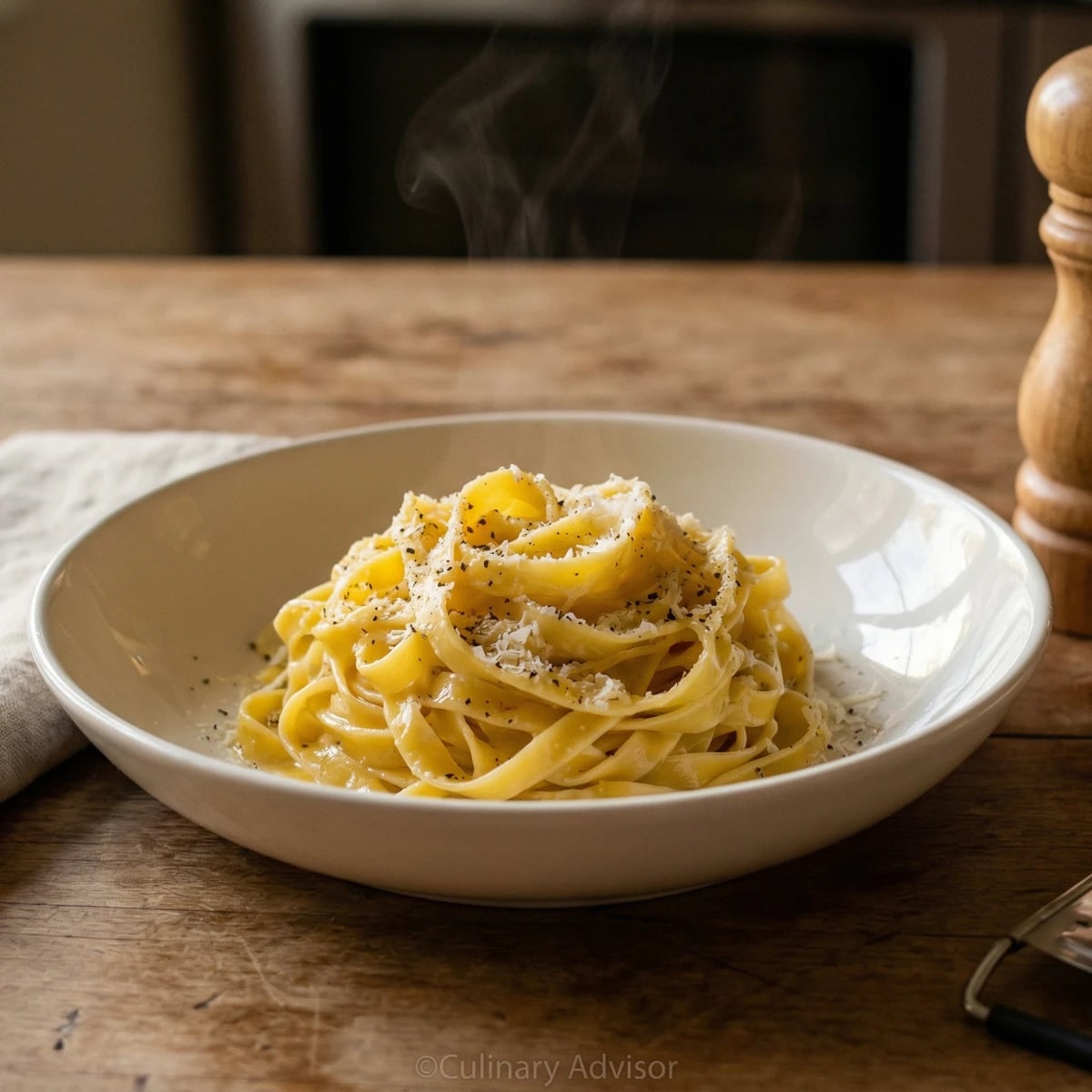
Fettuccine al Burro
Created by Chef Graziella
Three ingredients. No cream. The original Roman fettuccine that Americans call Alfredo, stripped of its corruptions and returned to its silken, buttery truth.
Americans have been making Alfredo wrong for nearly a century. Cream has no place in this dish. Never did. The original, created in a Roman restaurant, contained exactly three things: fresh fettuccine, the finest butter, and young Parmigiano-Reggiano. The magic happens in the tossing, when heat, starch, fat, and protein form an emulsion that coats each strand in silk.
I have watched people add cream, garlic, chicken, broccoli, shrimp. They call it Alfredo. It is not. What Alfredo di Lelio made for his pregnant wife was an act of love expressed through restraint. He understood that when your butter is exceptional and your cheese is properly aged, you do not need to add anything. You need to get out of the way.
This dish requires technique, not complicated ingredients. The butter must be room temperature. The pasta water must be starchy. The tossing must be vigorous and continuous. Simple does not mean easy. But when you execute it properly, you will understand why this combination conquered Rome and then the world.
Ingredients
fresh fettuccine
Quantity
1 pound
unsalted butter
Quantity
8 ounces (2 sticks)
at room temperature, cut into tablespoon pieces
Parmigiano-Reggiano
Quantity
6 ounces (about 2 cups)
finely grated
| Ingredient | Quantity |
|---|---|
| fresh fettuccine | 1 pound |
| unsalted butterat room temperature, cut into tablespoon pieces | 8 ounces (2 sticks) |
| Parmigiano-Reggianofinely grated | 6 ounces (about 2 cups) |
Where cooking meets culture.
Culinary guides, cultural storytelling, and the editorial depth that makes cooking meaningful.
Discover Culinary Explorer