
Chef Juliana
Amalá de Xangô
You don't need mystery for this pot. You need okra, dendê, onion, dried shrimp, and the patience to stir until the quiabo gives up its own caldo.
A cooking platform built around craft, culture, and the stories behind what we eat.
Created by
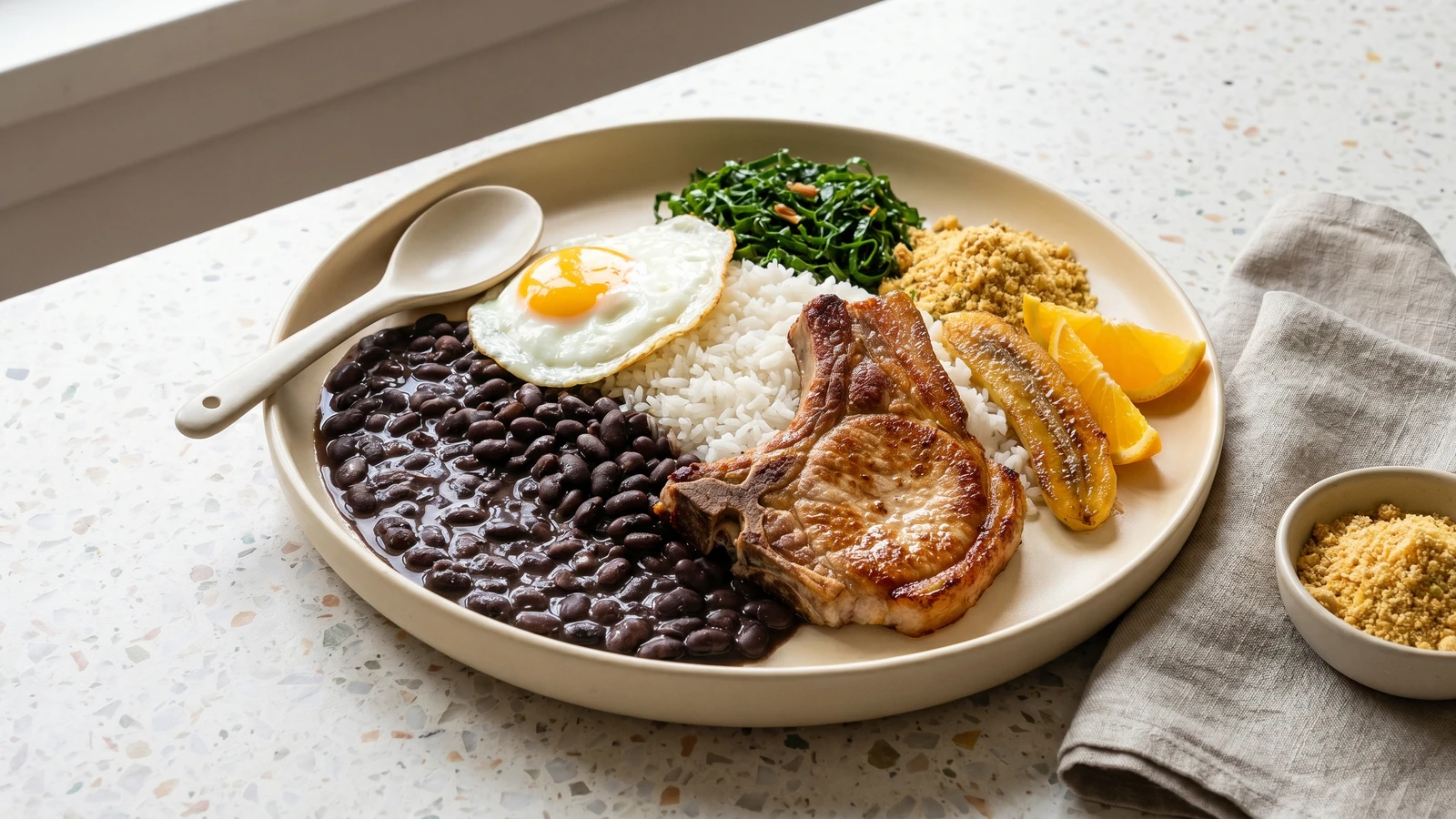
You think this is restaurant food. It isn't. It's beans, bisteca, rice, couve, farofa, orange, and one soft egg proving the pê-efe can dress up without pretending.
You know that little voice saying, isso não é pra mim? Good. Bring it close to the stove so a gente can prove it wrong. Feijoada paulistana looks like a boteco plate, loud and full and a little dramatic, but the work underneath is ordinary: soak beans, make a refogado, brown meat, fry what needs frying, put dinner on a plate.
I learned to cook as an adult, with a cheap caderno open beside me and enough ruined onions to humble a person properly. So I don't believe in mystery here. Cozinhar não é dom, é um aprendizado. If the recipe tells you what to do, what to watch for, and why it matters, you can do it.
This is the São Paulo version I think of when someone says Wednesday lunch: black beans with a deep caldo, bisteca browned until the edges catch, banana frita sweet against the salt, couve bright and quick, farofa for crunch, rice to carry it, orange to cut through, and a soft egg on top because São Paulo likes a plate that means business.
The foundation is still the everyday Brazilian plate, the pê-efe: rice, beans, something from the pan, something green. No packet, no powder pretending to be flavor. Just comida de verdade, built in a way you can repeat.
In São Paulo, feijoada became tied to the boteco and weekday lunch counter, especially Wednesday, when black beans and pork arrived as a full prato feito with rice, couve, farofa, orange, fried banana, and often egg. The paulistana plate is heavier and brighter than the classic pot served family-style: the bisteca and banana frita make it read like São Paulo, where immigrant lunch-counter habits and Brazilian rice-and-beans logic met on one crowded plate. The old story that feijoada came only from enslaved people cooking scraps is disputed by food historians, who place Brazilian bean-and-meat stews inside a wider mix of Portuguese, African, Indigenous, and local home-kitchen practices.
Quantity
2 cups
soaked overnight
Quantity
8 cups, divided, plus more as needed
Quantity
2
Quantity
2 tablespoons
for the beans
Quantity
1 large
finely chopped
Quantity
5 cloves
minced, divided
Quantity
200 g
sliced into thick coins
Quantity
150 g
cut into bite-size pieces
Quantity
1 1/2 teaspoons, plus more to taste
Quantity
1/2 teaspoon
Quantity
4, about 150 g each
Quantity
1 tablespoon
Quantity
1 tablespoon
for the bistecas
Quantity
2
halved lengthwise
Quantity
1/2 cup
Quantity
1 large
beaten, for breading the bananas
Quantity
3/4 cup
Quantity
1/2 cup
for frying the bananas
Quantity
1 bunch
stems removed and leaves thinly sliced
Quantity
1 tablespoon
for the couve
Quantity
2 cups
for serving
Quantity
1 cup
for serving
Quantity
4 large
fried with soft yolks
Quantity
1
cut into wedges
| Ingredient | Quantity |
|---|---|
| dried black beanssoaked overnight | 2 cups |
| water | 8 cups, divided, plus more as needed |
| bay leaves | 2 |
| oil or pork fatfor the beans | 2 tablespoons |
| onionfinely chopped | 1 large |
| garlicminced, divided | 5 cloves |
| smoked pork sausagesliced into thick coins | 200 g |
| smoked pork ribs or smoked pork belly (optional)cut into bite-size pieces | 150 g |
| salt | 1 1/2 teaspoons, plus more to taste |
| black pepper | 1/2 teaspoon |
| pork loin chops (bistecas) | 4, about 150 g each |
| lime juice | 1 tablespoon |
| oilfor the bistecas | 1 tablespoon |
| ripe but firm bananashalved lengthwise | 2 |
| all-purpose flour | 1/2 cup |
| eggbeaten, for breading the bananas | 1 large |
| fine breadcrumbs | 3/4 cup |
| oilfor frying the bananas | 1/2 cup |
| collard greens (couve)stems removed and leaves thinly sliced | 1 bunch |
| oilfor the couve | 1 tablespoon |
| cooked white ricefor serving | 2 cups |
| farofafor serving | 1 cup |
| eggsfried with soft yolks | 4 large |
| orangecut into wedges | 1 |
Put the black beans in a large bowl and cover with plenty of water by at least 3 fingers. Leave them 8 to 12 hours, then drain and rinse. Soaking isn't decoration. It helps the beans cook evenly and sit easier after dinner, which matters unless you enjoy arguing with your stomach at 10 p.m.
Put the soaked beans in a pressure cooker with 6 cups water and the bay leaves. Lock the lid, bring to pressure, then cook 25 minutes and let the pressure come down naturally for 10 minutes before opening. The beans should crush easily between your fingers but still look like beans. If they're firm, simmer uncovered a little longer. The clock gives you a direction; the bean gives you the answer.
Warm 2 tablespoons oil or pork fat in a heavy pot over medium heat. Add the onion and cook until it goes soft, sweet, and see-through, about 6 minutes. Add 4 minced garlic cloves and stir for 1 minute, just until you smell it. This is the flavor floor. Burn the garlic and bitterness follows the whole pot like gossip.
Add the sausage and optional smoked pork to the refogado and cook until the edges darken and the fat shines in the pan, about 5 minutes. Dourar means build color, not just warm it up. That browned edge gives the beans depth without any packet pretending to be dinner.
Ladle 1 cup cooked beans with some liquid into the refogado and mash them hard with a spoon until they look rough and creamy. Stir in the rest of the beans and enough cooking liquid to make a loose stew. The mashed beans are what make the caldo thick and glossy instead of watery. Anota aí: the bean thickens the bean.
Add 1 1/2 teaspoons salt and the black pepper. Simmer uncovered 20 to 25 minutes, stirring now and then, until the caldo coats a spoon and settles slowly when you drag the spoon through it. Taste before adding more salt, because smoked pork and sausage bring their own. The pot should taste deep, salty enough, and unmistakably like feijão, not like smoke wearing a costume.
Pat the pork chops dry, then season with salt, the remaining 1 minced garlic clove, lime juice, and a little black pepper. Let them sit 10 minutes while the beans simmer. Dry meat browns better. Wet meat hits the pan and starts boiling itself, and nobody came here for grey bisteca.
Heat 1 tablespoon oil in a wide skillet over medium-high heat until it looks thin and shiny. Add the bistecas in one layer, cooking in batches if needed, and brown 3 to 4 minutes per side until the edges are deeply golden and the meat is just cooked through. Don't crowd the pan. Crowd it and the temperature drops, the meat releases water, and you steam instead of sear.
Dip each banana half in flour, then beaten egg, then breadcrumbs. Heat 1/2 cup oil in a skillet over medium heat and fry the bananas until golden on both sides, about 1 to 2 minutes per side. They should be crisp outside and soft inside. Use ripe but firm bananas, because a very soft one collapses in the pan and then we all pretend it was intentional.
Warm 1 tablespoon oil in a clean skillet over medium-high heat. Add the thinly sliced couve with a pinch of salt and toss for 1 to 2 minutes, just until it turns bright green and softens. Stop there. Couve is best quick, still alive in color, because the plate already has beans and pork doing the heavy work.
Fry the 4 eggs however your pan behaves best, leaving the yolks soft if you like the boteco version. The whites should be set and the yolks still glossy. That yolk runs into the rice and beans and turns the plate into a small São Paulo argument in your favor.
Spoon rice onto each plate, ladle the feijoada beside it, and add one bisteca, couve, farofa, banana frita, a soft egg, and orange wedges. Keep the orange on the plate, not as decoration but as balance. Squeeze it over a bite of beans and pork and you'll understand why Brazil didn't forget it.
1 serving (about 950g)
Culinary guides, cultural storytelling, and the editorial depth that makes cooking meaningful.
Discover Culinary ExplorerChef Juliana
You don't need mystery for this pot. You need okra, dendê, onion, dried shrimp, and the patience to stir until the quiabo gives up its own caldo.

Chef Juliana
You think a Polish hunter's stew is not for your kitchen. Wrong. Brown meat properly, build a real refogado, simmer cabbage low, and tomorrow's lunch is already better.
Chef Juliana
Whole fish in a pot looks like a test. It isn't. Build the refogado, layer the filhote, let tucupi do its work, and the Círio table starts making sense.
Chef Juliana
You don't need river wisdom in your bones to cook tambaqui well. You need real tucupi, a calm simmer, and the sense to let the fish stay whole until it gives.