
Chef Juliette
Smelt (Éperlans)
Tiny éperlans, lightly floured and fried until their tails stand crisp, arrive in a generous heap on a napkin with fried parsley and grooved lemon, a weeknight lesson in heat and restraint.
A cooking platform built around craft, culture, and the stories behind what we eat.
Created by
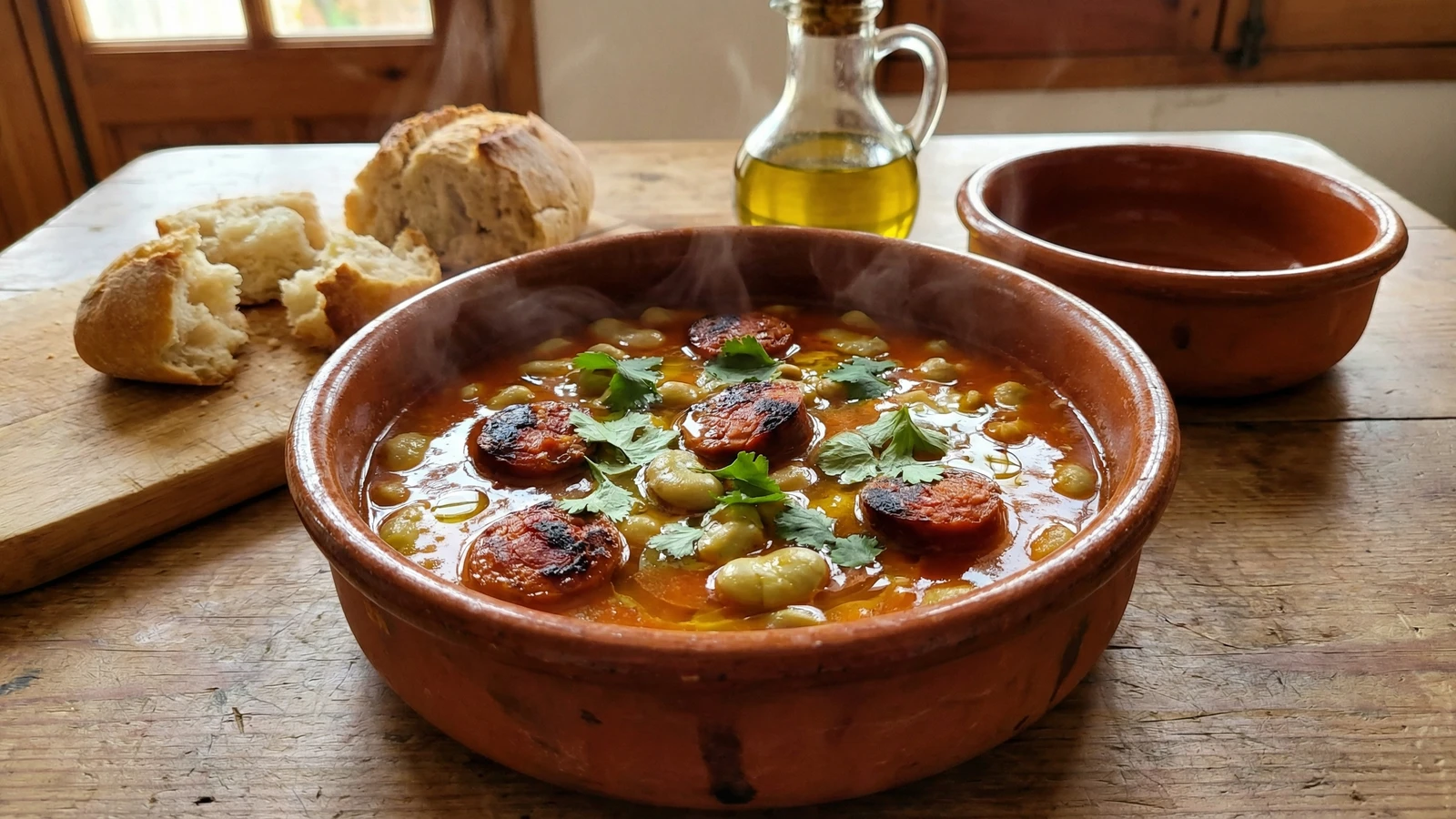
Fava beans and chouriço, stewed slow until the beans turn creamy and the broth runs red with smoky fat. Spring in a bowl. Bread for soaking is mandatory.
When the first favas appear at the market, you know winter is finally over. In Portugal, this is cause for celebration. In the Azores, it's practically a holiday.
My grandmother didn't grow favas in Alentejo (too hot, too dry), but I learned this dish from the Azorean grandmothers I've documented. Every May 1st, Labour Day, families gather around bowls of favas com chouriço. The workers' holiday. The spring holiday. The kind of cooking that says: we made it through another winter, and now we feast on what the earth gives us.
The technique is simple because it has to be. A slow refogado of onion and garlic. The chouriço goes in early so its smoky fat flavors everything. Then the favas, a splash of water, and patience. You're not cooking here so much as coaxing. Low heat. No rushing. The beans should turn creamy but hold their shape.
At Mesa da Avó, we serve this in the center of the table with a basket of bread and nothing else. The bread is not decoration. It's for soaking in that broth, that red-tinged liquid that tastes like smoke and spring and comfort. This is petisco eating at its finest: shared plates, torn bread, conversation that goes longer than planned.
Favas com chouriço is inseparable from May 1st celebrations in the Azores, where fresh fava beans mark the end of winter scarcity. The tradition dates back centuries, when labourers would gather after the morning's work to share communal pots of stewed favas. On the mainland, particularly in Alentejo and Ribatejo, the dish appears whenever spring favas come into season, though the Azorean May Day connection remains the strongest cultural anchor.
Quantity
1 kg (or 400g frozen/shelled)
Quantity
250g
sliced into thick rounds
Quantity
100g
cut into small pieces
Quantity
1 large
diced
Quantity
4 cloves
minced
Quantity
1/4 cup
Quantity
2
Quantity
1 cup
Quantity
1 tablespoon
Quantity
to taste
Quantity
to taste
freshly ground
Quantity
for serving
roughly chopped
Quantity
for serving
| Ingredient | Quantity |
|---|---|
| fresh fava beans in pods | 1 kg (or 400g frozen/shelled) |
| chouriçosliced into thick rounds | 250g |
| toucinho or baconcut into small pieces | 100g |
| oniondiced | 1 large |
| garlicminced | 4 cloves |
| extra virgin olive oil (azeite) | 1/4 cup |
| bay leaves | 2 |
| water or light chicken broth | 1 cup |
| red wine vinegar | 1 tablespoon |
| sea salt | to taste |
| black pepperfreshly ground | to taste |
| fresh coentros (optional)roughly chopped | for serving |
| crusty bread | for serving |
If using fresh favas, pop them from their pods. You'll lose about 60% of the weight to pods, which is why you need a full kilo. If your favas are large and mature, blanch them in boiling water for 2 minutes, then slip off the outer skins. Young, tender favas don't need this step. Frozen favas can go straight in.
In a heavy pot or deep skillet, warm the azeite over medium heat. Add the toucinho or bacon and cook until it starts to render its fat and turn golden at the edges, about 5 minutes. This is your first layer of flavor.
Add the onion to the pot and reduce heat to medium-low. Cook slowly, stirring occasionally, until soft and golden, about 10 minutes. Don't rush this. Add the garlic in the last minute, letting it soften but not brown.
Push the onion mixture to the sides and add the chouriço rounds to the center of the pot. Let them sizzle for 2 minutes per side until they release their red-tinged fat and develop a slight char. The oil will turn the color of sunset. This is good.
Add the favas, bay leaves, and water or broth to the pot. Stir everything together. Bring to a gentle simmer, then reduce heat to low. Cover and cook until the favas are completely tender and starting to turn creamy, 20 to 25 minutes. Stir occasionally and add a splash more water if it looks dry. The favas should be soft enough to mash against the side of the pot.
Remove the bay leaves. Stir in the red wine vinegar. Taste and adjust salt and pepper. The broth should be rich with chouriço fat, slightly glossy, deeply savory. Transfer to a warm serving bowl. Scatter with coentros if you like. Serve immediately with plenty of crusty bread for soaking. The bread is not optional. It's the whole point.
1 serving (about 300g)
Culinary guides, cultural storytelling, and the editorial depth that makes cooking meaningful.
Discover Culinary ExplorerChef Juliette
Tiny éperlans, lightly floured and fried until their tails stand crisp, arrive in a generous heap on a napkin with fried parsley and grooved lemon, a weeknight lesson in heat and restraint.

Chef Juliette
Brandade de Morue turns salt cod, warm olive oil, and milk into a pale, silky emulsion: keep everything warm and add the oil slowly, then crown the generous dome with butter-fried bread.

Chef Juliette
Salt cod worked warm with cream, one patient spoonful at a time, until the rough flakes become a glossy Nîmes paste, domed generously and ringed with butter-fried croutons for the table.

Chef Juliette
Wine-poached char packed in its earthenware crock beneath butter gold: a make-ahead first course that turns careful cooling, thorough boning, and one unbroken seal into quiet abundance.