Culinary Explorer

A cooking platform built around craft, culture, and the stories behind what we eat.
Discover Culinary Explorer
Fattoush (Lebanese Pita Salad)

Fattoush (Lebanese Pita Salad)

Created by

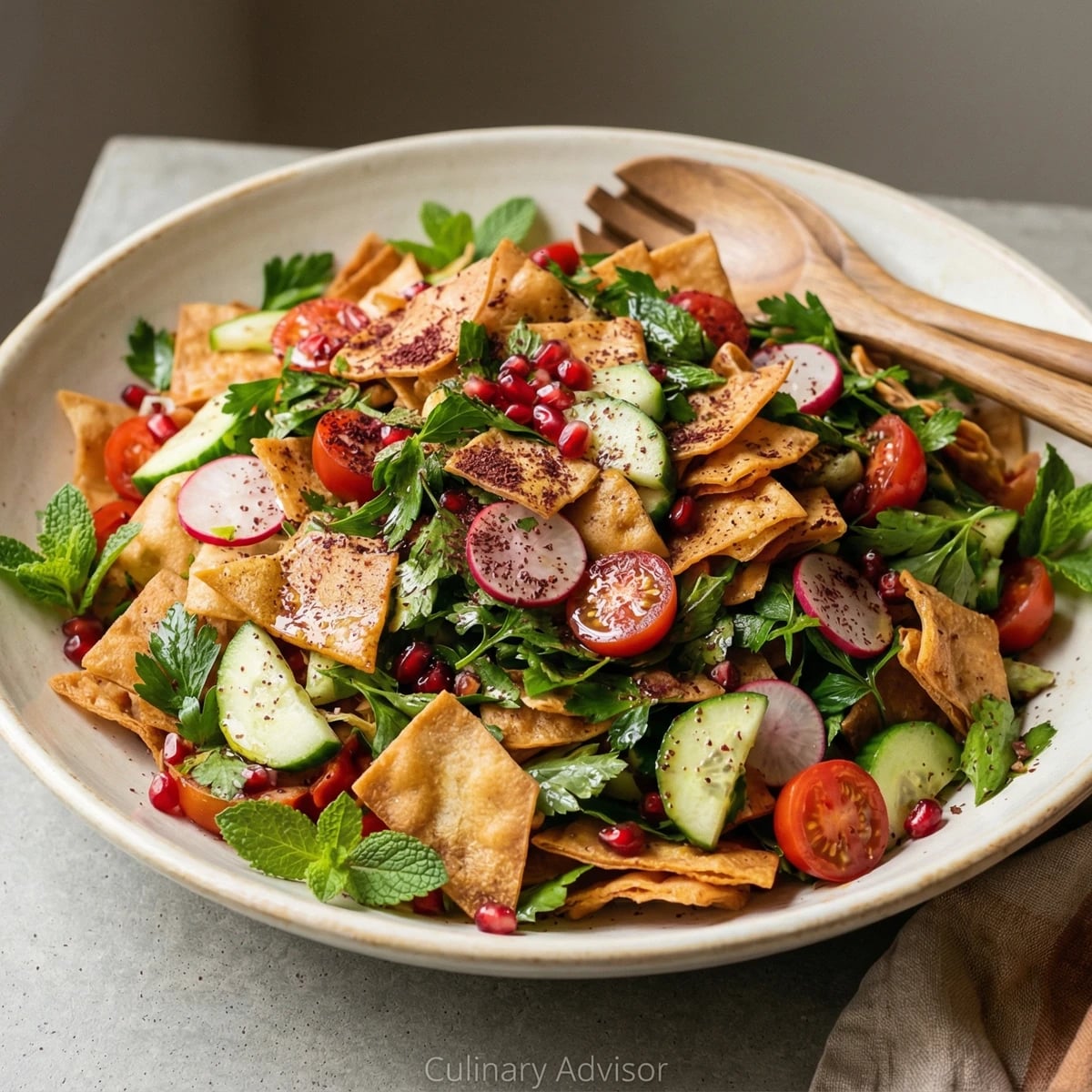
Shatteringly crisp pita pieces tumbled with peak-season tomatoes, cool cucumbers, peppery radishes, and a blizzard of fresh herbs, all dressed in a tart sumac and pomegranate vinaigrette that demands you eat immediately.

Salads
Lebanese
Dinner Party
35 min
Active Time
10 min cook45 min total
Yield6 servings

Every great cuisine has a bread salad. The Italians have their panzanella, the Arabs their fattoush. But where panzanella soaks stale bread in tomato juices, fattoush keeps its bread crisp and shattering until the moment fork meets mouth. This is not a salad for the timid or the slow.

Fattoush comes from the Levant, where cooks waste nothing and elevate everything. Leftover pita becomes golden shards. Garden vegetables get cut just so. The dressing, built on sumac's mysterious tartness and pomegranate molasses's dark sweetness, ties everything together with an acidity that wakes up your palate and refuses to let it sleep.

The secret lives in the timing. Every component can be prepared hours ahead, waiting in separate bowls like actors in the wings. But the moment you toss them together, the clock starts. You have perhaps ten minutes of perfect texture before the pita begins to soften. This is not a flaw. This is a feature. It forces you to gather your guests, present the salad with ceremony, and eat with the urgency the dish deserves.

The technique, the tradition, and the story behind every dish.

Discover Culinary Explorer

Ingredients

large pita breads

Quantity

2 (about 8 inches diameter)

extra virgin olive oil

Quantity

1/3 cup for frying, plus 1/2 cup for dressing

romaine lettuce

Quantity

1 head, inner leaves only (about 6 cups)

torn into bite-sized pieces

cherry tomatoes

Quantity

2 cups

halved

Persian cucumbers

Quantity

2

halved lengthwise and sliced

radishes

Quantity

6

thinly sliced

green onions

Quantity

4

white and light green parts, thinly sliced

fresh flat-leaf parsley

Quantity

1 cup leaves

loosely packed

fresh mint leaves

Quantity

1/2 cup

torn if large

fresh lemon juice

Quantity

3 tablespoons (about 1 large lemon)

pomegranate molasses

Quantity

1 tablespoon

garlic

Quantity

1 small clove

minced to a paste

ground sumac

Quantity

2 tablespoons, plus more for finishing

fine sea salt

Quantity

1 teaspoon, plus more to taste

freshly ground black pepper

Quantity

1/2 teaspoon

pomegranate seeds (optional)

Quantity

1/4 cup

for garnish

Equipment Needed

  • Large skillet (12-inch)
  • Wide shallow serving bowl or platter
  • Glass jar with tight-fitting lid for dressing
  • Salad servers or large spoons

Instructions

  1. 1

    Prepare the pita

    Split each pita horizontally into two thin rounds by running a knife around the edge and separating the layers. Tear or cut each round into irregular pieces roughly the size of playing cards. Irregular shapes create more textural interest than uniform squares. You want some pieces thinner, some thicker, some with edges that will crisp to shattering, others with soft spots that will catch dressing.

    Day-old pita works beautifully here. Fresh pita has more moisture and takes longer to crisp.
  2. 2

    Fry the pita until golden

    Heat one-third cup olive oil in a large skillet over medium-high heat until shimmering. Add pita pieces in a single layer, working in batches to avoid crowding. Fry until deeply golden and crisp, about two minutes per side, adjusting heat if they brown too quickly. The bread should be the color of a good croissant crust. Transfer to a paper towel-lined plate and season immediately with a pinch of salt. They will crisp further as they cool.

    For a lighter version, brush pita with olive oil and bake at 375°F until crisp, about eight to ten minutes, flipping halfway. The fried version is better.
  3. 3

    Prepare the vegetables

    Tear romaine leaves into generous bite-sized pieces and place in your largest serving bowl. The inner leaves of romaine provide the ideal balance of crunch and tender texture. Add the halved cherry tomatoes, sliced cucumbers, radishes, and green onions. Do not toss yet. Keep everything in distinct piles so you can admire the colors and assess the proportions. This is a composed salad until the moment of service.

  4. 4

    Build the dressing

    In a jar with a tight-fitting lid, combine the lemon juice, pomegranate molasses, minced garlic paste, sumac, salt, and pepper. Seal and shake vigorously until the salt dissolves, about thirty seconds. Add the remaining half cup of olive oil. Shake again for a full minute until the dressing thickens slightly and becomes opaque. This is proper emulsification. The acids and oil should stay combined for at least fifteen minutes without separating. Taste and adjust salt.

    The jar method creates a better emulsion than whisking because the vigorous shaking incorporates more air and breaks the oil into smaller droplets.
  5. 5

    Add the herbs

    Scatter the parsley leaves and torn mint over the vegetables. Fresh herbs are not garnish in fattoush. They are a primary ingredient, present in amounts that would startle most American cooks. Trust the proportions. The herbs provide vegetal freshness that balances the tart dressing and starchy bread.

  6. 6

    Toss and serve immediately

    Call your guests to the table. Add the crispy pita shards to the bowl. Give the dressing one final shake and pour over everything. Toss gently but thoroughly with your hands or two large spoons, lifting from the bottom to coat every piece. The pita should be distributed throughout, not sitting on top. Taste a bite: the acid should be bright, the sumac tangy and slightly floral, the pita still audibly crisp when you bite. Adjust salt if needed.

    You have exactly eight to ten minutes of optimal texture. After that, the pita begins its inevitable softening. Serve with urgency.
  7. 7

    Finish and present

    Transfer to a wide, shallow serving platter or present directly from the bowl. Dust generously with additional sumac, its burgundy color striking against the greens. If you have pomegranate seeds, scatter them over the top like edible jewels. Bring to the table immediately and serve with the confidence of someone who knows this salad cannot wait.

Chef Tips

  • Sumac is the soul of this salad. Find it at Middle Eastern groceries or order online. There is no adequate substitute. The deep red powder tastes of tart citrus and salt, with a fruity complexity that lemon alone cannot replicate.
  • Pomegranate molasses provides a counterpoint of sweet-sour depth. Look for brands with only pomegranate juice listed as an ingredient. If unavailable, increase the lemon juice by one tablespoon and add half a teaspoon of honey.
  • The dressing improves as it sits. Make it up to three days ahead and refrigerate. Shake vigorously before using, as it will separate. The garlic mellows and the flavors marry.
  • For dinner parties, prepare every component ahead: fry the pita (store in airtight container at room temperature for up to six hours), cut the vegetables (refrigerate in separate containers), wash and dry the herbs (wrap in damp paper towels), and make the dressing. When guests arrive, assembly takes three minutes.
  • Little gem lettuces make an elegant substitute for romaine, their compact heads providing natural cups for the vegetables. Avoid iceberg, which lacks the backbone to stand up to the dressing.

Advance Preparation

  • The dressing can be made up to three days ahead and refrigerated. Shake vigorously before using to re-emulsify.
  • Pita can be fried up to six hours ahead and stored uncovered at room temperature. It will stay crisp. Do not refrigerate.
  • Vegetables can be prepped up to eight hours ahead: store tomatoes at room temperature, refrigerate cucumbers and radishes in separate containers.
  • Herbs can be washed, dried, and refrigerated wrapped in damp paper towels up to two days ahead.
  • Final assembly must happen moments before serving. This salad does not hold.

Frequently Asked Questions

Nutrition Information

1 serving (about 250g)

Calories
435 calories
Total Fat
37 g
Saturated Fat
5 g
Trans Fat
0 g
Unsaturated Fat
32 g
Cholesterol
0 mg
Sodium
385 mg
Total Carbohydrates
23 g
Dietary Fiber
1 g
Sugars
5 g
Protein
4 g

Note: Chef personas and recipes are created with AI assistance. Cook with care: follow safe food-handling practices, check doneness with a thermometer when needed, and adapt for allergies and your kitchen.

Where cooking meets culture.

Culinary guides, cultural storytelling, and the editorial depth that makes cooking meaningful.

Discover Culinary Explorer

More from Sensational Salads

Browse the full collection