
Chef Dimitra
Athenian Freddo Espresso (Φρέντο Εσπρέσο)
Athens made espresso Greek by serving it cold: a double shot shaken with ice until the crema turns thick, then poured over cubes for the cafe standard.
A cooking platform built around craft, culture, and the stories behind what we eat.
Created by
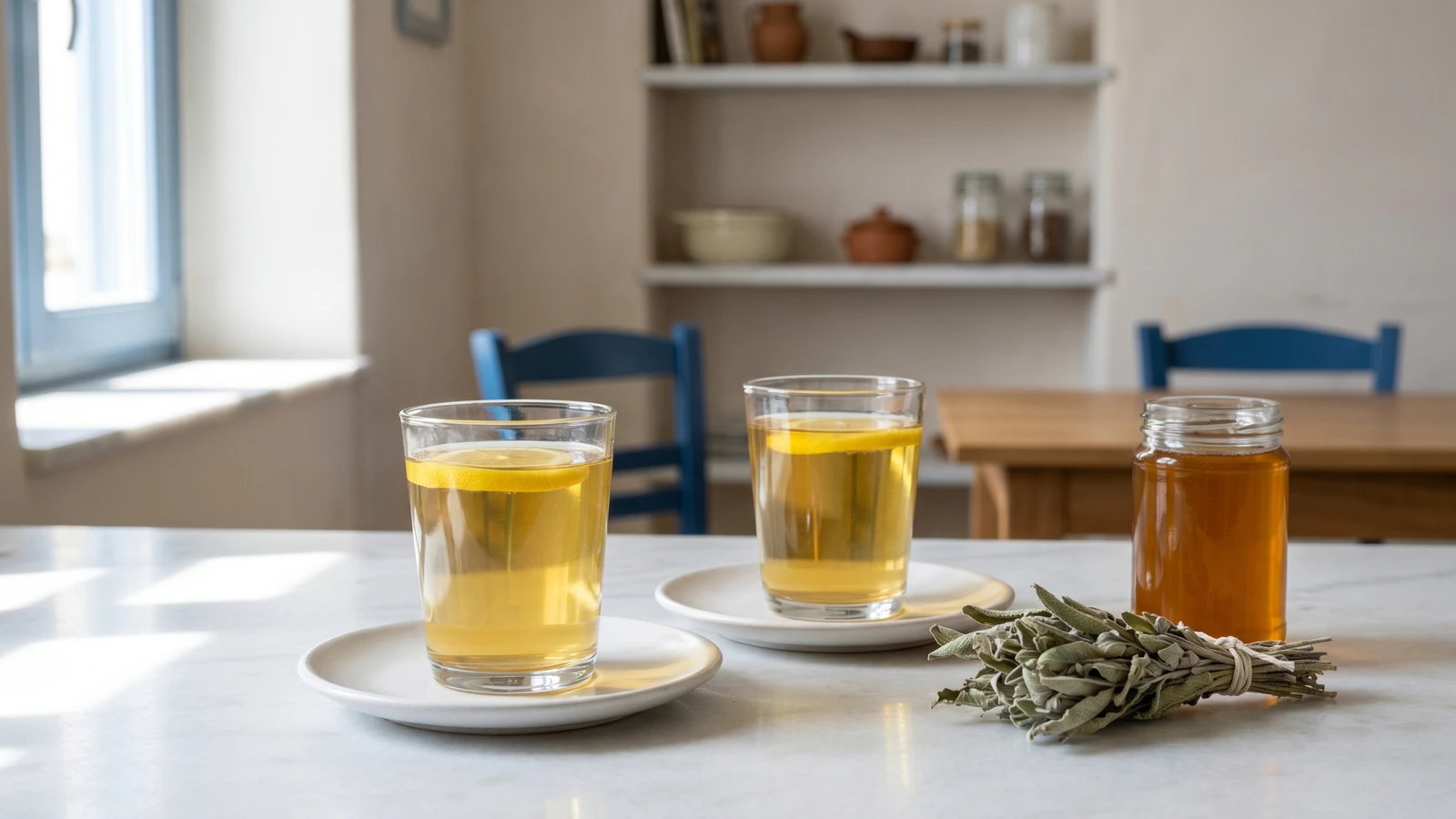
Crete's village sage infusion is comfort in a cup: dried faskomilo steeped briefly, served plain or with thyme honey and lemon when the throat asks for mercy.
Faskomilo Kritis is Crete's sage infusion, a mountain herb tea made from whole gray-green leaves and little flowering tops, not rubbed kitchen sage tipped from a jar. It tastes earthy, clean, and a little resinous, the cup you pour when a cold settles in the throat or when the day has been too long.
The method that decides it is restraint. Pour just-boiled water over the sage, cover the cup, and give it six minutes. Boil it in the pan or leave it for half an hour and the leaf turns bitter. This is the whole trick, and it is enough.
I serve it plain first, then honey and lemon only if the throat is asking. In winter, the little paper bundles from Crete sit beside my mountain tea in Thessaloniki, and they disappear faster than people admit. The region is the dish's surname, even for something as small as a cup of faskomilo.
Faskomilo is the common Greek name for sage, especially Salvia fruticosa, a plant gathered on Crete, the Aegean islands, and the dry hills of mainland Greece. The older name elelisphakos appears in Dioscorides' 1st-century De Materia Medica, where sage was recorded as a medicinal herb. In village practice it stayed domestic: gathered after flowering, dried in shade, and poured through winter for sore throats, coughs, and a tired stomach.
Quantity
500ml
Quantity
2g
whole leaves or flowering tops
Quantity
2 teaspoons
Quantity
2 thin slices or 2 teaspoons juice
| Ingredient | Quantity |
|---|---|
| water | 500ml |
| dried Cretan sage (faskomilo)whole leaves or flowering tops | 2g |
| Greek thyme honey (optional) | 2 teaspoons |
| lemon (optional) | 2 thin slices or 2 teaspoons juice |
Use whole dried faskomilo with leaves still recognizable, gray-green, and strongly fragrant when rubbed between your fingers. Powdered sage makes a muddy, harsh cup. Shake off any dust, but don't wash dried leaves or you take away the scent you came for.
Bring 500ml water to a boil, then take it off the heat. Wait about 30 seconds, just until the bubbling settles. Faskomilo wants hot water, not a rolling boil with the herb inside it.
Put the sage in a small lidded pot or divide it between two cups. Pour over the hot water, cover, and steep for 6 minutes. The cup should be pale amber and earthy. Boil it or forget it for half an hour and the leaf gives you bitterness instead of comfort. A lid matters because the fragrance belongs in your cup, not on the ceiling.
Strain into two cups. Taste it plain first, then add 1 teaspoon honey and a little lemon to each cup if the throat is asking. Drink it warm, while the sage is still bright and clean.
1 serving (about 250g)
Culinary guides, cultural storytelling, and the editorial depth that makes cooking meaningful.
Discover Culinary ExplorerChef Dimitra
Athens made espresso Greek by serving it cold: a double shot shaken with ice until the crema turns thick, then poured over cubes for the cafe standard.

Chef Dimitra
Athens cafe freddo cappuccino is iced double espresso crowned with cold afrogala, the dense milk foam that makes the drink clean, bitter, and properly Greek.

Chef Dimitra
Attiki lemonada is the kafeneio summer glass: fresh lemon juice, a light syrup, and a little zest steeped just long enough to smell like the peel.

Chef Dimitra
Chamomili from Greek Macedonia is a cup of dried spring flowers, steeped covered until pale gold and apple-sweet. The rule is plain: hot water, patient steeping, no boiling.