
Chef Isabel
Aguaillo de la Sierra de Cadiz
Aguaillo is from the Sierra de Cadiz: cold water, stale bread, garlic, oil and vinegar, closer to a field drink than a bowl of soup, and sharp enough to wake you in the heat.
A cooking platform built around craft, culture, and the stories behind what we eat.
Created by
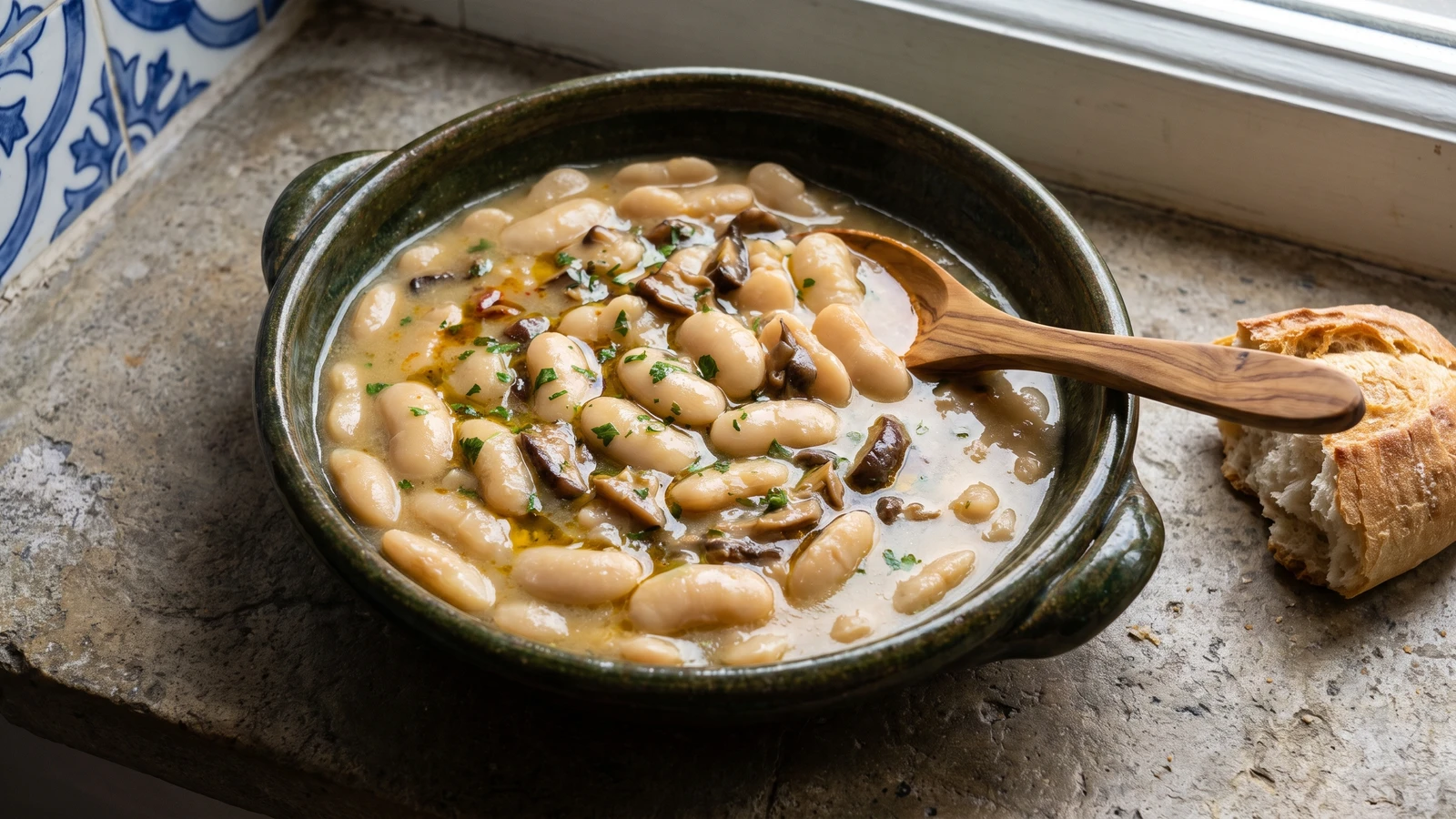
Fabes con setas are Asturian spoon food for autumn: fat white beans, wild mushrooms, garlic, and good oil, cooked slowly so the beans turn creamy and the setas still taste of the woods.
Fabes con setas are Asturian, a stew from the wet north where beans and woodland mushrooms meet without needing compango to speak for them. This is not fabada, because there is no chorizo, morcilla, or lacón doing the heavy work. The dish belongs to the bean and the mushrooms: creamy fabes de la granja, boletus if you can get them, trompeta negra if the market is kind, garlic, a little pimentón, and patience.
The step that decides it is the order. Cook the fabes slowly first, at the barest tremble, until they are tender and the broth turns silky. Then cook the setas apart in garlic oil and stir them in at the end. If you simmer the mushrooms for hours, they give up their bite and their clean woodland smell. Add them late and the stew tastes alive, not tired.
If you are far from Asturias, no hace falta haber pisado España. Use a large dried white bean, judión if you find it, or good cannellini if that is what the shop has. For the mushrooms, use firm oyster mushrooms or cremini with a small handful of dried porcini or dried black trumpet soaked into the cooking water. It will be less deep than fresh boletus in autumn, but it will still be honest. Pésalo, no lo adivines, weigh it, don't guess.
My Margin for this one says only: mushrooms at the end. That is where beginners spoil it, trying to make the pot taste stronger by cooking it longer. Don't. Let the beans do their slow work, let the setas keep their teeth, and serve it with bread for the broth. Siempre sale, si lo sigues.
Fabes belong to Asturias, where the large white bean called faba asturiana or fabes de la granja became the base of cold-weather cocina de cuchara, the spoon dishes of the north. Meat gave the famous fabada its feast-day weight, but Asturian homes also cooked fabes with what the season offered: clams from the coast, game from the hills, or mushrooms from the damp woods. Fabes con setas sit in that autumn branch of the tradition, using the same careful bean cookery but letting the woodland larder take the place of the matanza meats.
Quantity
500g
soaked overnight
Quantity
350g
cleaned and torn or sliced
Quantity
20g
Quantity
1.5 litres
Quantity
250ml
Quantity
1 medium
peeled and finely chopped
Quantity
1 small
finely chopped
Quantity
1
peeled and left whole
Quantity
1
Quantity
5 cloves
2 whole, 3 finely chopped
Quantity
80ml
divided
Quantity
1 teaspoon
Quantity
1 pinch
Quantity
1 tablespoon
chopped
Quantity
10g, plus more to taste
| Ingredient | Quantity |
|---|---|
| dried fabes de la granjasoaked overnight | 500g |
| mixed wild mushrooms, such as boletus and black trumpetcleaned and torn or sliced | 350g |
| dried porcini or dried black trumpet mushrooms | 20g |
| cold water | 1.5 litres |
| hot water for soaking dried mushrooms | 250ml |
| onionpeeled and finely chopped | 1 medium |
| leek, white part onlyfinely chopped | 1 small |
| carrotpeeled and left whole | 1 |
| bay leaf | 1 |
| garlic2 whole, 3 finely chopped | 5 cloves |
| extra virgin olive oildivided | 80ml |
| sweet pimentón de la Vera | 1 teaspoon |
| saffron threads (optional) | 1 pinch |
| flat-leaf parsleychopped | 1 tablespoon |
| salt | 10g, plus more to taste |
The night before, put the fabes in a large bowl and cover them with plenty of cold water. Leave them 12 hours. They should swell and smooth out, with no dry wrinkle at the centre. Drain them before cooking; the soak is not decoration, it is what lets the bean cook evenly instead of splitting outside while staying chalky within.
Put the dried mushrooms in a small bowl with 250ml hot water and leave them 20 minutes. Lift the mushrooms out, chop them roughly, and save the soaking liquid. Pour that liquid through a fine sieve or coffee filter to catch any grit. This is not a trick for show; it gives the broth the woodland depth that fresh mushrooms alone sometimes lack.
Warm 50ml of the olive oil in a wide heavy pot over low heat. Add the onion and leek with a pinch of salt and cook gently for 18 to 22 minutes, stirring now and then, until soft, dark gold, and almost jammy. Add the two whole garlic cloves, the bay leaf, carrot, pimentón, and saffron if using, and stir for 20 seconds off the heat so the pimentón smells sweet and does not scorch.
Add the drained fabes, the chopped soaked mushrooms, the strained mushroom soaking liquid, and 1.5 litres cold water. The liquid should cover the beans by about two fingers. Bring the pot up slowly over medium-low heat. When the first foam rises, skim it. Once the pot begins to move, lower the heat until the surface barely trembles. That gentle tremble is the whole business: a hard boil breaks the skins and muddies the broth.
Cook the fabes gently for about 2 hours, sometimes a little longer, until they are tender and creamy all the way through. Do not stir with a spoon. Shake the pot by the handles now and then so the beans move without breaking. If the liquid drops below the beans, add a small splash of cold water, asustar las fabes, to bring the level back up and settle the simmer.
When the fabes are almost tender, add 10g salt and keep cooking gently for 15 to 20 minutes more. Taste one bean, not the broth only. It should be soft through the centre, with the skin still whole. Remove the carrot, bay leaf, and whole garlic cloves. If you want a thicker broth, crush 3 tablespoons of beans with a little liquid in a cup and stir that back in by moving the pot, not beating it.
While the beans finish, heat the remaining 30ml olive oil in a large frying pan over medium-high heat. Add the fresh mushrooms in one layer, working in batches if needed, and cook until their water has gone and the edges take on a little colour. Add the three chopped garlic cloves and cook 1 minute more, just until the garlic smells sweet. Salt lightly and stir in the parsley.
Slide the sautéed setas and their garlic oil into the pot of fabes. Move the pot by the handles to settle everything together and cook 5 minutes, no more. Taste for salt. Let the stew rest off the heat for 15 minutes before serving; the broth thickens, the oil shines at the edges, and the mushrooms keep their bite. Serve in deep bowls with bread.
1 serving (about 400g)
Culinary guides, cultural storytelling, and the editorial depth that makes cooking meaningful.
Discover Culinary ExplorerChef Isabel
Aguaillo is from the Sierra de Cadiz: cold water, stale bread, garlic, oil and vinegar, closer to a field drink than a bowl of soup, and sharp enough to wake you in the heat.

Chef Isabel
Ajilimojili is Jaen's tomato-free cold soup: potato, roasted red pepper, garlic, olive oil, and vinegar pounded into a cool, silky spoonful.

Chef Isabel
Ajo carretero is Soriano, from the pine country of Soria: lamb cooked in a plain garlicky broth, then served the old way, meat first and bread-soaked soup after.

Chef Isabel
Ajoblanco Extremeño is the poor-kitchen cold soup of Extremadura: bread, garlic, oil, egg yolk, vinegar, and icy water, with no almonds. Whisk it slowly and serve it bien fresquito.