
Chef Isabel
Aguaillo de la Sierra de Cadiz
Aguaillo is from the Sierra de Cadiz: cold water, stale bread, garlic, oil and vinegar, closer to a field drink than a bowl of soup, and sharp enough to wake you in the heat.
A cooking platform built around craft, culture, and the stories behind what we eat.
Created by
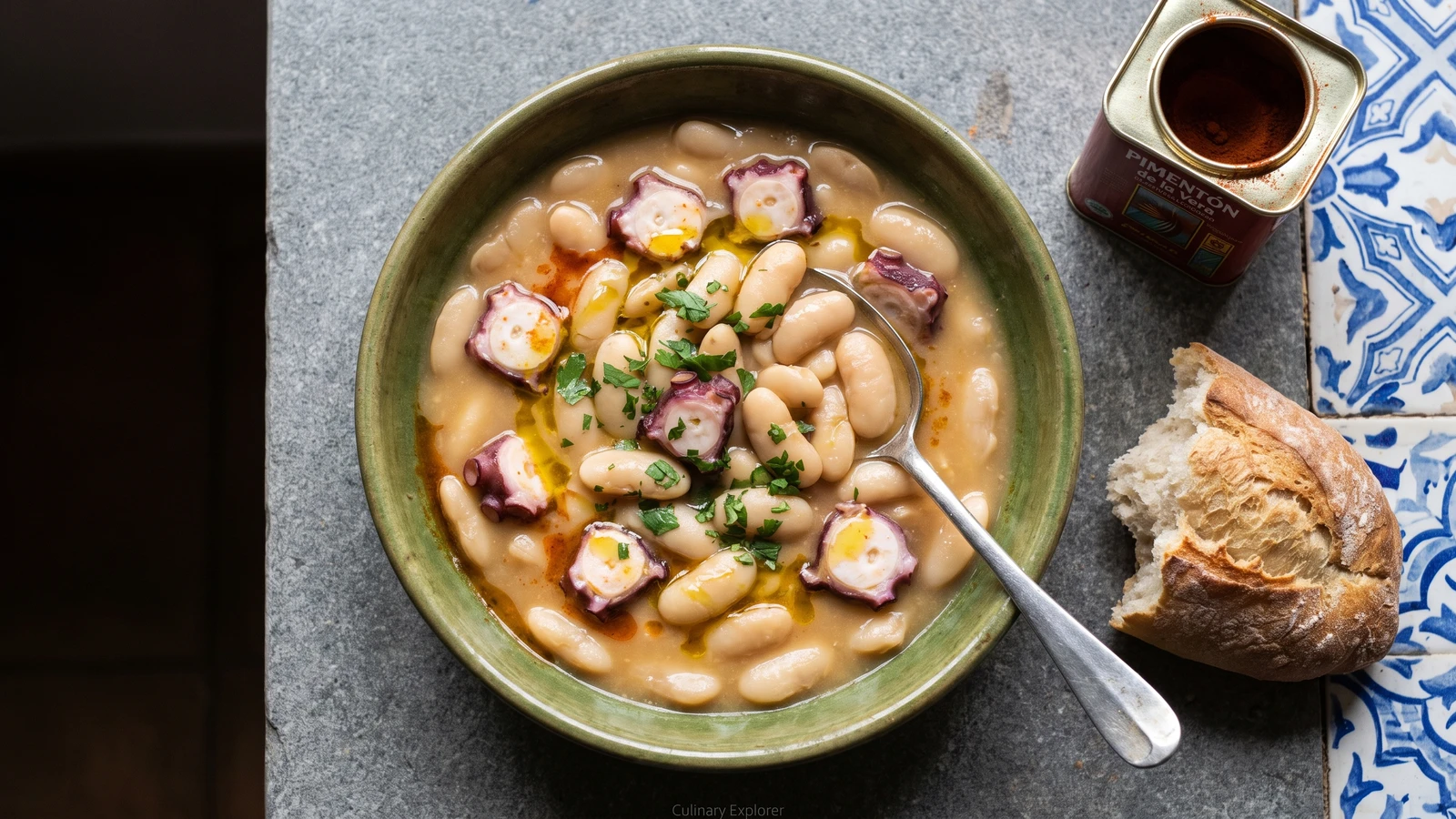
Fabes con pulpo are Asturias at the spoon: creamy fabes de la granja, tender octopus, and its own sweet broth, joined by a slow pimentón sofrito that gives the stew its body.
Fabes con pulpo are Asturian, not just white beans with seafood. The dish belongs to the same northern spoon table as fabada, but here the compango steps aside and the octopus gives the broth: clean, sweet, marine, with the fabes de la granja turning creamy around it. Esto es de Asturias, no de "España" a secas.
The method that decides it is simple: cook the pulpo first, then use that cooking water for the beans. If you throw raw octopus into the pot with the fabes, the timing fights you and somebody loses. Tender octopus first, slow beans after, and a low sofrito, the slow onion base, cooked until dark gold and sweet before the pimentón goes in. That is where the stew gets depth without turning heavy.
If you can't find fabes de la granja, use a large dried white bean, judión if you can, cannellini if that is what your shop has. The texture will be a little less buttery, so simmer even more gently and don't stir with a spoon. Frozen octopus is not second best here; it helps tenderness, the old kitchen truth made easy for cooks far from a Galician or Asturian fishmonger.
Give the beans their overnight soak, keep the pot at the barest tremble, and rest the stew before serving. Pésalo, no lo adivines. Siempre sale, si lo sigues, it turns out if you follow it.
Fabes con pulpo belongs to Asturias's cocina de cuchara, spoon food, where fabes de la granja anchor both inland stews and seafood pots from the Cantabrian coast. The dish shows the old northern habit of letting the market decide the pot: beans from the land, octopus from nearby waters, and pimentón brought from the preserved larder. It sits close to fabes con almejas in spirit, but the octopus makes it more festive and gives the broth a deeper, sweeter sea taste.
Quantity
500g
soaked overnight
Quantity
1.2kg
thawed if frozen
Quantity
1
Quantity
1
halved
Quantity
1
finely chopped
Quantity
1
white and pale green parts finely chopped
Quantity
3
2 lightly crushed and 1 minced
Quantity
80ml
Quantity
1 teaspoon
Quantity
1/4 teaspoon
Quantity
1 small
soaked and flesh scraped
Quantity
1 pinch
Quantity
1 tablespoon
chopped, to finish
Quantity
to taste
| Ingredient | Quantity |
|---|---|
| dried fabes de la granjasoaked overnight | 500g |
| cleaned octopusthawed if frozen | 1.2kg |
| bay leaf | 1 |
| onion for cooking the octopushalved | 1 |
| small onion for the sofritofinely chopped | 1 |
| small leekwhite and pale green parts finely chopped | 1 |
| garlic cloves2 lightly crushed and 1 minced | 3 |
| extra virgin olive oil | 80ml |
| sweet pimentón de la Vera | 1 teaspoon |
| hot pimentón de la Vera (optional) | 1/4 teaspoon |
| dried ñora pepper (optional)soaked and flesh scraped | 1 small |
| saffron threads (optional) | 1 pinch |
| flat-leaf parsleychopped, to finish | 1 tablespoon |
| salt | to taste |
The night before, cover the fabes with plenty of cold water and leave them 10 to 12 hours. They swell more than you think, so give them room. Drain them before cooking and discard any split or broken beans.
Put a large pot of water on to boil with the halved onion, bay leaf, and 2 crushed garlic cloves. Hold the octopus by the head, dip the tentacles into the boiling water three times, then lower it in. This is asustar el pulpo, setting the skin so it stays neat. Reduce to a gentle simmer and cook until a skewer slides into the thickest tentacle with slight resistance, about 45 to 60 minutes.
Turn off the heat and let the octopus rest in its cooking water for 20 minutes. Lift it out, strain and reserve 1.5 litres of the cooking water, and cut the tentacles into thick coins. Keep the thinner tips a little longer so they do not disappear in the stew.
Put the drained fabes in a wide heavy pot and cover with the reserved octopus water by about 3cm, adding plain water if needed. Bring up slowly over medium heat, then lower to the barest tremble. Skim the foam. Do not boil hard and do not stir with a spoon; shake the pot by the handles if you need to settle the beans.
While the beans begin to soften, warm the olive oil in a small pan and add the chopped onion, leek, and minced garlic with a pinch of salt. Cook low and slow for 20 to 25 minutes, until dark gold, soft, and jammy. Pull the pan off the heat, stir in the sweet pimentón, hot pimentón if using, ñora flesh if using, and saffron. Pimentón burns fast, and burnt pimentón tastes bitter. There is no rescuing it.
When the fabes are tender at the edges but not yet creamy, usually after 1 hour 15 minutes, spoon in the sofrito and shake the pot gently to spread it through the broth. Keep simmering at that quiet tremble until the beans are fully tender and the broth turns silky, about 45 to 75 minutes more. If the surface drops too low, add a small splash of cold water.
Add the sliced octopus for the final 10 minutes only, just long enough to warm through and give its flavour back to the beans. Taste before salting; octopus water can carry more salt than you expect. Season carefully.
Take the pot off the heat and let it rest 15 minutes. The broth settles and clings to the beans instead of running thin. Serve in deep bowls with parsley and a thread of olive oil if you like. Bread beside it, nothing clever. Tal como se hace allí.
1 serving (about 470g)
Culinary guides, cultural storytelling, and the editorial depth that makes cooking meaningful.
Discover Culinary ExplorerChef Isabel
Aguaillo is from the Sierra de Cadiz: cold water, stale bread, garlic, oil and vinegar, closer to a field drink than a bowl of soup, and sharp enough to wake you in the heat.

Chef Isabel
Ajilimojili is Jaen's tomato-free cold soup: potato, roasted red pepper, garlic, olive oil, and vinegar pounded into a cool, silky spoonful.

Chef Isabel
Ajo carretero is Soriano, from the pine country of Soria: lamb cooked in a plain garlicky broth, then served the old way, meat first and bread-soaked soup after.

Chef Isabel
Ajoblanco Extremeño is the poor-kitchen cold soup of Extremadura: bread, garlic, oil, egg yolk, vinegar, and icy water, with no almonds. Whisk it slowly and serve it bien fresquito.