
Chef Isabel
Aguaillo de la Sierra de Cadiz
Aguaillo is from the Sierra de Cadiz: cold water, stale bread, garlic, oil and vinegar, closer to a field drink than a bowl of soup, and sharp enough to wake you in the heat.
A cooking platform built around craft, culture, and the stories behind what we eat.
Created by
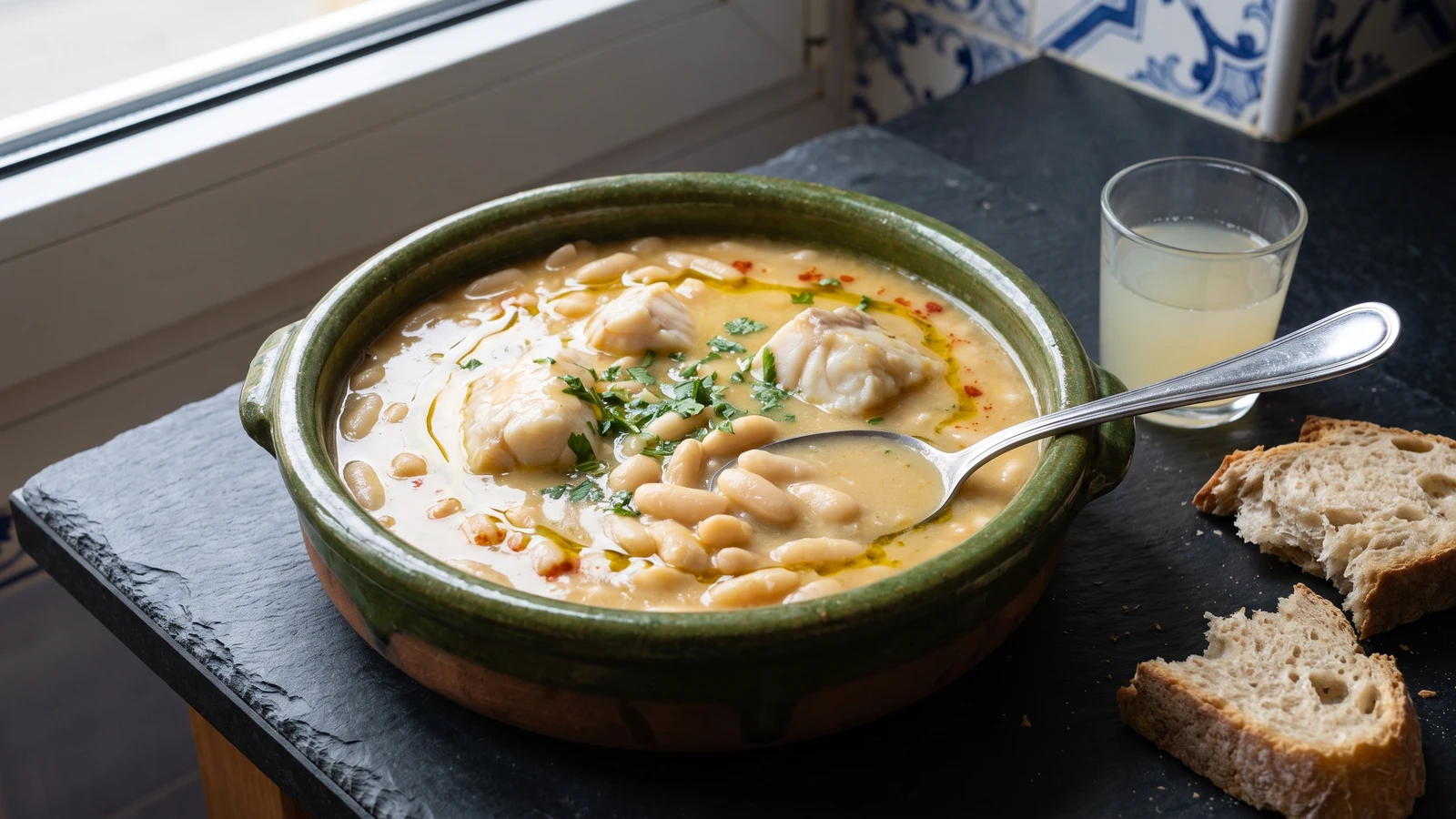
Asturias gives the faba a sea pot here: creamy fabes de la granja, monkfish called pixín, and a sidra sofrito. Cook the beans gently, then add the fish last.
Fabes con pixín is Asturian: the same fat white fabes de la granja that carry fabada, but turned toward the Cantabrian sea with pixín, monkfish, instead of compango. Esto es de Asturias, no de "España" a secas. The bean is still the backbone, creamy and quiet; the fish gives it clean strength, and the sidra sofrito, the slow onion base cooked with Asturian cider, gives the pot its northern bite.
The part that decides it is the order. Cook the fabes until tender at a bare tremble, with no spoon stirring, then slip the monkfish in at the end. Monkfish is firm, but it isn't a cured sausage. Boil it for half an hour and you get rope. Five minutes in the glossy broth, then a rest, and it stays pearly and sweet.
If you can't find pixín, buy monkfish tail sold as rape or monkfish; that is the same fish with another name. If there is no monkfish, a thick hake loin or halibut will do, but add it for only three or four minutes because it flakes sooner. For the beans, use judión or good cannellini when fabes de la granja are out of reach; the broth will be a little less buttery, not ruined. No hace falta haber pisado España.
In the Margin beside this one I wrote only: "el pescado al final," the fish at the end. It sounds too plain to be useful, until you taste the pot when you have followed it. This is cocina de cuchara, spoon food, from the coast. Con buenos ingredientes y paciencia, it comes out.
Fabes con pixín belongs to Asturias, where the inland bean fields and the Cantabrian fishing ports sit close enough to meet in the same pot. Pixín is the Asturian name for monkfish, a firm-fleshed fish used in stews because it holds its shape better than more delicate fish from the coast. Unlike fabada Asturiana, whose flavor comes from the cured compango of the matanza, this version takes its depth from fish stock, sidra natural, and a slow sofrito, so the faba remains the dish's body while the sea gives the broth its edge.
Quantity
450g
soaked overnight
Quantity
750g
skin and grey membrane removed, cut into 4cm pieces
Quantity
1.5L
cold, preferably unsalted
Quantity
120ml
Quantity
80ml, plus 1 tablespoon to finish
Quantity
180g
finely chopped
Quantity
100g
finely chopped
Quantity
3 cloves
finely chopped
Quantity
150g fresh or 120g canned
grated if fresh
Quantity
1 teaspoon
Quantity
1 pinch
Quantity
1
Quantity
10g
chopped
Quantity
to taste
Quantity
as needed
| Ingredient | Quantity |
|---|---|
| dried fabes de la granjasoaked overnight | 450g |
| cleaned monkfish tail meat (pixín or rape)skin and grey membrane removed, cut into 4cm pieces | 750g |
| light fish stockcold, preferably unsalted | 1.5L |
| Asturian sidra natural or dry hard cider | 120ml |
| extra virgin olive oil | 80ml, plus 1 tablespoon to finish |
| onionfinely chopped | 180g |
| leek white partfinely chopped | 100g |
| garlicfinely chopped | 3 cloves |
| ripe tomato or canned crushed tomatograted if fresh | 150g fresh or 120g canned |
| sweet pimentón de la Vera | 1 teaspoon |
| saffron threads (optional) | 1 pinch |
| bay leaf | 1 |
| flat-leaf parsleychopped | 10g |
| salt | to taste |
| cold water (optional) | as needed |
Put the fabes in a large bowl and cover them with plenty of cold water by at least 6cm. Soak 8 to 12 hours, then drain. Pésalo, no lo adivines: old or tiny beans cook unevenly here, and this dish wants large beans that turn creamy without collapsing.
Warm the olive oil in a wide, heavy pot over low heat. Add the onion, leek, and a pinch of salt, and cook slowly for 20 to 25 minutes, stirring now and then, until they are dark gold, soft, and almost jammy. Add the garlic for 2 minutes, then the tomato, and cook until the liquid is gone and the oil shows at the edges. This slow sofrito, the onion base, is where the sweetness comes from.
Take the pot off the heat and stir in the pimentón and saffron, if using, just until they smell warm, not scorched. Add the sidra, return the pot to the heat, and let it reduce by half. Add the drained fabes, bay leaf, and cold fish stock. The liquid should cover the beans by about 3cm; add cold water if it does not.
Bring the pot up slowly, skimming any foam that rises, then lower the heat until the surface barely trembles. Cook 2 to 2 1/2 hours, depending on the beans, adding small splashes of cold water if the top dries out. Do not stir with a spoon; shake the pot by the handles. Salt only when the beans are nearly tender, because salted skins can toughen before the insides soften.
When the fabes are tender all the way through, scoop out about 100g of beans with a little broth, mash them with a fork, and return them to the pot. Swirl the pot gently until the broth turns silky and lightly coats the spoon. Taste for salt now, before the fish goes in.
Salt the monkfish pieces lightly, lay them over the beans, and nudge them just under the broth. Keep the heat low and cook 5 to 6 minutes, only until the fish turns pearly and firm. Monkfish can take more than hake, but it is still fish; boil it hard and you have made rope. If using hake or halibut, cook only 3 to 4 minutes.
Turn off the heat, cover the pot, and let it rest 10 minutes. Stir in most of the parsley by shaking the pot, not digging through it, then finish with the remaining parsley and a thin thread of olive oil. Serve in deep bowls with bread for the broth. Siempre sale, si lo sigues.
1 serving (about 560g)
Culinary guides, cultural storytelling, and the editorial depth that makes cooking meaningful.
Discover Culinary ExplorerChef Isabel
Aguaillo is from the Sierra de Cadiz: cold water, stale bread, garlic, oil and vinegar, closer to a field drink than a bowl of soup, and sharp enough to wake you in the heat.

Chef Isabel
Ajilimojili is Jaen's tomato-free cold soup: potato, roasted red pepper, garlic, olive oil, and vinegar pounded into a cool, silky spoonful.

Chef Isabel
Ajo carretero is Soriano, from the pine country of Soria: lamb cooked in a plain garlicky broth, then served the old way, meat first and bread-soaked soup after.

Chef Isabel
Ajoblanco Extremeño is the poor-kitchen cold soup of Extremadura: bread, garlic, oil, egg yolk, vinegar, and icy water, with no almonds. Whisk it slowly and serve it bien fresquito.