
Chef Isabel
Aguaillo de la Sierra de Cadiz
Aguaillo is from the Sierra de Cadiz: cold water, stale bread, garlic, oil and vinegar, closer to a field drink than a bowl of soup, and sharp enough to wake you in the heat.
A cooking platform built around craft, culture, and the stories behind what we eat.
Created by
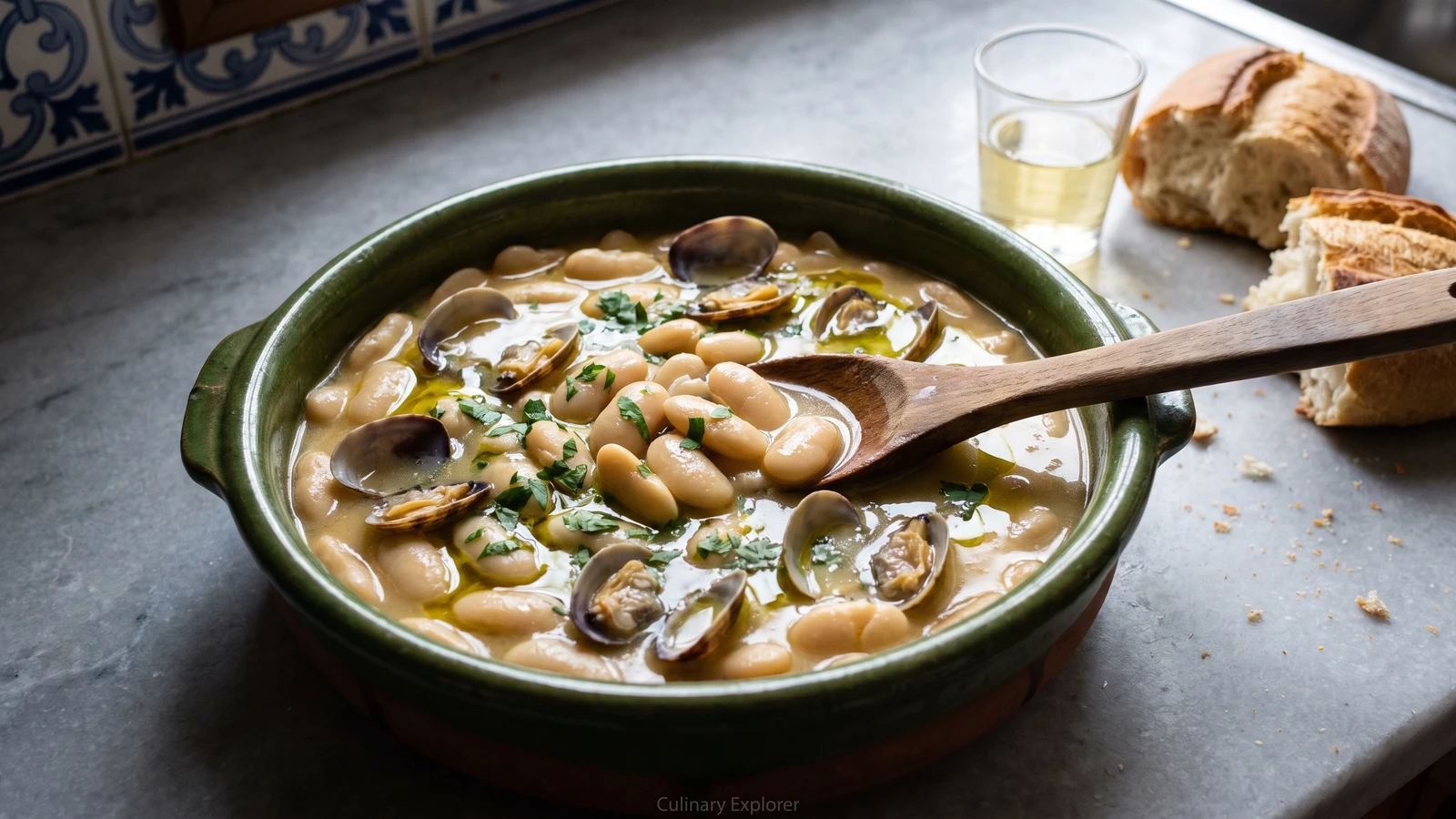
Fabas de Lourenzá con almejas is Galicia in one pot: buttery beans from Lugo, clean Atlantic clams, and a slow sofrito. Cook the beans first, then let the clams open at the end.
Fabas de Lourenzá con almejas is Galician, from the big white bean of Lourenzá in Lugo meeting clams from the Atlantic. The bean is large, thin-skinned, and creamy; the clam is clean and briny. That is what makes this dish itself and not a neighbor's stew: no compango, no pork backbone, no heavy red pot. Galicia lets land and sea sit in the same spoon, and both have to be heard.
The method that decides it is timing. Cook the soaked fabas first, slowly, until they are tender and creamy inside, then add the clams only at the end so they open into the broth and stop there. If you make the clams wait for the beans, they turn tough and give you grit in a pot you worked two hours for. No. Beans first, clams last.
If you're far from Galicia, no hace falta haber pisado España. Use a large dried white bean, judión if you have it, cannellini if you don't; it will be a little less buttery but still a good stew if you soak it and cook it gently. For the clams, choose small live littlenecks or Manila clams, not big chopped clams from a tin. Pésalo, no lo adivines, and purge them properly.
The Margin beside this one has only the warning I earned the hard way: don't chase thickness with heat. Mash a spoonful of beans if the broth needs body, keep the pot gentle, and let the parsley go in at the end. Siempre sale, si lo sigues.
Faba de Lourenzá comes from the valley around Vilanova de Lourenzá in A Mariña, Lugo, where the damp Galician climate and light soils give a large white bean with a fine skin and creamy flesh; it is protected as an IGP. Almejas, especially those from Carril in the Ría de Arousa, are among Galicia's prized shellfish, and pairing them with beans shows the Galician habit of joining the inland pot to the coast. The Festa da Faba in Lourenzá marks the autumn harvest, while the clam belongs to the rías, so the dish carries both market tables in one cazuela.
Quantity
450g
soaked overnight
Quantity
1.2kg
purged and scrubbed
Quantity
2L water plus 60g salt
Quantity
1.6L, plus more as needed
Quantity
80ml
Quantity
1 (about 120g)
peeled and left whole
Quantity
1
Quantity
1 (about 180g)
finely chopped
Quantity
3
finely chopped
Quantity
120g fresh or 100g canned
grated if fresh
Quantity
150ml
Quantity
1 teaspoon
Quantity
10 threads
lightly crushed
Quantity
6g, then more only if needed
Quantity
15g
finely chopped
| Ingredient | Quantity |
|---|---|
| dried Faba de Lourenzá IGP, or another large dried white beansoaked overnight | 450g |
| live small clams, preferably almejas de Carril, littlenecks, or Manila clamspurged and scrubbed | 1.2kg |
| cold water and fine sea salt, for purging clams | 2L water plus 60g salt |
| cold water, for cooking beans | 1.6L, plus more as needed |
| extra virgin olive oil | 80ml |
| small onionpeeled and left whole | 1 (about 120g) |
| bay leaf | 1 |
| medium onionfinely chopped | 1 (about 180g) |
| garlic clovesfinely chopped | 3 |
| ripe tomato, or canned crushed tomatograted if fresh | 120g fresh or 100g canned |
| dry Galician white wine, such as Albariño or Ribeiro | 150ml |
| sweet pimentón | 1 teaspoon |
| saffron threads (optional)lightly crushed | 10 threads |
| fine sea salt | 6g, then more only if needed |
| flat-leaf parsleyfinely chopped | 15g |
The night before, rinse the fabas and cover them with plenty of cold water, at least 8cm above the beans. Leave them to soak for 12 hours. Drain them before cooking and throw away any split or shriveled beans; they won't become creamy by force.
Put the drained beans in a wide heavy pot with 1.6L cold water, the whole peeled onion, and the bay leaf. Bring them up slowly over medium-low heat. Skim the pale foam that rises in the first ten minutes, then lower the heat before the pot gets rowdy.
Keep the beans at the barest tremble, not a boil, for 1 hour 45 minutes to 2 hours, depending on the bean. If the water drops below the beans, add a small splash of cold water. Don't stir hard with a spoon; move the pot by its handles if you need to settle them.
While the beans cook, warm the olive oil in a frying pan and add the chopped onion with a pinch of the measured salt. Cook it low and slow for 15 to 18 minutes, until soft, dark gold, and sweet. Add the garlic for 2 minutes, then the grated tomato and cook until the oil shows again at the edges. Pull the pan off the heat, stir in the pimentón and saffron if using, then add the wine and return it to the heat for 3 minutes so the sharp alcohol smell goes.
About an hour before serving, dissolve 60g fine sea salt in 2L cold water. Add the clams and leave them in a cool place for 45 to 60 minutes so they release sand. Lift them out of the water instead of pouring the sandy water over them, scrub the shells, and discard cracked clams or any open one that doesn't close when tapped.
When the beans are fully tender, remove the whole onion and bay leaf. Stir the sofrito into the pot, add the remaining 6g salt, and simmer gently for 15 minutes. If the broth looks thin, mash half a ladle of beans against the side of the pot and stir them back in. This thickens the broth without punishing the clams later.
Bring the beans to a gentle, steady bubble and scatter the purged clams over the top. Cover the pot and cook 3 to 5 minutes, shaking the pot once or twice by the handles, just until the shells open. Take the pot off the heat as soon as they do. Discard any clam that stays closed.
Stir in the chopped parsley and let the stew rest off the heat for 5 minutes. Taste the broth before adding more salt, because the clams bring their own sea. Serve in deep bowls with bread for the pale golden broth. Tal como se hace allí: simple, clean, and not rushed.
1 serving (about 460g)
Culinary guides, cultural storytelling, and the editorial depth that makes cooking meaningful.
Discover Culinary ExplorerChef Isabel
Aguaillo is from the Sierra de Cadiz: cold water, stale bread, garlic, oil and vinegar, closer to a field drink than a bowl of soup, and sharp enough to wake you in the heat.

Chef Isabel
Ajilimojili is Jaen's tomato-free cold soup: potato, roasted red pepper, garlic, olive oil, and vinegar pounded into a cool, silky spoonful.

Chef Isabel
Ajo carretero is Soriano, from the pine country of Soria: lamb cooked in a plain garlicky broth, then served the old way, meat first and bread-soaked soup after.

Chef Isabel
Ajoblanco Extremeño is the poor-kitchen cold soup of Extremadura: bread, garlic, oil, egg yolk, vinegar, and icy water, with no almonds. Whisk it slowly and serve it bien fresquito.