Culinary Explorer

A cooking platform built around craft, culture, and the stories behind what we eat.
Discover Culinary Explorer
Eve's Pudding

Eve's Pudding

Created by Chef Thomas

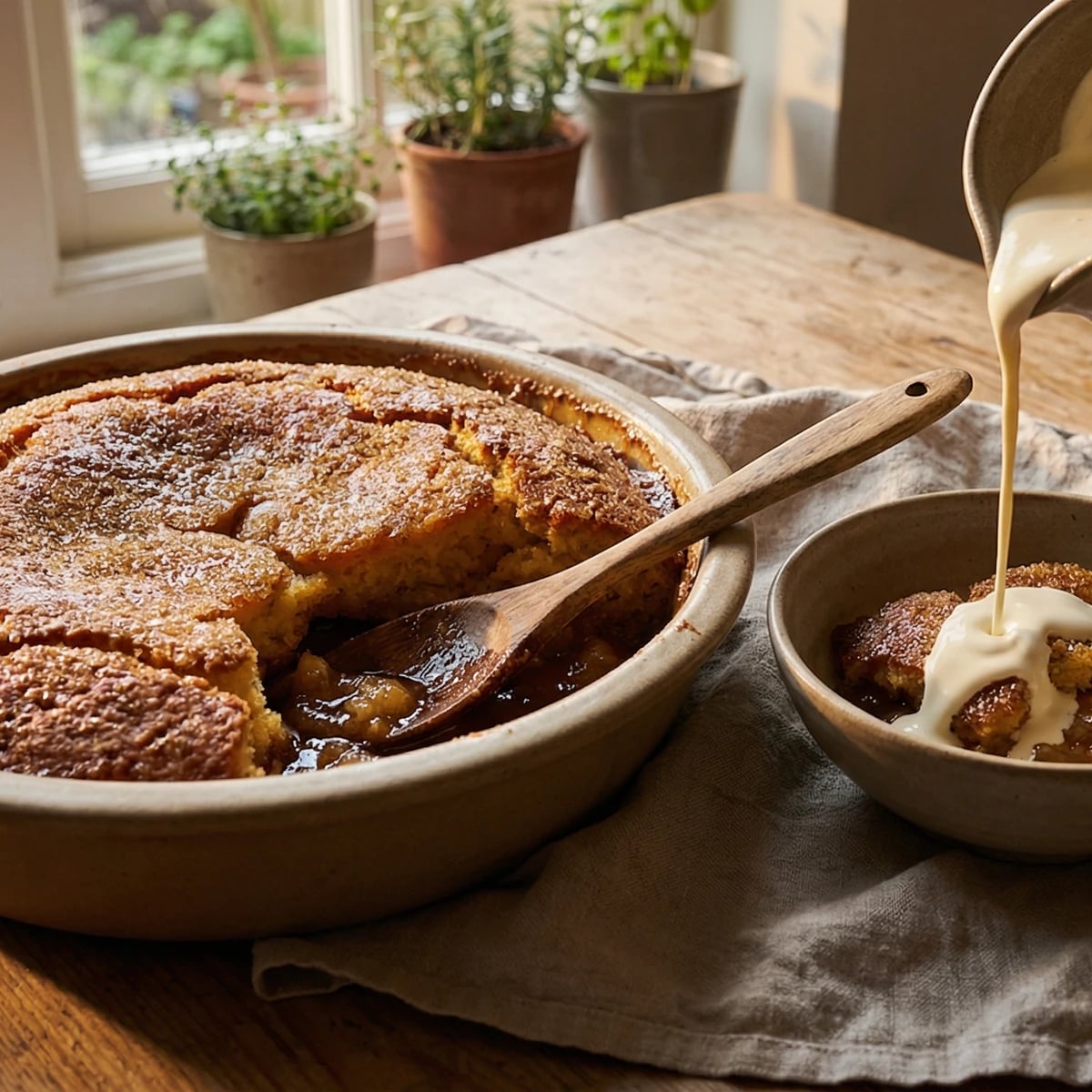
A simple pudding of sharp Bramley apples baked under a buttery sponge lid, turning golden on top while the fruit beneath collapses into something warm and generous.

Desserts
British
Weeknight
Comfort Food
20 min
Active Time
45 min cook1 hr 5 min total
Yield6 servings

There's a particular kind of October evening that asks for this pudding. The sort where it's been raining on and off all day, the light goes early, and the kitchen is the warmest room in the house. You've got a bag of Bramleys sitting on the side because the garden has given you more than you know what to do with, and you want something that doesn't ask too much of you but gives back properly.

Eve's pudding is that something. Sharp cooking apples in the bottom of a dish, a Victoria sponge batter dolloped over the top, the whole thing baked until the sponge is golden and the apples underneath have gone soft and sweet-sour and faintly jammy at the edges. It's the kind of pudding that's been made in British kitchens for generations because it works. Named, I suppose, for the apple in the garden, though I don't think about that when I'm making it. I think about the smell of the butter and vanilla meeting the tart steam coming off the fruit.

A recipe is a conversation, not a contract. If you've got blackberries from a hedgerow walk, tuck a handful in among the apples. If you've got a quince, grate some in. But the classic, the one I wrote down in the notebook years ago and haven't felt the need to change, is just apples and sponge. Bramleys, because nothing else falls apart quite the way they do. Good butter, because the sponge has so few ingredients that each one is exposed.

Serve it hot, with cold cream poured from a jug so it pools and melts into the sponge. There are few better feelings on a dark evening than putting a dish of this in the middle of the table and letting people help themselves. We're only making dinner. But some dinners stay with you longer than others.

The technique, the tradition, and the story behind every dish.

Discover Culinary Explorer

Ingredients

Bramley cooking apples

Quantity

700g

peeled, cored and sliced

golden caster sugar (for the apples)

Quantity

2 tablespoons

water

Quantity

1 tablespoon

lemon zest

Quantity

half a lemon

lemon juice

Quantity

small squeeze

unsalted butter

Quantity

125g

softened

golden caster sugar

Quantity

125g

large eggs

Quantity

2

at room temperature

self-raising flour

Quantity

125g

vanilla extract

Quantity

1 teaspoon

milk (optional)

Quantity

a splash

demerara sugar

Quantity

1 tablespoon

for scattering

double cream or custard

Quantity

to serve

Equipment Needed

  • 1.5 litre ovenproof baking dish
  • Mixing bowl
  • Wooden spoon or electric hand mixer
  • Spatula
  • Apple peeler or small sharp knife

Instructions

  1. 1

    Prepare the apples

    Set the oven to 180C/160C fan. Butter a medium ovenproof dish, something that holds about 1.5 litres. Peel and core the apples and slice them fairly thick, half a centimetre or so. Bramleys collapse quickly, and slices any thinner will disappear into a puree before the sponge is done. Tip them into the dish with the two tablespoons of sugar, the water, the lemon zest and a small squeeze of juice. Toss it all together with your hands and spread it level.

    Bramleys are the apple for this. Eaters like Cox or Braeburn hold their shape too well and stay tart in the wrong way. You want the sort that falls apart into a sharp, pale fluff.
  2. 2

    Make the sponge

    Put the soft butter and caster sugar in a bowl and beat them together until the mixture looks pale and fluffy and has lost all its graininess. Five minutes by hand, three with a mixer. This is the one step worth being patient about. The air you beat in now is the lift the sponge will have later.

  3. 3

    Add eggs and flour

    Crack in the eggs one at a time, beating well after each. Add the vanilla. If the mixture looks like it's starting to curdle, add a spoonful of the flour and carry on. Sift in the rest of the flour and fold it through gently with a large spoon or spatula. Stop the moment it's combined. The batter should drop reluctantly from the spoon. If it feels tight, loosen it with a splash of milk.

  4. 4

    Spoon over the apples

    Dollop the sponge batter over the apples in rough spoonfuls, then spread it gently to the edges of the dish. Don't worry about covering every last gap. The batter will find its way as it bakes, and a few bits of apple peeking through at the edges is part of the pleasure. Scatter the demerara over the top for a bit of crunch.

    Work gently. If you press too hard the batter sinks into the fruit and you lose the layered effect. A light hand, trusting the oven to do the rest.
  5. 5

    Bake until golden

    Slide the dish into the oven and bake for forty to forty-five minutes. The top should be risen and deep gold, the edges pulling slightly away from the dish, and the apple juices bubbling up around the rim in a dark, sticky ring. A skewer into the centre of the sponge should come out clean. Your nose will tell you before the timer does: butter, vanilla, warm apple, and that faint caramel note from the edges catching.

  6. 6

    Rest and serve

    Let it sit for ten minutes before serving. The apples underneath are lava straight from the oven, and the sponge needs a moment to settle. Spoon it out into bowls, making sure everyone gets both the golden lid and the soft fruit beneath. Pour cold double cream over the top, or proper custard if you've made it. Eat it straight away.

Chef Tips

  • Bramleys are not optional. I know they're harder to find than they used to be, but a good greengrocer or a decent supermarket will have them from September through to spring. Eating apples don't collapse in the same way and you'll end up with firm slices under a sponge rather than the soft, jammy layer you're after.
  • Soften the butter properly before you start. Fridge-cold butter won't cream with the sugar no matter how long you beat it, and the sponge will be heavy. Half an hour on the counter in a warm kitchen is usually enough. Press a finger in. It should leave an easy dent.
  • Don't skip the ten minutes of rest after it comes out of the oven. The apples beneath are fiercely hot and the sponge firms up as it cools slightly, which makes it easier to spoon out without everything sliding sideways.
  • Cream or custard, not both, and never ice cream. Cold double cream poured straight from a jug is the traditional pairing and the best one. If you want custard, make it properly with eggs and milk. The shop-bought stuff in a carton will do in a pinch but you'll taste the difference.

Advance Preparation

  • The apples can be prepared a few hours ahead and kept in the dish, covered, in the fridge. A squeeze of lemon juice stops them browning. Make the sponge batter and spoon it over just before baking.
  • Leftovers keep in the fridge for two days and reheat well in a low oven, covered loosely with foil, until warmed through. It's not quite as good as fresh from the oven, but it's still a very fine breakfast.

Frequently Asked Questions

Nutrition Information

1 serving (about 190g)

Calories
420 calories
Total Fat
19 g
Saturated Fat
11 g
Trans Fat
0 g
Unsaturated Fat
7 g
Cholesterol
105 mg
Sodium
115 mg
Total Carbohydrates
60 g
Dietary Fiber
3 g
Sugars
39 g
Protein
5 g

Note: Chef personas and recipes are created with AI assistance. Cook with care: follow safe food-handling practices, check doneness with a thermometer when needed, and adapt for allergies and your kitchen.

Where cooking meets culture.

Culinary guides, cultural storytelling, and the editorial depth that makes cooking meaningful.

Discover Culinary Explorer

More from British Puddings & Crumbles

Browse the full collection