
Chef Thomas
Apple Charlotte
Buttered bread baked to a deep mahogany around a filling of spiced Bramley apples, turned out at the table in a small moment of drama, cold cream poured from a jug alongside.
A cooking platform built around craft, culture, and the stories behind what we eat.
Created by Chef Thomas
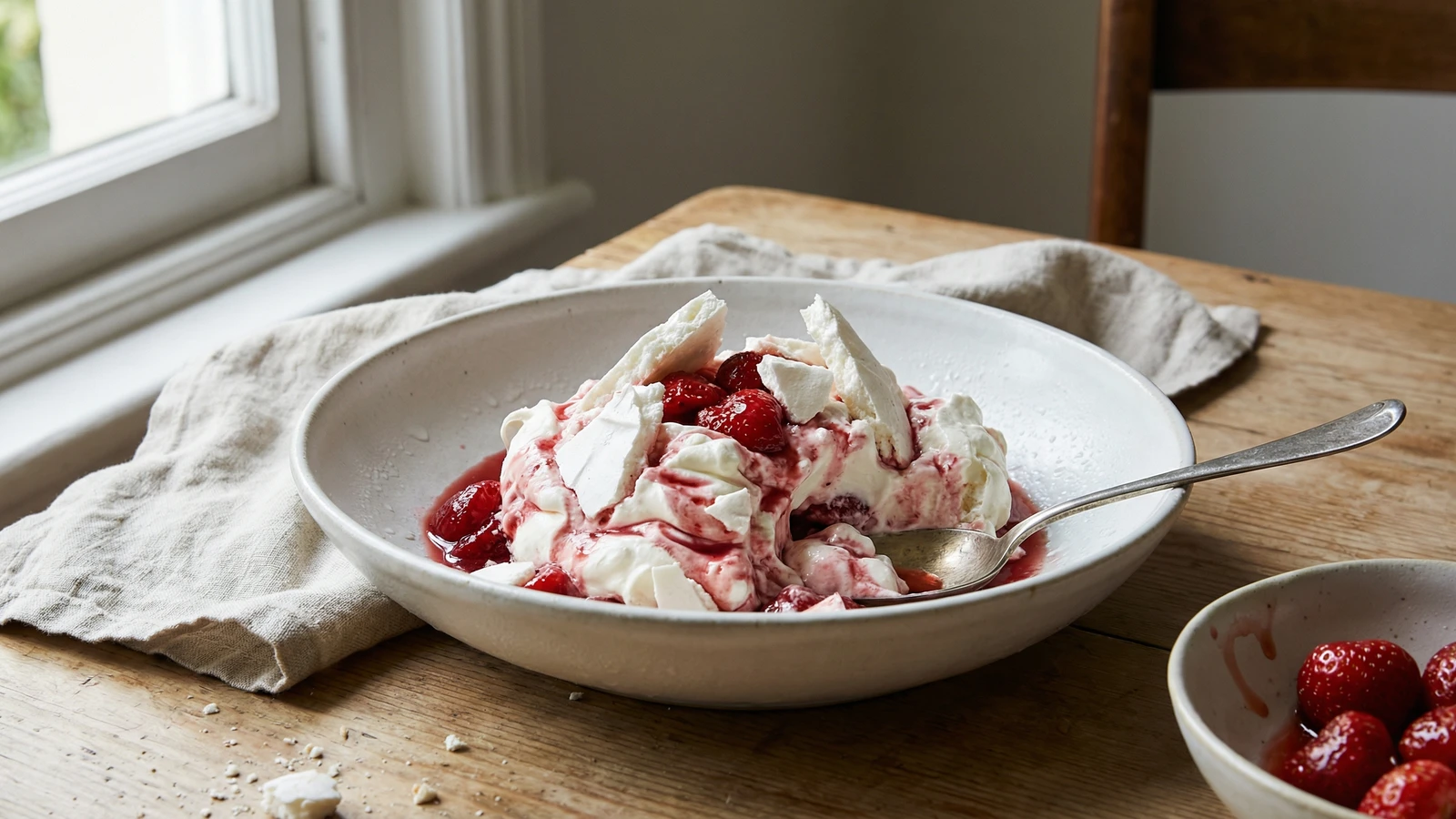
A summer dessert of crushed meringue, softly whipped cream, and strawberries still warm from the garden, thrown together without ceremony and eaten while the cricket is still on.
Ahot afternoon in late June. The strawberries have come in and they actually taste of something, which is not a thing you can say in March no matter what the supermarket tells you. The kitchen door is open. Someone is meant to be coming for supper. This is what you make.
Eton mess is barely a recipe. Three things. Strawberries, cream, meringue. You crush them together in a bowl and pretend you meant to. The beauty of it is the honesty: no piping, no layers, no artful quenelles. You tumble it into a dish and hand someone a spoon. The first mouthful should be cold, sweet, crisp, and soft all at once. That contrast is the whole reason this exists.
The strawberries matter more than anything. Use British ones, in season, ideally ones that have seen some sun. A pale, crunchy, out-of-season strawberry will make a dull mess, and no amount of sugar will rescue it. If it isn't ripe, it isn't ready. The market decides.
I wrote it down in the notebook once, years ago, after a picnic that went on too long into the evening. "Strawberries, cream, meringue. June. Everyone quiet for a minute." That's about as much recipe as this needs.
Quantity
500g
hulled
Quantity
2 tablespoons
Quantity
a squeeze
Quantity
300ml
well chilled
Quantity
1 teaspoon
Quantity
1 tablespoon
Quantity
4 large
shop-bought or homemade
Quantity
small handful
| Ingredient | Quantity |
|---|---|
| ripe British strawberrieshulled | 500g |
| caster sugar | 2 tablespoons |
| lemon juice | a squeeze |
| double creamwell chilled | 300ml |
| vanilla extract | 1 teaspoon |
| icing sugar | 1 tablespoon |
| meringue nestsshop-bought or homemade | 4 large |
| fresh mint leaves (optional) | small handful |
Cut two thirds of the strawberries into halves or quarters, depending on size, and put them in a bowl. Scatter the caster sugar over the top and add a squeeze of lemon. Stir gently and leave them alone for half an hour. They'll soften and release a dark, syrupy juice that smells like the height of June. This juice is the whole soul of the dish. Don't pour it away.
Take the remaining third of the strawberries and crush them roughly with a fork in a separate bowl. You're not making a smooth purée. You want a rough, pulpy mess with bits of strawberry still recognisable in it. This goes in at the end to ripple through the cream.
Pour the cold cream into a cold bowl. Add the vanilla and icing sugar. Whisk, by hand if you can be bothered, until it holds soft peaks. Not stiff. Soft. When you lift the whisk, the cream should flop gently rather than stand to attention. Overwhipped cream turns grainy and sulky, and there is no fixing it. Stop sooner than you think you should.
Crush the meringue nests with your hands over a bowl. Not to dust, to rubble. You want big, honest shards and a bit of fine powder. The variation in size is the whole point. Some bits will dissolve into the cream and disappear; others will stay crisp and hold their shape for a while. Both are welcome.
Tip the crushed strawberries and most of their juices into the cream. Fold, don't stir, three or four times, just enough to leave ruby streaks running through the white. Add the meringue pieces and fold again, even more lightly. Stop the moment it looks marbled. Any more and the meringue turns to paste and you've lost the contrast that makes this dish sing.
Spoon the mess into bowls or glasses, or one big bowl if you're feeling generous. Scatter the macerated strawberries and their syrupy juices over the top, letting everything tumble where it wants to. Tear over a few mint leaves if you've got them. Serve immediately, while the meringue still has some crunch left in it. This is not a dessert that waits.
1 serving (about 220g)
Culinary guides, cultural storytelling, and the editorial depth that makes cooking meaningful.
Discover Culinary ExplorerChef Thomas
Buttered bread baked to a deep mahogany around a filling of spiced Bramley apples, turned out at the table in a small moment of drama, cold cream poured from a jug alongside.

Chef Thomas
Whole Bramley apples cored and stuffed with butter, brown sugar and plump dried fruit, baked until they collapse and the kitchen fills with the smell of autumn getting on with itself.

Chef Thomas
A proper baked rice pudding, slow-cooked in whole milk with butter and nutmeg until the top sets into a freckled golden skin. The kind of pudding that makes January feel like less of a long haul.

Chef Thomas
Wild blackberries and Bramley apples collapsed together under a thick, sandy crumble, the pudding that makes September feel like it's worth staying in for.