Culinary Explorer
A cooking platform built around craft, culture, and the stories behind what we eat.
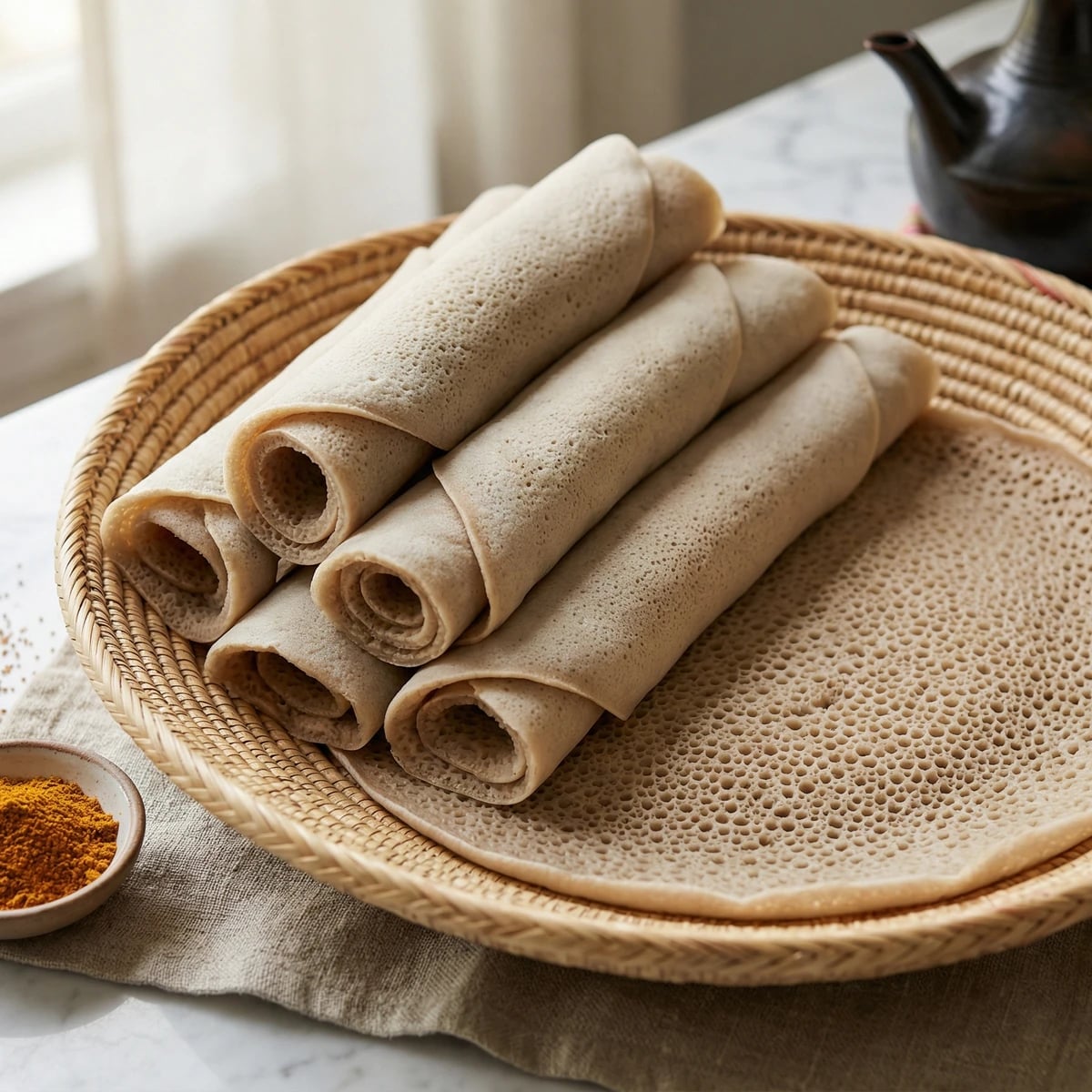
Ethiopian Injera
Created by Chef Dean
The ancient sourdough of the Horn of Africa, transformed into a spongy, tangy flatbread covered with a thousand tiny eyes. This is bread that doubles as plate and utensil, inviting you to tear, scoop, and share.
Injera predates European sourdough by millennia. Ethiopian cooks have fermented teff flour into this extraordinary flatbread for over three thousand years, creating something that functions as bread, plate, and eating utensil all at once. The technique requires patience but no special skill. You mix flour and water, wait for wild yeasts to work their magic, then pour thin rounds onto a hot surface. That's the whole of it.
The spongy texture comes from fermentation. As wild bacteria and yeasts consume the starches in teff flour, they produce carbon dioxide and lactic acid. The gas creates thousands of tiny bubbles. The acid creates tang. This isn't decoration. Those bubbles give injera the structural integrity to wrap around stews without falling apart, while the sourness cuts through the rich, spiced dishes it's meant to cradle.
Teff is the world's smallest grain, native to the Ethiopian highlands. It contains more protein and iron than wheat, and its flavor carries earthy, slightly nutty notes you won't find in any other bread. Finding pure teff flour may require a trip to an international market or an online order. The effort is worth making. Substitutions exist, and I'll share them, but nothing truly replicates the real thing.
I've watched Ethiopian grandmothers make injera that puts restaurant versions to shame. Their secret? Time. Three days of fermentation produces better injera than two. The batter should smell pleasantly sour, like good sourdough, before you cook it. Rush this process and you'll have flat, flavorless crepes. Give it time and you'll have something magnificent.
Ingredients
teff flour
Quantity
500g (3 1/2 cups)
lukewarm water
Quantity
750ml (3 cups), plus more as needed
fine sea salt
Quantity
1/2 teaspoon
| Ingredient | Quantity |
|---|---|
| teff flour | 500g (3 1/2 cups) |
| lukewarm water | 750ml (3 cups), plus more as needed |
| fine sea salt | 1/2 teaspoon |
Where cooking meets culture.
Culinary guides, cultural storytelling, and the editorial depth that makes cooking meaningful.
Discover Culinary Explorer