Culinary Explorer
A cooking platform built around craft, culture, and the stories behind what we eat.
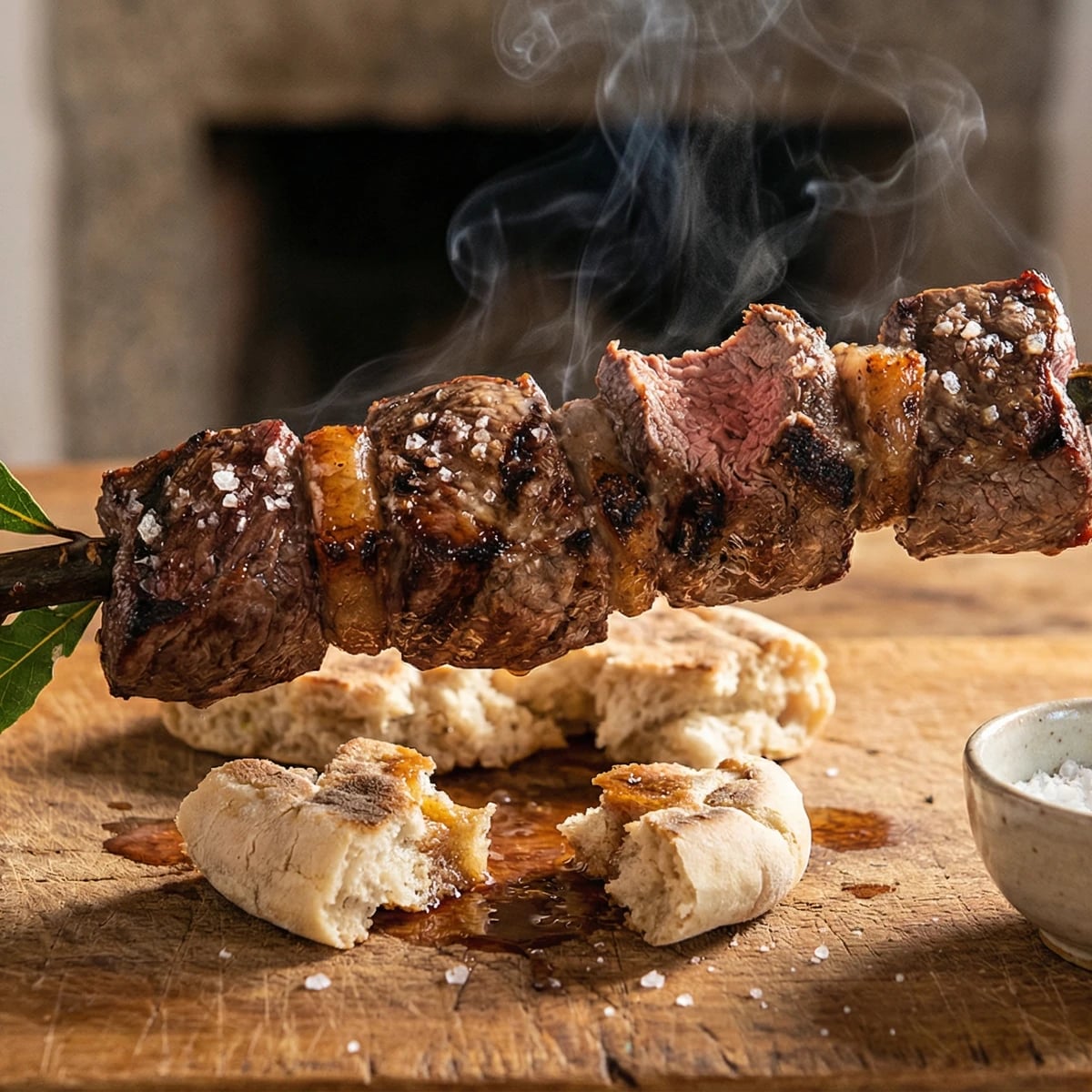
Espetada Madeirense
Created by Chef Margarida
Beef cubes threaded on laurel branches, grilled over coals until charred and smoky, hung vertically at the table while the juices drip onto waiting bread. This is Madeira on a stick.
I didn't grow up with espetada. Avó Leonor was from the mainland, from Alentejo, where we cooked pork over coals but never this way. I discovered espetada on my first trip to Madeira, sitting at a tasca in Câmara de Lobos, watching the skewers hang from iron hooks above the table. The waiter placed bread beneath them and said nothing. I understood immediately.
This is elemental cooking. Beef, salt, garlic, fire. The laurel branch isn't decoration; it's the soul of the dish. The wood releases its oils as it heats, perfuming the meat with something you can't get from metal skewers or a gas grill. When I documented recipes from grandmothers in Madeira's mountain villages, they all said the same thing: without the louro branch, it's just grilled meat.
The presentation matters too. Espetada traditionally hangs vertically on a hook called a cabide, the meat dangling while its juices drip onto bolo do caco below. That bread, warm and garlicky, drinks the beef fat and becomes part of the dish. You can lay the skewers flat on a platter and call it espetada, but you'll be missing half the experience.
At my Mesa da Avó dinners, when I serve espetada, I hang them properly. People gather around, tearing bread, sliding meat off the branches, catching drips with their fingers. It's communal, messy, perfect. This is food that forces you to pay attention to each other.
Ingredients
beef rump or sirloin
Quantity
1.5 kg
cut into 4cm cubes
garlic
Quantity
6 cloves
minced
coarse sea salt
Quantity
2 tablespoons
| Ingredient | Quantity |
|---|---|
| beef rump or sirloincut into 4cm cubes | 1.5 kg |
| garlicminced | 6 cloves |
| coarse sea salt | 2 tablespoons |
Where cooking meets culture.
Culinary guides, cultural storytelling, and the editorial depth that makes cooking meaningful.
Discover Culinary Explorer