
Chef Isabel
Asadillo Manchego
Asadillo Manchego is La Mancha's roasted pepper salad: red peppers, tomato, olive oil, garlic, and cumin, pounded plainly and served with egg, warm or cold.
A cooking platform built around craft, culture, and the stories behind what we eat.
Created by
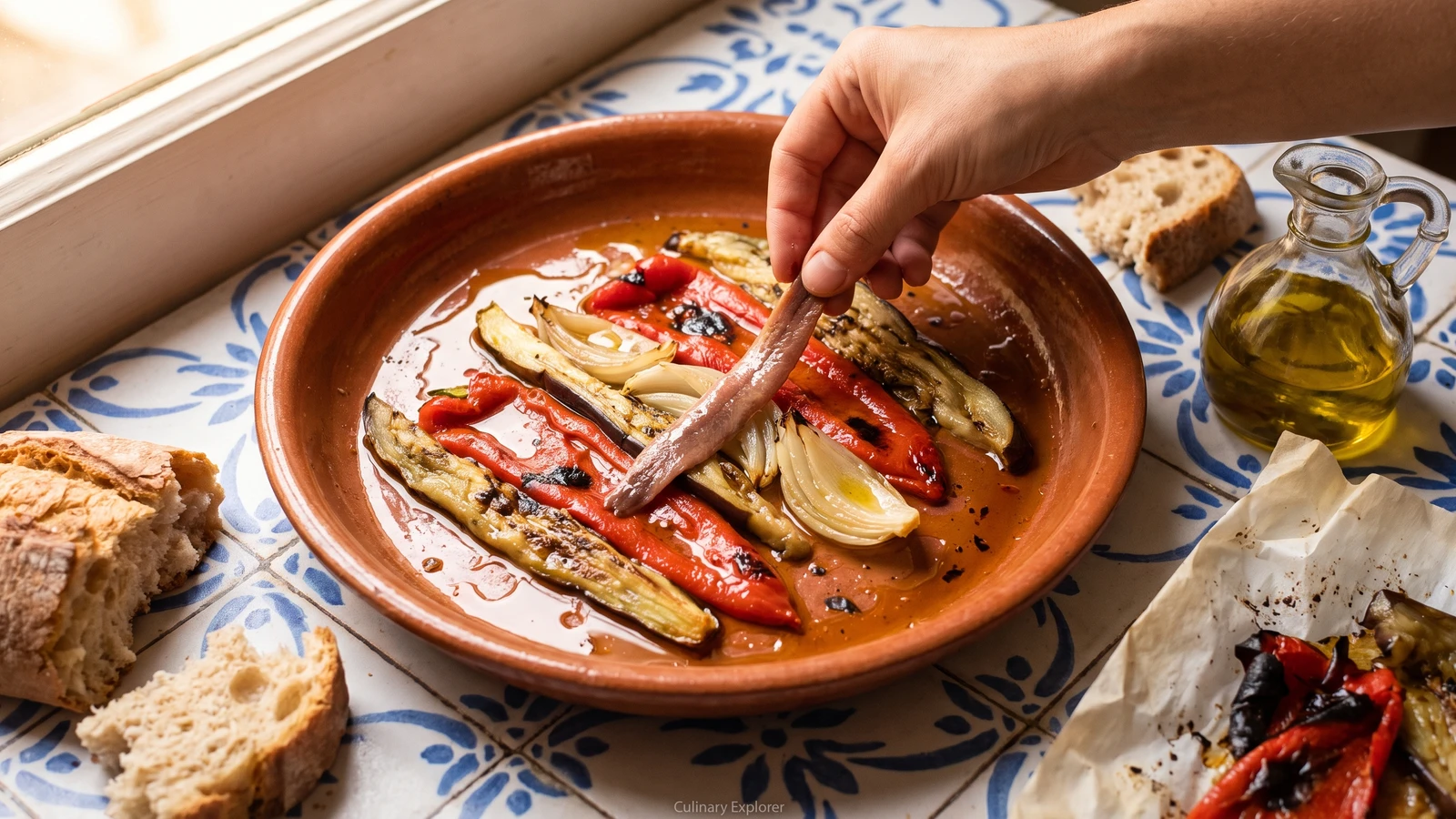
Escalivada is Catalan: peppers, aubergine, onion, and sometimes tomato roasted whole until the skins blacken, then peeled warm and torn into strips. The smoke and soft flesh are the dish.
Escalivada is Catalan, from the old verb escalivar, to cook in embers, and that tells you almost everything. Red peppers, aubergine, onion, and often a tomato or two are roasted whole until the skins blister black and the flesh collapses into itself. Then you peel them warm, tear them into strips, dress them with good olive oil and salt, and leave them alone. That smoke is the dish.
The method that decides it is the char. You don't cube the vegetables first and you don't roast them politely until only soft. Whole vegetables protect their own juices while the outside burns enough to perfume the flesh underneath. Peel too cold and the skins cling. Peel too clean and you wash away the good dark taste. Work warm, with your hands if you can bear it, and keep every roasted juice that runs out.
If you have a grill, use it. If you don't, a very hot oven and the broiler get you there, with less smoke and a little less edge. No hace falta haber pisado Cataluña. Choose heavy peppers, shiny aubergines, and onions with tight skins, and don't drown them in vinegar or garlic. A little is allowed in some homes, but the base is oil and salt. Siempre sale, si lo sigues.
Escalivada belongs to Catalonia and to the old habit of cooking vegetables directly in the heat left by wood embers, especially in farm and village kitchens where the fire had already done the day's harder work. The name comes from escalivar, to cook in ashes or embers, which is why the dish is defined by whole vegetables blackened outside and sweet inside, not by a dressing. It often appears with toasted bread, anchovies, or salted cod, but the core remains the same: roasted peppers, aubergine, and onion dressed simply so the smoke carries the plate.
Quantity
3 (about 600g total)
Quantity
2 (about 700g total)
Quantity
2 (about 350g total)
Quantity
2 (about 300g total)
Quantity
80ml, plus more to finish
Quantity
1 teaspoon, plus more to taste
Quantity
1 tablespoon
Quantity
1 small
very finely grated
Quantity
8
Quantity
for serving
| Ingredient | Quantity |
|---|---|
| large red peppers | 3 (about 600g total) |
| medium aubergines | 2 (about 700g total) |
| medium onions | 2 (about 350g total) |
| ripe tomatoes (optional) | 2 (about 300g total) |
| extra virgin olive oil | 80ml, plus more to finish |
| fine sea salt | 1 teaspoon, plus more to taste |
| vinagre de Jerez or red wine vinegar (optional) | 1 tablespoon |
| garlic clove (optional)very finely grated | 1 small |
| oil-packed anchovy fillets (optional) | 8 |
| rustic bread or coca (optional) | for serving |
Heat a charcoal grill to medium-high, or heat the oven to 230C with the broiler ready for the end. Leave the peppers, aubergines, onions, and tomatoes whole. Whole is not a detail here; the skins take the burn while the flesh steams in its own juices underneath.
Put the vegetables on the grill grate, or on a foil-lined tray in the hot oven. Turn them now and then until the pepper skins are blistered and black in patches, the aubergines have collapsed, the onions feel soft when pressed, and the tomatoes split. Expect 25 to 35 minutes for tomatoes and peppers, 35 to 45 minutes for aubergines and onions. A polite golden roast is not escalivada. You need char.
Move the roasted vegetables to a bowl as each one finishes, cover with a plate or clean cloth, and let them rest for 10 minutes. This loosens the skins and catches the juices. Don't throw those juices away; strain them if there are black flakes, then keep them for the dressing.
Peel the vegetables while they are still warm enough to handle. Pull away the pepper skins and seeds, slit the aubergines and scrape the soft flesh from the skins, slip the onions from their papery outside, and peel the tomatoes if using. Do not rinse them under the tap. Water steals the smoke you worked for.
Tear the peppers and aubergines into long strips with your fingers, and slice the onions into thick petals. Rough edges are right. Lay the vegetables in separate loose bands or gently mixed together on a shallow platter, spooning over any saved roasted juices.
Whisk the olive oil with the salt, and add the vinegar and grated garlic only if you want that sharper house version. Spoon it over the vegetables and let the escalivada sit at least 15 minutes, or longer if you have time. Serve at room temperature, with anchovies and bread if you like. Tal como se hace allí, plain and full of smoke.
1 serving (about 265g)
Culinary guides, cultural storytelling, and the editorial depth that makes cooking meaningful.
Discover Culinary ExplorerChef Isabel
Asadillo Manchego is La Mancha's roasted pepper salad: red peppers, tomato, olive oil, garlic, and cumin, pounded plainly and served with egg, warm or cold.

Chef Isabel
Empedrat is Catalan: white beans and shredded salt cod dressed with tomato, pepper, onion, black olives, and good oil, then left to rest until the salad tastes joined instead of mixed.

Chef Isabel
Ensalada campera is Andalucía's summer potato salad, loose and bright with tomato, pepper, onion, egg, tuna, olive oil, and vinegar. It is not bound in mayonnaise, and that matters.

Chef Isabel
Ensalada Catalana is Catalonia's green salad made a meal: crisp lettuce, ripe tomato, onion, olives, and sliced embutits, dressed plainly with olive oil, vinegar, and salt.