
Chef Juliana
Açaí com Camarão do Pará
You think açaí belongs with banana and granola because that's the version that traveled. In Pará, thick unsweetened açaí sits beside shrimp, rice, and farinha. Anota aí: same fruit, different meal.
A cooking platform built around craft, culture, and the stories behind what we eat.
Created by
You don't need bravery for this pan. You need heat, patience, and the sense to brown one thing at a time so dinner tastes like dinner.
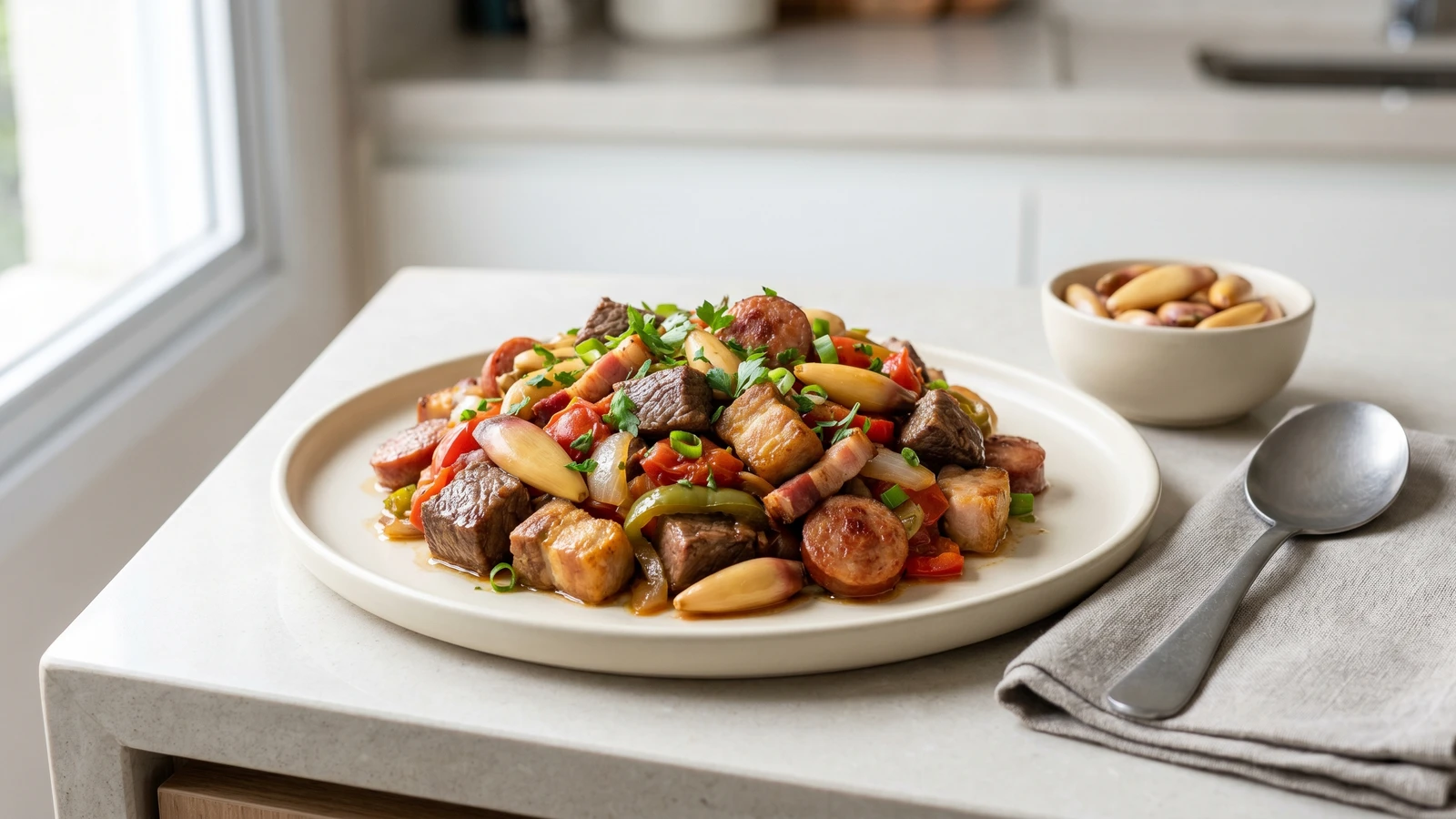
You look at a pan with beef, pork, sausage, bacon, peppers, and pinhão and think, quietly, isso não é pra mim. Too many meats. Too much chopping. Some gaúcho secret guarded by a man near a fire, probably giving opinions nobody asked for. Anota aí: cozinhar não é dom, é um aprendizado. This is a skillet, not a test of character.
The method is simple, and it's the whole point. Pinhão gets cooked until tender first, because raw pinhão is stubborn and no hot pan will fix that. The meats go in one at a time, because each one needs contact with the pan to dourar. Crowd everything together and the meat releases water, the heat drops, and suddenly you're boiling grey cubes while wondering where the flavor went. I have done this. It was educational, in the annoying way.
Entrevero solves dinner in the most southern Brazilian way: hearty, direct, full of real ingredients that taste like themselves. Put it beside arroz soltinho, feijão, and couve or a sharp green salad, and the pê-efe is right there, rice, beans, a meat-heavy pan, something green. A country doesn't stay itself only through feasts. It stays itself through plates people can repeat.
No packet. No powdered smoke pretending to be fire. Onion, garlic, good browning, the sweetness of peppers, and pinhão when it's actually in season, cheap, local, and not tired from crossing half the map. That's comida de verdade, taught plainly, so you can make it tonight.
Pinhão is the seed of the araucária tree, Araucaria angustifolia, harvested in autumn and winter across southern Brazil, especially Paraná, Santa Catarina, and Rio Grande do Sul. Entrevero means a mix or tangle, and in southern ranch and tropeiro cooking it became a hot-pan meal of meats, vegetables, and whatever sturdy ingredient was at hand. The version with pinhão is strongly associated with the South's winter food calendar, and festivals such as Lages's Festa Nacional do Pinhão, first held in 1989, helped make it a regional calling card.
Quantity
3 cups
halved lengthwise
Quantity
1 pound
cut into 1-inch cubes
Quantity
1 pound
cut into 1-inch cubes
Quantity
10 ounces
sliced into 1/2-inch rounds
Quantity
4 ounces
cut into small batons
Quantity
2 tablespoons, as needed
Quantity
1 1/2 teaspoons, divided, plus more to taste
Quantity
1/2 teaspoon
Quantity
1 large
chopped
Quantity
4 cloves
minced
Quantity
1
chopped
Quantity
1
chopped
Quantity
2 medium
seeded and chopped
Quantity
1/4 cup
chopped
Quantity
2 tablespoons
chopped
Quantity
1 tablespoon
Quantity
as needed
for serving
Quantity
as needed
for serving
Quantity
as needed
for serving
| Ingredient | Quantity |
|---|---|
| cooked peeled pinhãohalved lengthwise | 3 cups |
| beef sirloin or rump steakcut into 1-inch cubes | 1 pound |
| pork shoulder or pork loincut into 1-inch cubes | 1 pound |
| fresh pork sausage or linguiçasliced into 1/2-inch rounds | 10 ounces |
| baconcut into small batons | 4 ounces |
| neutral oil | 2 tablespoons, as needed |
| salt | 1 1/2 teaspoons, divided, plus more to taste |
| black pepper | 1/2 teaspoon |
| onionchopped | 1 large |
| garlicminced | 4 cloves |
| red bell pepperchopped | 1 |
| green bell pepperchopped | 1 |
| tomatoesseeded and chopped | 2 medium |
| parsleychopped | 1/4 cup |
| green onionchopped | 2 tablespoons |
| vinegar or lime juice | 1 tablespoon |
| cooked white ricefor serving | as needed |
| feijãofor serving | as needed |
| sautéed couve or green saladfor serving | as needed |
If your pinhão is raw, rinse it, put it in a pressure cooker with water to cover by 2 inches, and cook under pressure for 35 to 40 minutes. Let the pressure come down naturally, then peel while warm and halve lengthwise. The seed should be tender enough to bite cleanly, not chalky in the center. Pinhão is dense, so it needs its own cooking time before it meets the skillet.
Pat the beef and pork dry with paper towels, then season them with 1 teaspoon of the salt and the black pepper. Dry meat browns. Wet meat spits, steams, and makes you think the pan betrayed you. It didn't. Water did.
Set a large heavy skillet or wide pot over medium heat. Add the bacon and cook until the fat melts and the pieces turn browned at the edges, 5 to 7 minutes. Scoop the bacon to a plate and leave the fat in the pan. That fat is the first layer of flavor, so use it instead of buying a packet that pretends to know what pork tastes like.
Raise the heat to medium-high. Add the sausage slices in one layer and brown them on both sides, about 3 minutes per side, then move them to the plate with the bacon. Give each slice space to touch the pan. If they pile up, they sweat instead of dourar, and browned sausage is the difference between a skillet and boiled circles of sadness.
Add 1 tablespoon oil only if the pan looks dry. Add the beef in a single layer and leave it alone until the bottom gets a deep brown crust, 2 to 3 minutes. Turn and brown the other sides, then move the beef to the plate. Work in batches if needed. I know you want to dump it all in. Don't. Crowding is how good meat becomes grey meat in grey liquid.
Add another small spoon of oil if needed, then brown the pork the same way, in one layer, until golden at the edges and still juicy inside, 4 to 6 minutes. Move it to the plate. The pork will finish later with everything else, so don't cook it to death now. First color, then tenderness.
Lower the heat to medium. Add the onion to the same pan with a pinch of salt and cook, scraping the browned bits from the bottom, until it murcha and turns soft and glossy, about 5 minutes. Add the garlic and stir for 1 minute, just until you smell it. Onion needs time to sweeten. Garlic needs attention because burnt garlic is bitter and unforgiving.
Add the red and green peppers and cook until their raw smell fades and the colors brighten, about 4 minutes. Add the tomatoes and cook until they soften and leave a little juice in the pan, 3 to 4 minutes. This little bit of liquid loosens the browned flavor stuck to the pan without turning the whole thing into sauce.
Return the bacon, sausage, beef, pork, and any juices on the plate to the pan. Add the cooked pinhão and the remaining 1/2 teaspoon salt. Toss everything together and cook for 5 to 8 minutes, until the pinhão is glossy, the meats are cooked through, and the vegetables cling to the pieces instead of pooling at the bottom. That's the ponto: mixed, juicy, but not soupy.
Turn off the heat and stir in the parsley, green onion, and vinegar or lime juice. Taste and adjust the salt. The acid wakes up the fat and browned meat so the pan tastes lively, not heavy. Serve with arroz soltinho, feijão, and couve or a green salad, because even a generous skillet still wants the everyday plate around it.
1 serving (about 540g)
Culinary guides, cultural storytelling, and the editorial depth that makes cooking meaningful.
Discover Culinary ExplorerChef Juliana
You think açaí belongs with banana and granola because that's the version that traveled. In Pará, thick unsweetened açaí sits beside shrimp, rice, and farinha. Anota aí: same fruit, different meal.

Chef Juliana
You think savory açaí is not for you. I understand. Then you taste the cold, dark bowl beside hot fried fish, rice, greens, and farinha, and dinner gets very quiet.

Chef Juliana
You think salted beef and rice sound like trouble. Anota aí: soak the charque, brown it properly, build the refogado, and this one pot resolves dinner.

Chef Juliana
You think a Maranhão green rice belongs to somebody else's clever hands. It doesn't. Wilt the vinagreira, build the refogado, fold it through arroz soltinho, and dinner gets bright, coastal, and yours.