Culinary Explorer
A cooking platform built around craft, culture, and the stories behind what we eat.
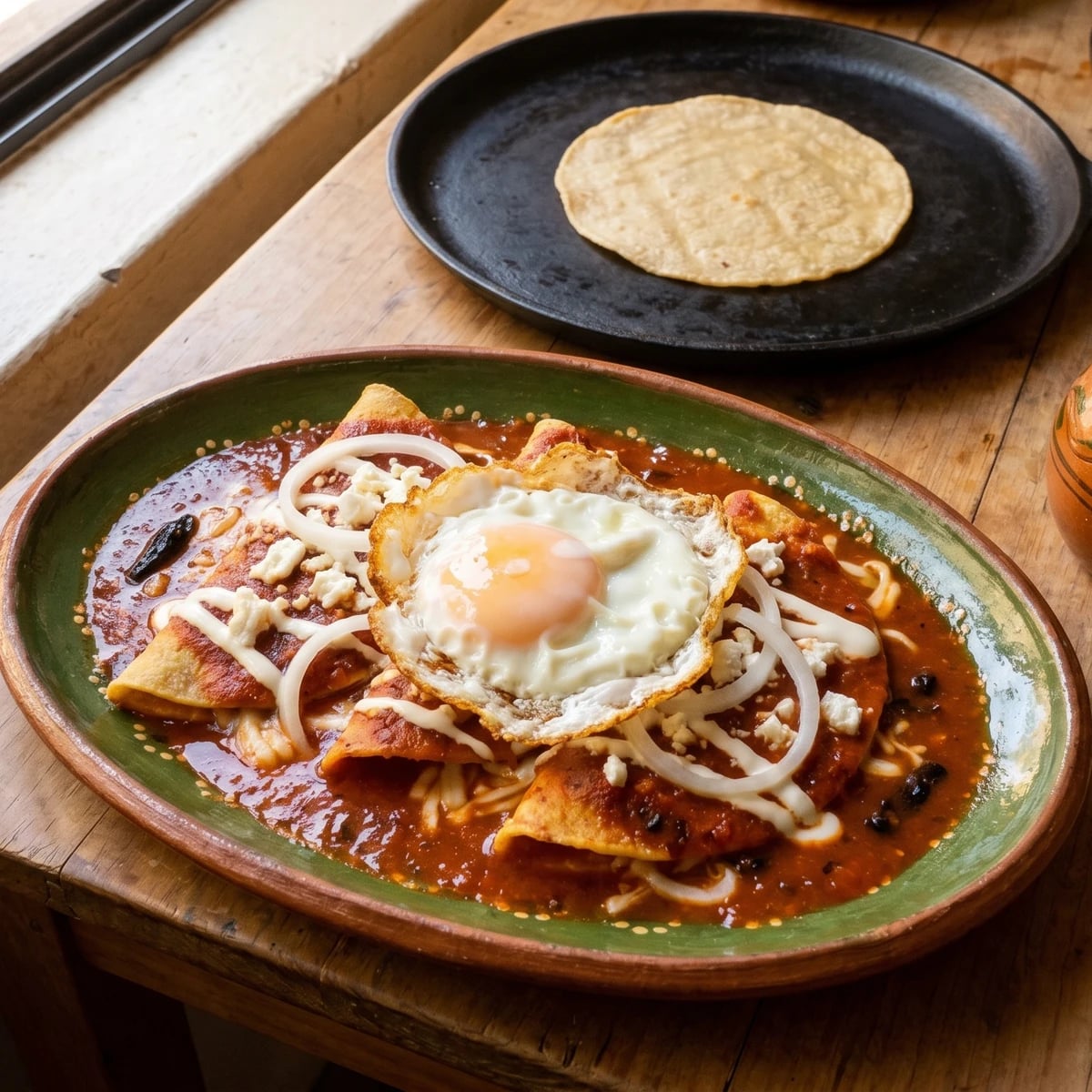
Entomatadas Oaxaqueñas con Quesillo
Created by Chef Lupita
Oaxaca's weekday breakfast, corn tortillas dipped in a roasted tomato and smoked pasilla oaxaqueño salsa, filled with strings of quesillo, crowned with a fried egg, and finished with crema and queso fresco the way every fonda in the Valles Centrales serves them.
This is Oaxaca's breakfast. Not the weekend mole, not the fiesta tamale. This is what a cook in the Valles Centrales makes on a Tuesday morning when the family needs to eat before work and school. Entomatadas: corn tortillas passed through a roasted tomato salsa, filled with quesillo, folded on a plate, and crowned with a fried egg. Thirty minutes from comal to table.
The salsa is where this stops being generic and starts being Oaxacan. One or two chile pasilla oaxaqueño, smoked over wood in the Mixe highlands, go onto the comal alongside the tomatoes. That smoky, fruity heat is the fingerprint of Oaxacan cooking. A toasted hoja de aguacate goes into the blender with everything else and gives the salsa an anise undertone that you will not find in entomatadas from any other state. These two ingredients, the smoked chile and the avocado leaf, are the line between entomatadas and Oaxacan entomatadas. Cada estado, su propia cocina.
The other thing that marks this dish is asiento. Not manteca de cerdo, not vegetable oil. Asiento is the dark, dense sediment that settles at the bottom of the pot when lard is rendered. It tastes like concentrated pork, smoky and rich, and Oaxacan cooks spread it on tlayudas, smear it on memelas, and use it the way French cooks use butter: on everything. You warm the tortillas in it before they go into the salsa. You fry the egg in it. The asiento gives a depth that clean lard does not, and clean lard gives a depth that vegetable oil never will. If you cannot find asiento, use manteca. It is a compromise, not an upgrade, but the dish will still work.
I collected this version from a señora who sold entomatadas from a clay comal outside the Mercado 20 de Noviembre in Oaxaca city. She pulled the quesillo into long strings, laid them across each tortilla, and folded them with a confidence that came from doing it ten thousand times. When I asked for her recipe, she told me the measurements in handfuls, not tablespoons. My mother would have understood perfectly. Saber cocinar es saber vivir.
Ingredients
Roma tomatoes (jitomates guaje)
Quantity
6
dried chile pasilla oaxaqueño
Quantity
2
stemmed
garlic cloves
Quantity
2
unpeeled
| Ingredient | Quantity |
|---|---|
| Roma tomatoes (jitomates guaje) | 6 |
| dried chile pasilla oaxaqueñostemmed | 2 |
| garlic clovesunpeeled | 2 |
Where cooking meets culture.
Culinary guides, cultural storytelling, and the editorial depth that makes cooking meaningful.
Discover Culinary Explorer