
Chef Lupita
Cebollas Moradas en Escabeche Yucatecas
Yucatán's pink pickled red onions, blanched and steeped in naranja agria with allspice, charred habanero, and oregano yucateco. The Peninsula's table garnish, in every fonda from Mérida to Tizimín.
A cooking platform built around craft, culture, and the stories behind what we eat.
Created by
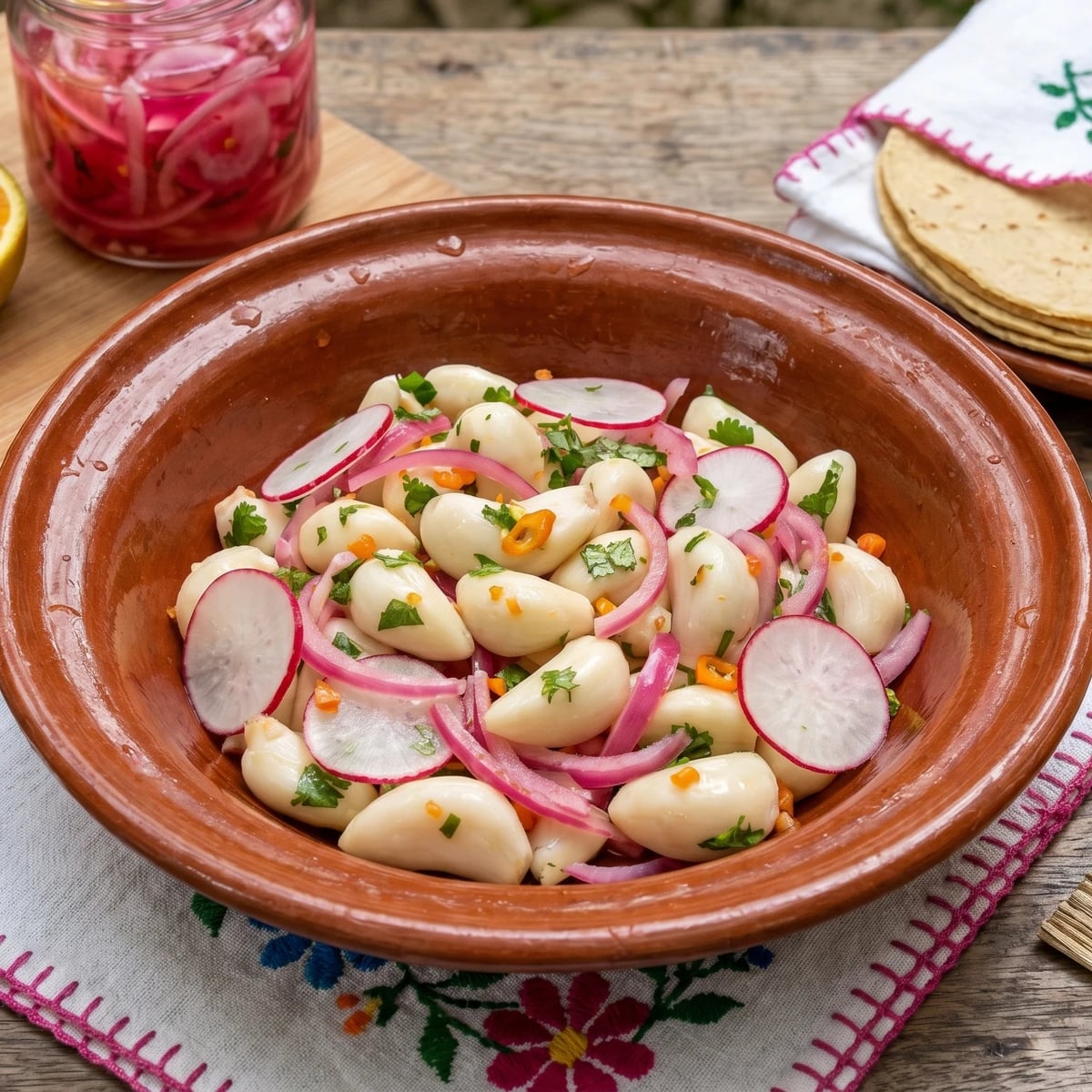
Yucatan's Maya milpa salad: tender ibes cured with naranja agria and pink onion, sharpened by habanero and radish, the way a senora in Merida or Tizimin would put it on the courtyard table.
This is from Yucatan. Not from Mexico in general, from the peninsula. The Maya cooked ibes in the milpa system, alongside corn and squash, long before Spanish ships came up the coast and changed what the rest of the country ate. The ibe is the original white lima bean of the peninsula, thin-skinned, mineral, more delicate than the alubias and peruanos of the central highlands. If you can find ibes at a Yucatecan store or order them dried, do it. If not, the small dried lima bean is the closest substitute, and I will tell you it is a compromise, not an upgrade.
This salad is not a salad in the lettuce sense. Yucatecan salads are built on jicama, citrus, cabbage, radish, beet, and beans. They are dressed with naranja agria, not vinegar. Naranja agria is the sour orange that grows in the peninsula's house patios, the same fruit that gives cochinita pibil its tang. It does the work of vinegar here and it cannot be replaced with lime alone. If you have to substitute, mix two parts fresh lime juice with one part fresh sweet orange juice and a pinch of grapefruit zest. That is the closest you will get north of Tizimin.
The habanero is the chile of the peninsula. Not jalapeno, not serrano, habanero. It carries a floral heat that belongs to Yucatan the way ancho belongs to Puebla. The pink cebolla morada en escabeche is the visual signature of the Yucatecan table, and the color comes from the citrus reacting with the onion. Nobody dyes it. Cada estado, su propia cocina.
The ibe (Phaseolus lunatus, the lima bean) is one of the few staple legumes domesticated independently in Mesoamerica rather than introduced by the Columbian Exchange, with archaeological evidence of cultivation in the Yucatan peninsula dating back roughly four thousand years. Within the Maya milpa system, ibes were planted alongside corn and squash as the third element of the indigenous version of the Three Sisters, fixing nitrogen for the corn while climbing its stalks. Naranja agria (Citrus aurantium), by contrast, is a post-conquest introduction the Spanish brought from the Mediterranean in the 16th century, but Yucatecan cooks absorbed it so completely into the regional palate that it now functions as the peninsula's defining acid, replacing the lime-and-vinegar logic of central Mexican cooking.
Quantity
1 pound
soaked overnight in cold water
Quantity
1 medium
halved
Quantity
4
peeled and lightly smashed
Quantity
2 sprigs
Quantity
1 tablespoon, plus more to taste
Quantity
1 small
sliced into paper-thin half-moons
Quantity
1/2 cup (about 3 sour oranges)
Quantity
1 bunch
thinly sliced
Quantity
1/2 cup
roughly chopped
Quantity
1
stemmed and finely minced (seeds in or out, your call)
Quantity
3 tablespoons
Quantity
1 teaspoon
lightly toasted on a comal
Quantity
1
seeded and diced small
Quantity
to finish
Quantity
for serving
| Ingredient | Quantity |
|---|---|
| dried ibes (Maya white lima beans)soaked overnight in cold water | 1 pound |
| white onionhalved | 1 medium |
| garlic clovespeeled and lightly smashed | 4 |
| fresh epazote | 2 sprigs |
| kosher salt | 1 tablespoon, plus more to taste |
| red onionsliced into paper-thin half-moons | 1 small |
| fresh naranja agria juice | 1/2 cup (about 3 sour oranges) |
| radishesthinly sliced | 1 bunch |
| fresh cilantro leaves and tender stemsroughly chopped | 1/2 cup |
| fresh chile habanerostemmed and finely minced (seeds in or out, your call) | 1 |
| extra-virgin olive oil | 3 tablespoons |
| dried Yucatecan oreganolightly toasted on a comal | 1 teaspoon |
| ripe but firm tomatoseeded and diced small | 1 |
| flaky sea salt | to finish |
| tostadas or warm corn tortillas (optional) | for serving |
The night before, place the dried ibes in a large bowl and cover with cold water by three inches. Leave them on the counter for eight to twelve hours. Skip the soak and the skins will burst before the centers turn tender. The ibe is a delicate bean, thinner-skinned than alubia or peruano, and it does not forgive shortcuts. No me vengas con atajos.
Drain the ibes and transfer them to a heavy pot. Cover with fresh cold water by two inches. Add the halved white onion, the smashed garlic, and the epazote sprigs. Bring to a gentle simmer over medium heat. Skim the foam in the first ten minutes. Lower the heat until the water moves with lazy bubbles, partially cover, and cook for 50 to 70 minutes. The bean is done when it crushes between your fingers without resistance but still holds its oval shape on the spoon. Add salt only in the last fifteen minutes. Salt early and the skins toughen.
While the beans cook, place the paper-thin red onion slices in a small glass jar or bowl. Pour the naranja agria juice over them with a pinch of salt. Press them down so they sit in the citrus. Leave them for at least twenty minutes. The onion turns from purple to bright pink and the bite mellows. This is the cebolla morada en escabeche that anchors every Yucatecan table from Merida to Tizimin. The pink color comes from the citrus reacting with the anthocyanins in the onion. It is not optional.
Once the ibes are tender, lift them out of their cooking liquid with a slotted spoon and spread them on a sheet pan to cool to room temperature. Reserve the cooking liquid. A salad needs the beans dry, not swimming. Discard the spent onion, garlic, and epazote sprigs. If the beans look thirsty as they cool, sprinkle a tablespoon or two of the cooking liquid back over them to keep them plump.
Heat a dry comal over medium-low. Place the dried Yucatecan oregano in your palm, rub it between your hands to break it up, and scatter it on the comal. Toast for fifteen to twenty seconds, no more, swirling the comal until the oregano releases its perfume. Yucatecan oregano is its own herb, lemony and resinous, not the Mediterranean kind. If you cannot find it, Mexican oregano is the right substitute. Italian oregano is wrong for this dish.
In a wide bowl, combine the cooled ibes, the sliced radishes, the chopped cilantro, the diced tomato, and the minced habanero. Lift the pink onion out of its citrus brine with a fork and add it to the bowl, but do not pour the brine in yet. Drizzle the olive oil over everything and crumble the toasted oregano on top. Toss gently with your hands. Beans break when you stir them with a spoon.
Now add three to four tablespoons of the reserved citrus brine from the onions. Taste. The salad should be bright and sour-forward, with the citrus carrying the dish the way vinegar would carry a salad in another country. Add flaky salt to finish. Let the salad sit for ten minutes at room temperature before serving, so the beans drink the naranja agria. Serve with tostadas or warm corn tortillas. This is how it lands on a Merida courtyard table at two in the afternoon. Asi se hace y punto.
1 serving (about 275g)
Culinary guides, cultural storytelling, and the editorial depth that makes cooking meaningful.
Discover Culinary Explorer
Chef Lupita
Yucatán's pink pickled red onions, blanched and steeped in naranja agria with allspice, charred habanero, and oregano yucateco. The Peninsula's table garnish, in every fonda from Mérida to Tizimín.

Chef Lupita
Yucatán's birthday-table coditos, elbow macaroni folded with diced jamón, pineapple in syrup, mayonesa, and media crema. Sweet, rich, and unapologetic, the pasta salad that anchors every fiesta from Mérida to Tizimín.

Chef Lupita
Yucatán's cold shredded beef salad, brisket simmered with epazote then pulled by hand and tossed with rabanito, cilantro, red onion, habanero, and naranja agria. Eaten over hand-pressed tostadas.

Chef Lupita
Mérida's regional Caesar, dressed with naranja agria where the lemon would go, queso de bola where the parmesan would go, and codzitos fried in lard where the croutons would go.