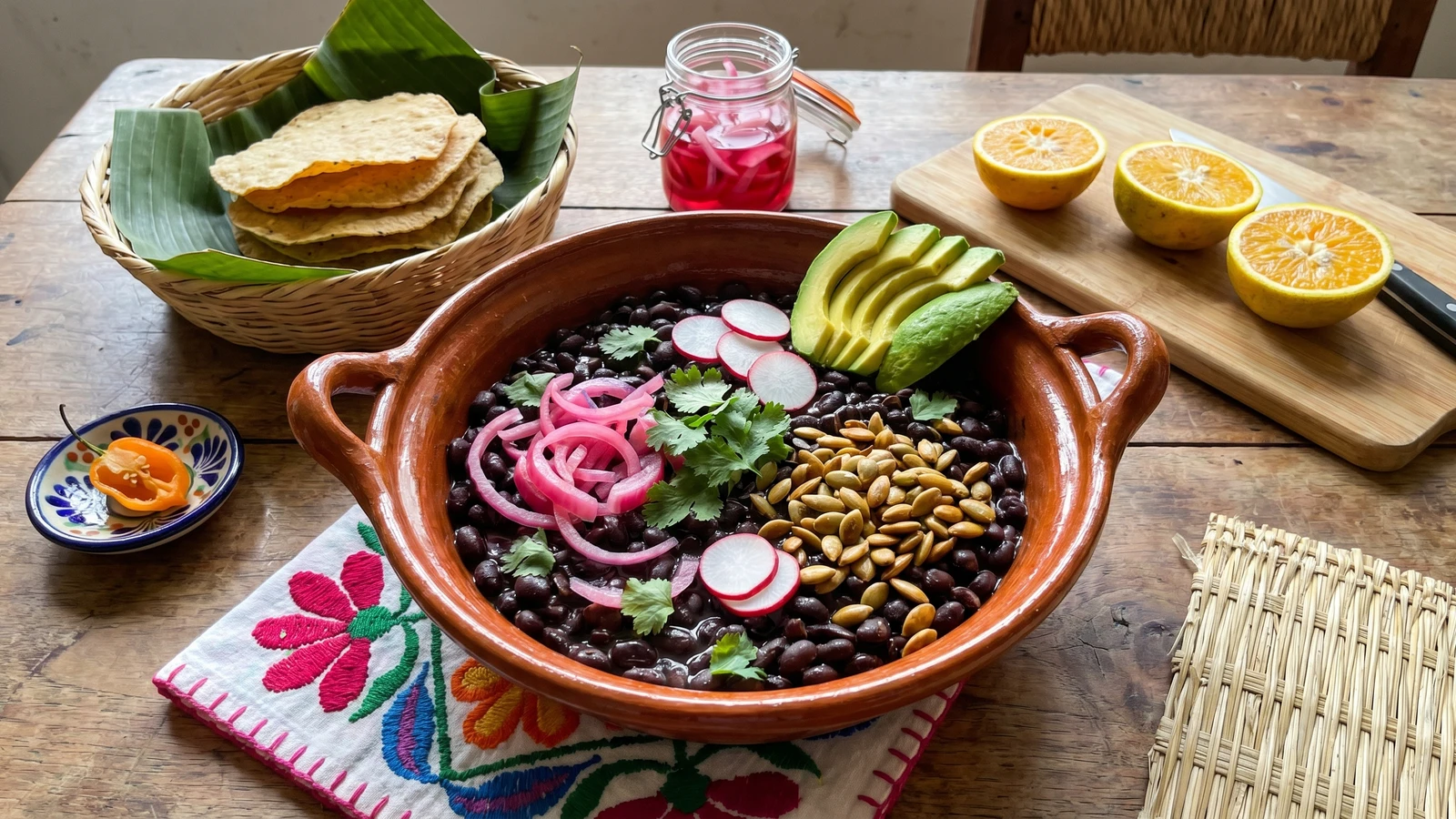
Yucatán's cool cantina botana of black beans, sliced rabanito, cebolla morada softened in naranja agria, fresh cilantro, and a fistful of toasted pepita scattered across the top.
Salads
Mexican
Budget Friendly
Weeknight
Meal Prep
25 min
Active Time
1 hr 30 min cook•1 hr 55 min total
Yield6 servings
This is from Yucatán. Not from Mexico in general, from Yucatán specifically. The peninsula has its own pantry, its own herbs, its own citrus, and its own way of treating beans. If you understand that, you understand why this salad tastes the way it does.
The acid is naranja agria, the sour orange that grows in courtyards across Mérida and Valladolid. It is not lime. It is sharper, more aromatic, with a bitterness that lime cannot fake. If you cannot find naranja agria where you live, mix lime juice with fresh sweet orange juice. That is the standard substitution every Yucatecan cook in the diaspora uses, and they will tell you the same. A substitution is a compromise, not an upgrade.
The pepita is not a topping. It is the dish. Yucatán has been grinding and toasting pumpkin seeds since long before the Spanish arrived. Sikil pak, papadzules, the green mole that anchors so many dishes, all of it starts with pepita. Here the seeds stay whole and toasted on a comal until they puff and turn golden at the edges. That crunch against the soft bean is the whole point of the salad.
My mother did not cook Yucatecan food. She was from Jalisco and she would have been the first to tell you that. But I have a page in her notebook with a recipe she copied from a woman she met at a posada in 1992, a Meridana who taught her this salad and insisted on the habanero finely minced, not sliced. I have made it dozens of ways since. The Meridana was right. Saber cocinar es saber vivir.
The Yucatán peninsula's culinary identity is built on the foundation of Maya cuisine and was reshaped by three centuries of relative isolation from central Mexico, which produced a pantry distinct from the rest of the country: naranja agria, achiote, chile habanero, chaya, and oregano yucateco are signatures that do not appear in significant amounts in cuisines west of Campeche. Pepita has been central to Maya cooking since at least 2000 BCE, with pumpkin seed grinding traditions documented in pre-Columbian sikil pak and the seven-mole tradition of the peninsula that predates the Columbian exchange. The cantina botana tradition of serving small cold plates with afternoon beer became codified in Mérida in the late 19th century and absorbed bean salads like this one into a rotation that also includes salpicón, jícama with chile piquín, and codzitos.
The technique, the tradition, and the story behind every dish.
or 1/4 cup lime juice mixed with 1/4 cup fresh sweet orange juice
extra-virgin olive oil
Quantity
3 tablespoons
cebolla morada (red onion)
Quantity
1 small
sliced into very thin half-moons
rabanitos (red radishes)
Quantity
8 to 10
sliced into thin coins
fresh cilantro
Quantity
1/2 cup, chopped
leaves and tender stems
fresh chile habanero
Quantity
1
stemmed and very finely minced (use half if you want less heat)
dried Mexican oregano
Quantity
1/2 teaspoon
preferably oregano yucateco
ripe avocado (optional)
Quantity
1
sliced
lima agria wedges (optional)
Quantity
for serving
tostadas or totopos (optional)
Quantity
for serving
Ingredient
Quantity
dried black beanspicked over and rinsed
1 pound
white onionhalved
1 small
garlic clovespeeled
4
fresh epazote
2 sprigs
manteca de cerdo
1 tablespoon
kosher salt
1 1/2 teaspoons, plus more to taste
raw hulled pepita (pumpkin seeds)
3/4 cup
fresh naranja agria juiceor 1/4 cup lime juice mixed with 1/4 cup fresh sweet orange juice
1/2 cup
extra-virgin olive oil
3 tablespoons
cebolla morada (red onion)sliced into very thin half-moons
1 small
rabanitos (red radishes)sliced into thin coins
8 to 10
fresh cilantroleaves and tender stems
1/2 cup, chopped
fresh chile habanerostemmed and very finely minced (use half if you want less heat)
1
dried Mexican oreganopreferably oregano yucateco
1/2 teaspoon
ripe avocado (optional)sliced
1
lima agria wedges (optional)
for serving
tostadas or totopos (optional)
for serving
Equipment Needed
•Heavy 4-quart pot for the beans
•Cast iron comal or heavy dry skillet for toasting the pepita
•Sharp knife for thin-slicing the rabanito and cebolla morada
•Large mixing bowl
•Wooden spoon
Instructions
1
Cook the black beans
Place the beans in a heavy pot with the halved white onion, garlic cloves, and one sprig of epazote. Cover with cold water by three inches. Bring to a gentle simmer over medium heat, then lower to a lazy bubble. Cook uncovered for 1 hour, then add the manteca and the salt. Continue cooking until the beans are completely tender but still hold their shape, another 20 to 30 minutes. Yucatecan cooks salt the beans late so the skins do not toughen. Taste one. The skin should give without resistance and the interior should be creamy.
Do not skip the epazote. It is not a garnish. It is what makes the beans taste like Yucatecan beans and not generic black beans from a can.
2
Cool the beans dry
Drain the beans in a colander, saving a cup of the cooking liquid for another use. Spread them on a sheet pan in a single layer. Pull out the onion halves, garlic, and spent epazote. Let the beans cool to room temperature, about 20 minutes. This salad is built on cool beans, not hot ones. Hot beans wilt the radish and break down the cebolla morada into mush. Be patient.
3
Toast the pepita
Heat a dry comal or heavy skillet over medium. Add the pepita in a single layer. Toast, shaking the pan often, until the seeds puff and start to pop like quiet popcorn, about 4 to 5 minutes. They will turn from pale green to a deeper green with golden edges. The kitchen will smell nutty and slightly sweet. Slide them onto a plate immediately so they stop cooking. Burned pepita is bitter and there is no recovering from it.
Toast the pepita the day you serve the salad. They lose their crunch within hours of toasting if you store them in a covered container.
4
Soften the cebolla morada
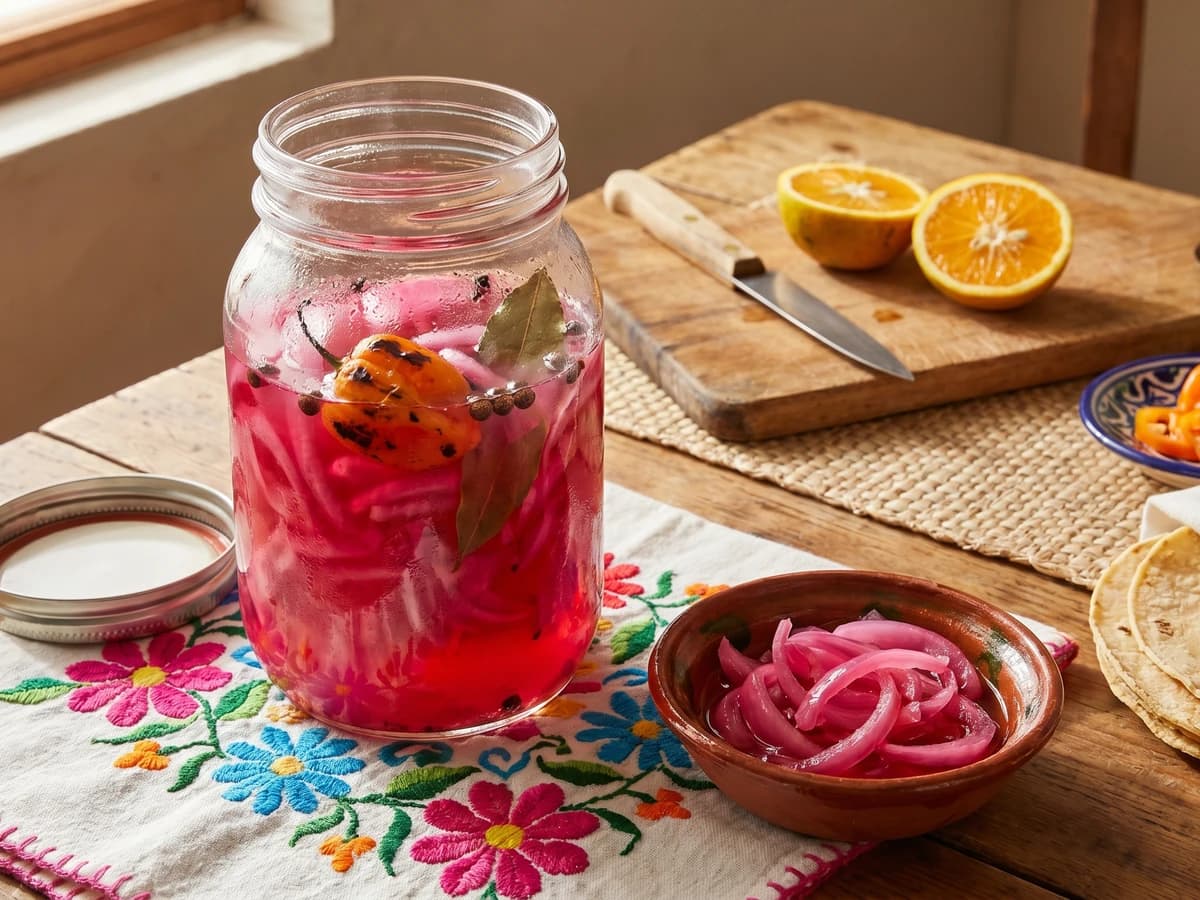
Place the sliced cebolla morada in a small bowl. Pour the naranja agria juice over it and add a generous pinch of salt. Let it sit for 10 minutes. The acid takes the raw bite off the onion and turns it a brighter pink. This is the same trick Yucatecan cooks use for the pickled red onions that go on cochinita. Same principle, faster version.
5
Build the salad
In a large bowl, combine the cooled beans, the cebolla morada with its juice, the sliced rabanito, chopped cilantro, minced habanero, and crumbled oregano yucateco. Drizzle the olive oil over the top. Toss gently with a wooden spoon so the beans do not break. Taste for salt. Yucatecan beans want more salt than you think. The naranja agria and the pepita pull the salt in different directions and the dish needs to be assertive to hold its own.
6
Finish with the pepita
Just before serving, scatter the toasted pepita across the top. Do not stir them in. The seeds need to stay on top so they hold their crunch against the wet beans. Lay the avocado slices around the edge of the bowl. Set lima agria wedges and tostadas on the side. Serve at room temperature, the way it is served in the cantinas of Mérida and Tizimín, as a botana to go with a cold beer in the afternoon heat. Así se hace y punto.
Chef Tips
•Naranja agria does the work of vinegar in Yucatecan cooking. If you must substitute, use half lime juice and half fresh sweet orange juice. Bottled sour orange from the Latin market is acceptable in a pinch but the fresh version is sharper and more aromatic. No me vengas con atajos that involve plain vinegar.
•Use raw hulled pepita, the pale green ones from a Mexican market or a bulk bin you trust. The pre-roasted, salted pepitas from the snack aisle are not what you want. They will not puff on the comal and they bring an off-salt that fights the naranja agria.
•Habanero is not optional and it is not negotiable. This is Yucatán. The chile is part of the regional identity. Mince it finely so the heat distributes evenly across the salad and no one gets a single piece that ruins their afternoon. If you have a very heat-shy guest, use half a chile and leave the other half on a side plate for those who want more.
•If you have ibes, the Maya lima bean, in addition to or instead of black beans, the dish becomes something even more peninsular. Ibes are pale, creamy, and traditional to the region. Hard to find outside the peninsula but worth asking for at a Yucatecan tienda if you have one nearby.
Advance Preparation
•The beans can be cooked one day ahead and refrigerated in their cooking liquid. Drain and bring to room temperature before building the salad.
•The cebolla morada can be sliced and macerated in naranja agria up to 4 hours ahead, refrigerated.
•Toast the pepita the same day you serve the salad. They lose their crunch overnight even in a sealed jar.
•Assemble the salad no more than 1 hour before serving. The rabanito will soften and lose its pink edge if it sits too long in the acid.
Frequently Asked Questions
Nutrition Information
1 serving (about 350g)
Calories
500 calories
Total Fat
22 g
Saturated Fat
4 g
Trans Fat
0 g
Unsaturated Fat
17 g
Cholesterol
2 mg
Sodium
390 mg
Total Carbohydrates
56 g
Dietary Fiber
15 g
Sugars
7 g
Protein
17 g
Where cooking meets culture.
Culinary guides, cultural storytelling, and the editorial depth that makes cooking meaningful.