
Chef Lupita
Aporreadillo Michoacano con Huevo
Michoacán's Tierra Caliente almuerzo, where salted beef is softened, pounded, fried in lard, folded with egg and chile perón salsa, then served beside morisqueta like a proper working table.
A cooking platform built around craft, culture, and the stories behind what we eat.
Created by
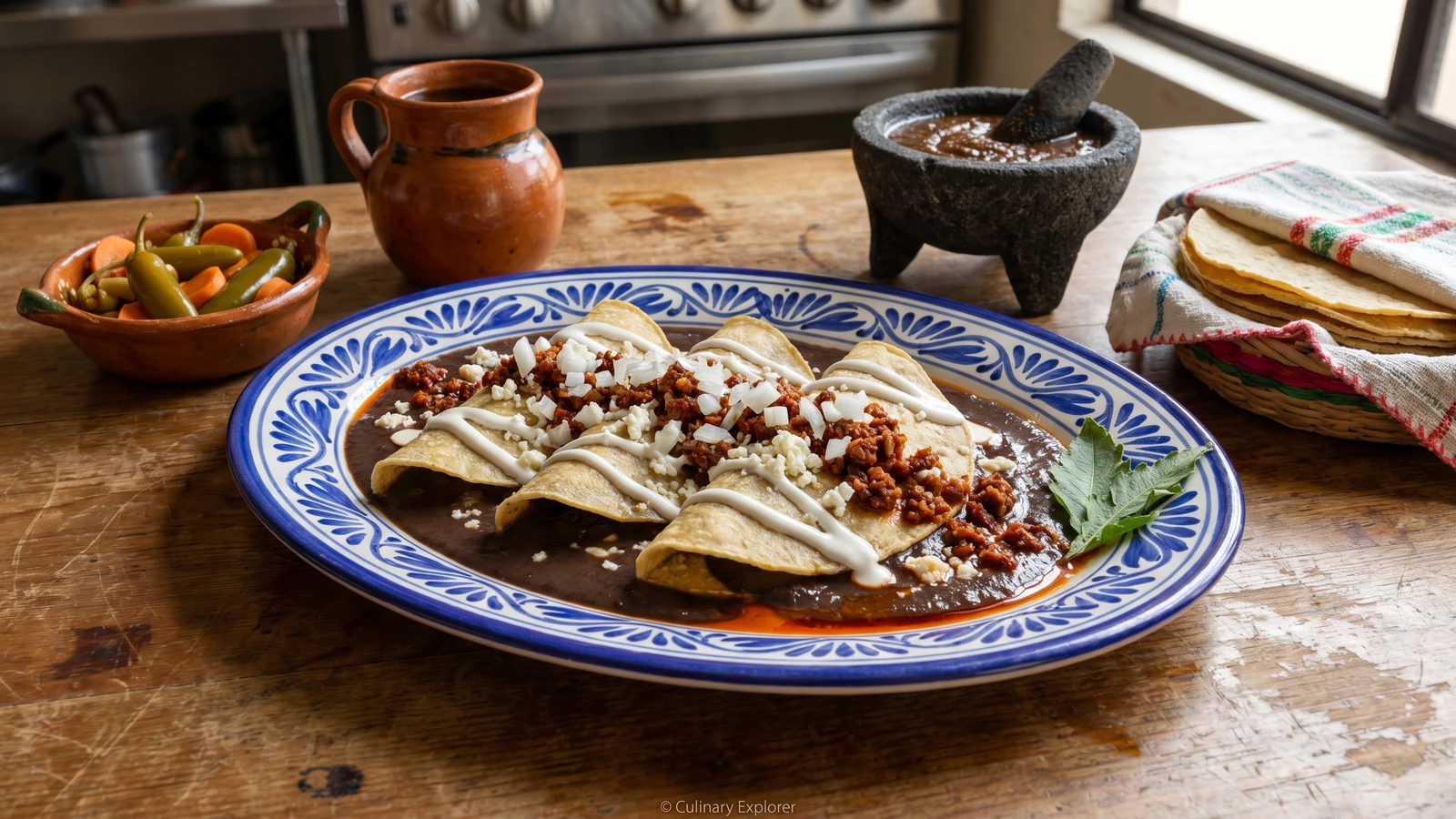
Ciudad de Mexico's bean-bath breakfast, corn tortillas dipped through a puree of black beans and epazote, folded under crema, queso fresco, and chorizo rendered in its own red fat.
Enfrijoladas are a Ciudad de Mexico breakfast. Not a fancy one. A weekday one, the kind a cook makes when the pot of beans from Sunday is still in the refrigerator and the family needs to eat before they leave the house. The dish lives in the working-class fondas of Colonia Roma, Colonia Doctores, La Merced, where a plate of three folded tortillas under crema and queso fresco costs less than a coffee and feeds you until lunch.
The bean has to be black and it has to be cooked from scratch with epazote in the pot. Canned beans will make you a thin, vegetal puree that tastes like a can. A pot of beans cooked slow with onion, a sprig of epazote, and a knob of lard will make you a puree with body, with the herbaceous bitterness epazote gives to anything it touches. The chile pasilla in the puree is what makes this version capitalina. It is dark, smoky, slightly sweet, and it gives the beans a depth that plain black beans cannot reach on their own. Cada estado, su propia cocina, and this one is from the kitchens of the capital.
My mother made these on Mondays. The pot of frijoles de la olla from Sunday's comida went into the blender, the chorizo went into the comal, and we ate before school. She would tell me that enfrijoladas were proof you could feed a family well on almost nothing if you knew what you were doing. Saber cocinar es saber vivir. That was her line and she meant it literally.
One rule. The tortilla goes through warm lard before it goes through the beans. Skip that step and you will fight the tortillas the whole time and tear half of them. Do it the way the senoras at the fondas do it and the dish comes together in minutes.
Enfrijoladas belong to the broader family of Mexican 'tortillas bañadas' dishes (entomatadas in tomato, enchiladas in chile sauce, enmoladas in mole) that emerged from the household economy of central Mexican kitchens, where leftover tortillas and a pot of beans were transformed into a fresh meal rather than discarded. The use of chile pasilla in the bean puree marks the central highlands version, distinguishing it from Oaxacan enfrijoladas, which often use chile chilhuacle or chilcostle, and Yucatecan versions, which can substitute frijol colado from refried beans with epazote. The epazote itself (Dysphania ambrosioides) is a pre-Columbian herb native to central Mexico, used medicinally for centuries to ease the digestion of beans, and its inclusion in the puree is functional as much as it is aromatic.
Quantity
3 cups
about 1 1/2 cups dry, cooked from scratch with onion and epazote
Quantity
2
plus more for the bean puree
Quantity
1
stemmed and seeded
Quantity
1
stemmed
Quantity
1/2 medium
plus more diced for garnish
Quantity
2
Quantity
3 tablespoons
divided
Quantity
1/2 pound
casings removed
Quantity
12
day-old preferred
Quantity
1 teaspoon, plus more to taste
Quantity
1/2 cup
Quantity
3/4 cup
crumbled
Quantity
1/4 cup
for serving
Quantity
for serving
| Ingredient | Quantity |
|---|---|
| cooked black beans with their cooking liquidabout 1 1/2 cups dry, cooked from scratch with onion and epazote | 3 cups |
| fresh epazote sprigsplus more for the bean puree | 2 |
| dried chile pasillastemmed and seeded | 1 |
| dried chile de arbol (optional)stemmed | 1 |
| white onionplus more diced for garnish | 1/2 medium |
| garlic cloves | 2 |
| lard (manteca de cerdo)divided | 3 tablespoons |
| Mexican chorizocasings removed | 1/2 pound |
| corn tortillasday-old preferred | 12 |
| kosher salt | 1 teaspoon, plus more to taste |
| Mexican crema | 1/2 cup |
| queso frescocrumbled | 3/4 cup |
| finely diced white onionfor serving | 1/4 cup |
| pickled jalapenos (optional) | for serving |
Heat a dry comal or heavy skillet over medium. Toast the pasilla (and the arbol if using) for about 20 seconds per side. The pasilla is thin and turns bitter the second you stop paying attention. Pull it off the comal the moment it puffs and smells like dried fruit. Drop the toasted chiles into a small bowl of hot tap water and let them soften for 10 minutes.
In a wide skillet, melt 1 tablespoon of the lard over medium heat. Add the half onion and the garlic and cook for 3 to 4 minutes until soft and starting to color at the edges. Scrape everything into a blender. Add the cooked black beans with about 1 cup of their cooking liquid, the drained chiles, the 2 sprigs of epazote, and the salt. Blend on high until completely smooth and pourable. You want the texture of cream soup. If it is too thick, add more bean broth. If it is too thin, you did not start with enough beans.
Melt another tablespoon of lard in the same skillet over medium heat. Pour in the bean puree. It will sputter. Cook for 8 to 10 minutes, stirring often with a wooden spoon, until the puree darkens half a shade and you can see the bottom of the pan briefly when you drag the spoon through it. This is the step that separates a serious enfrijolada from a sad one. Raw bean puree on a tortilla tastes like raw bean puree. Fried bean puree tastes like Ciudad de Mexico breakfast.
In a separate small skillet, render the chorizo over medium heat. No oil needed. Mexican chorizo releases its own deep red fat as it cooks. Break it up with a wooden spoon and cook for 6 to 8 minutes until the meat is deeply browned and crumbled small. Remove from the heat. Do not drain the fat. That fat is the dressing.
Keep the bean puree at a low simmer, stirring once in a while so a skin does not form. In a small skillet, warm the last tablespoon of lard over medium heat. Pass each tortilla through the warm lard for about 5 seconds per side, just to soften and make it pliable. This is the step most home cooks skip and it is why their enfrijoladas tear. A cold tortilla cracks. A warmed tortilla folds. Stack the softened tortillas on a plate as you go.
One at a time, dip each warm tortilla into the simmering bean puree using tongs or two forks. Coat both sides completely. Lift it out, let the excess drip back into the pan, and fold it in half, then in half again into a quarter. Lay it on a warm serving plate. Repeat with the rest. Three folded tortillas per person. Spoon a little extra bean puree over the tops so they glisten.
Scatter the crumbled chorizo across the bathed tortillas while it is still warm, letting the red fat run into the beans. Drizzle the crema in a slow back-and-forth line. Shower with crumbled queso fresco, the diced raw white onion, and a final sprig of fresh epazote torn over the top. Serve immediately with pickled jalapenos on the side. Enfrijoladas wait for nobody. They go from breakfast to a sad puddle in about 10 minutes.
1 serving (about 350g)
Culinary guides, cultural storytelling, and the editorial depth that makes cooking meaningful.
Discover Culinary ExplorerChef Lupita
Michoacán's Tierra Caliente almuerzo, where salted beef is softened, pounded, fried in lard, folded with egg and chile perón salsa, then served beside morisqueta like a proper working table.

Chef Lupita
Guerrero's Costa Grande aporreado is salted cecina pounded soft, scrambled with egg, and finished in a red guajillo and chile de árbol salsa loud with garlic and cilantro.

Chef Lupita
Los Altos de Chiapas turns two-night fermented white corn into a tart-sweet atole, cooked with canela and piloncillo, then poured hot into jícaras for desayuno.

Chef Lupita
Oaxaca's Mixteca region ferments nixtamalized masa for days until it turns tart and alive, then simmers it with piloncillo and canela into a thick, warm atole served at first light in clay.