Tabasco's lowland empanadas, green with chopped chaya, pressed from corn masa, filled with queso fresco or huevo, and fried in manteca until the shell turns crisp at the edges.
Appetizers & Snacks
Mexican
Make Ahead
Picnic
Potluck
35 min
Active Time
30 min cook•1 hr 5 min total
Yield12 empanadas
Tabasco, the lowlands around Villahermosa and the Chontalpa, is where these empanadas live. Chaya grows in patios, near fences, beside plantains and cacao trees. It is not a decorative green. It is daily food, the leaf that goes into masa, eggs, broths, and whatever the morning demands.
The chaya must be cooked before it goes into the masa. Raw chaya is not lettuce. It carries compounds that need heat, so you blanch it, drain it, chop it fine, and then knead it into fresh corn masa until the dough turns speckled green. A señora in the Mercado Pino Suárez in Villahermosa corrected me once for chopping it too coarse. She was right. Big pieces tear the masa when you press the empanada.
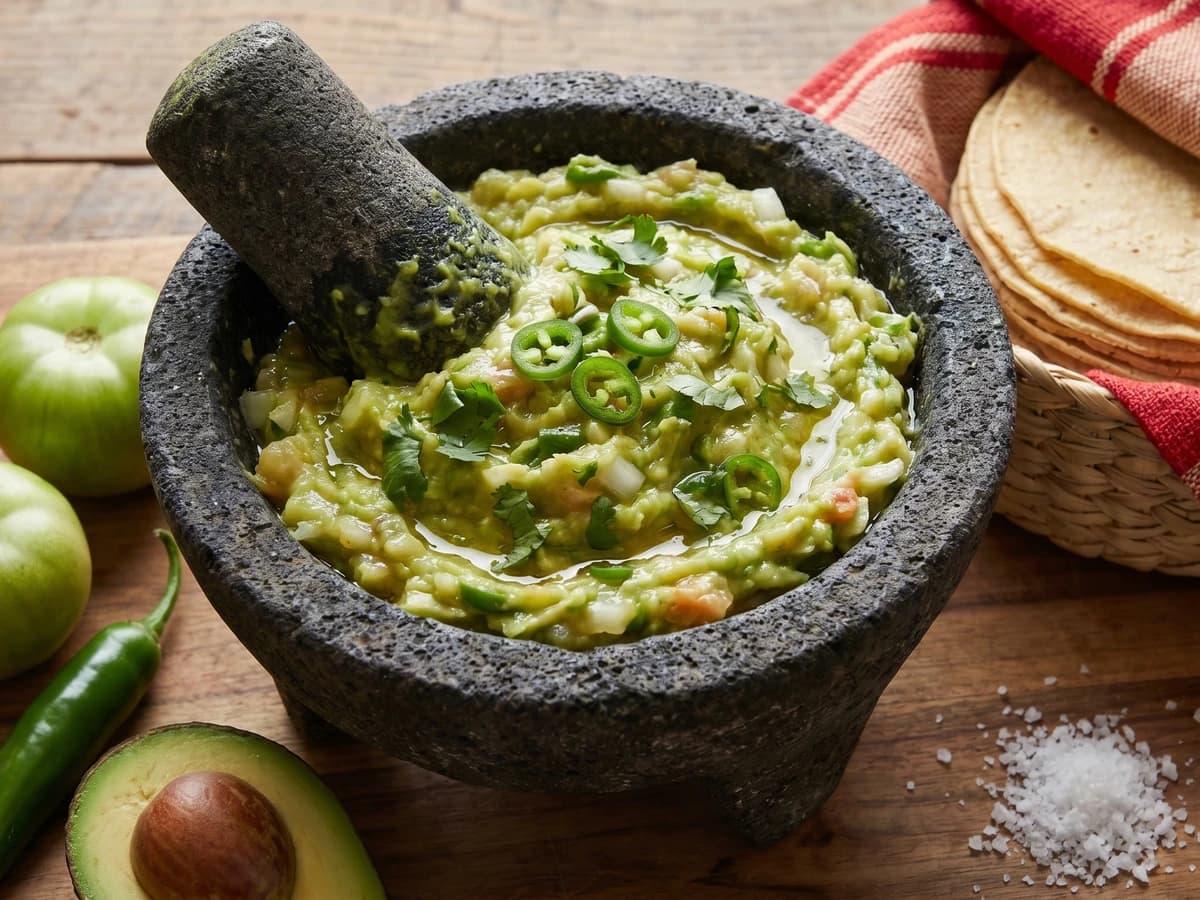
The filling is humble: queso fresco, better if you have queso de poro from Balancán, or scrambled huevo with a little white onion. The chile amashito belongs in the salsa on the table, not inside the dough. Remember that. Tabasco has its own chile and its own way of using it. Cada estado, su propia cocina.
Fry them in manteca de cerdo. Not vegetable oil. The shell should blister lightly, crisp at the rim, and stay tender where the masa is thick. La manteca es el sabor. No me vengas con atajos.
Chaya, Cnidoscolus aconitifolius, is a Maya domesticated leafy shrub used across the Yucatán Peninsula, Tabasco, and parts of Chiapas long before the Spanish conquest. In Tabasco, where humid lowland agriculture is shaped by cacao, plantain, corn, river fish, and patio herbs, chaya became a practical daily green because it grows aggressively in heat and rain. The state's small fried masa foods, including empanadas, panuchos, and local antojitos sold at dawn markets, show the Maya south's preference for corn masa enriched with regional leaves rather than wheat flour.
The technique, the tradition, and the story behind every dish.
or 2 cups masa harina mixed with 1 1/2 cups warm water
fresh chaya leaves
Quantity
2 packed cups
tough stems removed
kosher salt
Quantity
1 teaspoon, plus more to taste
manteca de cerdo
Quantity
2 tablespoons
melted, for the masa
warm water
Quantity
1/4 to 1/2 cup
as needed for the masa
queso fresco or queso de poro de Balancán
Quantity
1 1/2 cups
crumbled
large eggs (optional)
Quantity
4
lightly beaten, for optional egg filling
white onion (optional)
Quantity
2 tablespoons
finely chopped, for optional egg filling
manteca de cerdo (optional)
Quantity
1 tablespoon
for optional egg filling
manteca de cerdo
Quantity
3 cups
for frying
salsa de chile amashito (optional)
Quantity
for serving
lime halves (optional)
Quantity
for serving
Ingredient
Quantity
fresh corn masa for tortillasor 2 cups masa harina mixed with 1 1/2 cups warm water
3 cups
fresh chaya leavestough stems removed
2 packed cups
kosher salt
1 teaspoon, plus more to taste
manteca de cerdomelted, for the masa
2 tablespoons
warm wateras needed for the masa
1/4 to 1/2 cup
queso fresco or queso de poro de Balancáncrumbled
1 1/2 cups
large eggs (optional)lightly beaten, for optional egg filling
4
white onion (optional)finely chopped, for optional egg filling
2 tablespoons
manteca de cerdo (optional)for optional egg filling
1 tablespoon
manteca de cerdofor frying
3 cups
salsa de chile amashito (optional)
for serving
lime halves (optional)
for serving
Equipment Needed
•Tortilla press lined with plastic
•Heavy cast iron skillet or deep clay-safe frying pan
•Stainless steel or enamel pot for cooking chaya
•Slotted spoon or kitchen spider
•Molcajete for salsa de chile amashito
Instructions
1
Cook the chaya
Bring a pot of water to a boil. Add the chaya leaves and cook for 8 to 10 minutes, until the leaves turn deep green and lose their raw stiffness. Drain well, rinse briefly, and squeeze out the excess water. Chaya must be cooked before eating. Do not treat it like spinach from a plastic bag.
Use stainless steel, enamel, or clay for cooking chaya. Avoid aluminum pots. The old market rule is simple and still useful: chaya gets cooked clean, drained well, and chopped fine.
2
Chop it fine
Lay the cooked chaya on a board and chop it very fine. If the pieces are large, they tear the masa when you press and fold the empanadas. You want green flecks throughout the dough, not ropes of leaf pulling through it.
3
Make the masa
Put the fresh corn masa in a bowl. Add the salt, melted manteca, and chopped chaya. Knead with your hand for 3 to 4 minutes, adding warm water a tablespoon at a time only if the dough cracks. The masa should feel soft, moist, and alive, like tortilla dough that can be pressed without splitting at the edges.
4
Prepare the filling
For cheese empanadas, keep the crumbled queso fresco or queso de poro ready in a bowl. For huevo, melt 1 tablespoon manteca in a small skillet, cook the white onion until soft, then add the beaten eggs and scramble just until set. Do not overcook them. They will cook again inside the empanada.
5
Press the rounds
Divide the masa into 12 balls, each about the size of a small lime. Line a tortilla press with two pieces of plastic cut from a clean bag. Press one ball into a round about 5 inches wide. It should be thicker than a tortilla because it has to hold filling and survive the frying fat.
6
Fill and seal
Place 2 tablespoons queso or 2 tablespoons scrambled huevo on one side of the masa round. Fold the plastic over to close the empanada into a half-moon. Press the edge firmly with your fingers to seal. If the edge cracks, the masa is too dry. Knead in a spoonful of warm water and continue. The dough tells you what it needs.
7
Fry in manteca
Heat the manteca de cerdo in a deep heavy skillet to 350F. Fry 2 or 3 empanadas at a time, turning once, for 3 to 4 minutes total. The shell should turn golden with small blisters and a crisp rim. If the fat is too cool, the empanadas drink it. If it is too hot, the outside browns before the masa cooks through.
8
Drain and serve
Lift the empanadas onto a rack or brown paper to drain. Serve warm with salsa de chile amashito and lime halves. The salsa is where the Tabasco heat goes. The empanada itself is about corn, chaya, cheese, egg, and good fat. Así se hace y punto.
Chef Tips
•Buy chaya from a mercado vendor who knows the plant, not a decorative nursery. Ask for young leaves. Tough old leaves taste coarse and take longer to soften.
•Fresh masa from a tortillería is best. Masa harina works, but it is a compromise, not an upgrade. Add the water slowly because chaya brings its own moisture.
•Queso de poro de Balancán is the Tabasco choice when you can get it. If not, use a good queso fresco that crumbles cleanly and is not watery.
•Chile amashito is tiny, bright, and serious. Mash it in a molcajete with lime, salt, and a little roasted tomato if you want salsa. Do not bury it inside the dough where its perfume gets lost.
•Make the empanadas ahead if you need to, but fry them close to serving. A fried masa shell is proud for a short time, then it softens. That is not failure. That is corn.
Advance Preparation
•The chaya can be cooked, drained, chopped, and refrigerated one day ahead.
•The chaya masa can be kneaded up to 6 hours ahead and held covered at room temperature if the kitchen is cool, or refrigerated and brought back to room temperature before pressing.
•Filled uncooked empanadas can be held between pieces of plastic in the refrigerator for up to 4 hours. Fry them directly from chilled, adding about 30 seconds to the cooking time.
Frequently Asked Questions
Nutrition Information
1 serving (about 95g)
Calories
240 calories
Total Fat
16 g
Saturated Fat
7 g
Trans Fat
0 g
Unsaturated Fat
9 g
Cholesterol
80 mg
Sodium
390 mg
Total Carbohydrates
17 g
Dietary Fiber
2 g
Sugars
1 g
Protein
7 g
Where cooking meets culture.
Culinary guides, cultural storytelling, and the editorial depth that makes cooking meaningful.