
Chef Lupita
Arroz a la Oaxaqueña
Oaxaca's red rice, stained with tomato and fried in lard, steamed with carrots, ejotes, black beans, and epazote. The side that anchors a Oaxacan family meal and earns its place beside the main.
A cooking platform built around craft, culture, and the stories behind what we eat.

Created by
Sinaloa's ranch-style green beans, blanched and folded into a lard-built tomato sofrito with serrano, cumin, and oregano. The side dish that lands on the table next to the carne asada every week of summer.
This is from Sinaloa. The Pacific coast, the agricultural valleys around Culiacan, the ranchos that feed the state. Sinaloa grows more tomatoes than anywhere else in Mexico and the green beans come in just as the tomato season peaks. The two ingredients land in the same pan because they land in the kitchen on the same day. That is how northern cooks have always cooked. Cook what the garden gave you this morning.
The technique is simple and the technique is the recipe. You blanch the ejotes hard and fast so they hold their bite. You build a sofrito of onion, garlic, and serrano in manteca de cerdo, not oil. You cook the tomato down until the water leaves and the lard rises. Then you fold the beans through at the end. Twenty minutes. No mystery, no shortcut. The discipline is in the timing.
Do not look for epazote here. This is not Veracruz. The herb pantry of the noroeste is cumin and Mexican oregano, the legacy of cattle country and the trade routes that ran north into what is now the U.S. Southwest. And the tortilla on the side is flour, not corn. Sinaloa, Sonora, Chihuahua, the wheat states. My mother was from Jalisco and she made these beans with corn tortillas. She was wrong about that, and she would have admitted it if I had pushed her. Cada estado, su propia cocina.
The green bean (Phaseolus vulgaris in its unripe pod form) is one of the oldest cultivated foods of the Americas, with archaeological evidence of bean cultivation in the Tehuacan Valley dating back more than 7,000 years. Sinaloa's emergence as Mexico's dominant vegetable-producing state began in the early 20th century with the development of the Culiacan irrigation district, which transformed the state into a year-round supplier of tomatoes, beans, and chiles for both domestic and U.S. markets. The pairing of ejotes with tomato in a lard-built sofrito reflects the noroeste's ranchero kitchen tradition, where cumin and Mexican oregano, both carried north along the Camino Real, replace the epazote and hoja santa that anchor central and southern Mexican cooking.
Quantity
1 1/2 pounds
ends trimmed, cut into 2-inch lengths
Quantity
1 tablespoon
Quantity
3 tablespoons
Quantity
1
finely diced
Quantity
3
minced
Quantity
2
finely chopped, seeds in
Quantity
4 medium (about 1 1/2 pounds)
finely diced
Quantity
1/2 teaspoon
lightly crushed in a molcajete
Quantity
1 teaspoon
crumbled between your fingers
Quantity
1 teaspoon, plus more to taste
Quantity
to taste
Quantity
for serving
warmed
| Ingredient | Quantity |
|---|---|
| fresh green beans (ejotes)ends trimmed, cut into 2-inch lengths | 1 1/2 pounds |
| kosher salt (for blanching water) | 1 tablespoon |
| manteca de cerdo (pork lard) | 3 tablespoons |
| small white onionfinely diced | 1 |
| garlic clovesminced | 3 |
| fresh chile serranofinely chopped, seeds in | 2 |
| Roma tomatoesfinely diced | 4 medium (about 1 1/2 pounds) |
| whole cumin seedslightly crushed in a molcajete | 1/2 teaspoon |
| dried Mexican oreganocrumbled between your fingers | 1 teaspoon |
| kosher salt | 1 teaspoon, plus more to taste |
| freshly ground black pepper | to taste |
| hand-pressed flour tortillas (optional)warmed | for serving |
Bring a large pot of water to a hard boil and salt it generously. It should taste like the Gulf of California. Drop the trimmed beans in and cook for three to four minutes, until the color deepens to a vivid green and the beans bend without snapping. Drain them. Do not shock them in ice water. Northern cooks do not bother with that. The residual heat keeps cooking the bean just enough to meet the tomato halfway.
While the beans drain, set a small dry skillet over medium heat. Add the crushed cumin seeds and toast for 30 to 45 seconds, swirling the pan until the kitchen smells nutty and warm. Tip them onto a plate immediately. Cumin burns fast and burned cumin tastes like dust. The northern states use cumin where the south uses epazote. Different region, different herb pantry.
Melt the manteca in a wide cast iron or heavy skillet over medium heat. La manteca es el sabor and these beans need that pork backbone. When the fat shimmers, add the onion with a pinch of salt. Cook for four to five minutes, stirring, until the onion turns translucent and the edges start to gild. Add the garlic and the chopped serrano. Cook another minute, until the garlic perfumes the lard. Do not let it brown.
Add the diced tomato, the toasted cumin, the oregano, and the teaspoon of salt. Stir to combine. Cook over medium heat for six to eight minutes, mashing the tomato gently with the back of a wooden spoon as it softens. You want a loose, jammy sofrito with the lard rising at the edges. Cook past the watery stage. Cook until the spoon leaves a brief trail across the bottom of the pan.
Add the drained green beans to the skillet. Fold them through the tomato until every bean is coated. Cook another two to three minutes, just long enough for the beans to take on the flavor of the sofrito. Taste for salt. Crack black pepper over the top. The beans should still have a clean bite. If they have gone limp, you cooked them too long at the start.
Bring the skillet to the table or turn the beans out into a wide stoneware bowl. Serve alongside carne asada, machaca, or a pot of frijoles puercos with warm flour tortillas for scooping. In Sinaloa, flour tortillas, not corn. Asi se hace y punto. Recetas probadas y garantizadas.
1 serving (about 280g)
Culinary guides, cultural storytelling, and the editorial depth that makes cooking meaningful.
Discover Culinary ExplorerChef Lupita
Oaxaca's red rice, stained with tomato and fried in lard, steamed with carrots, ejotes, black beans, and epazote. The side that anchors a Oaxacan family meal and earns its place beside the main.
Chef Lupita
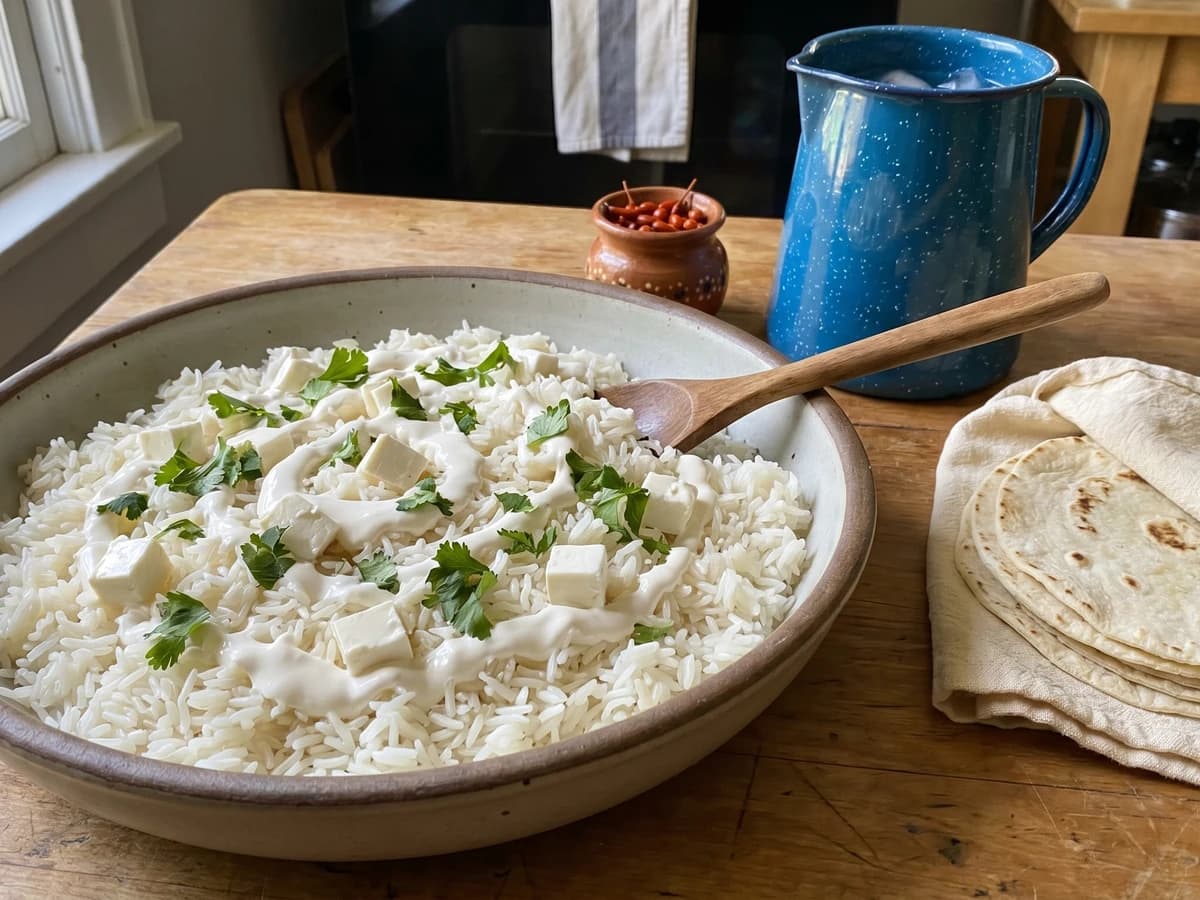
Sinaloa's home-cook white rice topped with cold cubes of cream cheese that soften into the warm grain, finished with crema and a sprinkle of chiltepin at the table. The trick that makes a side dish feel like a small luxury.
Chef Lupita
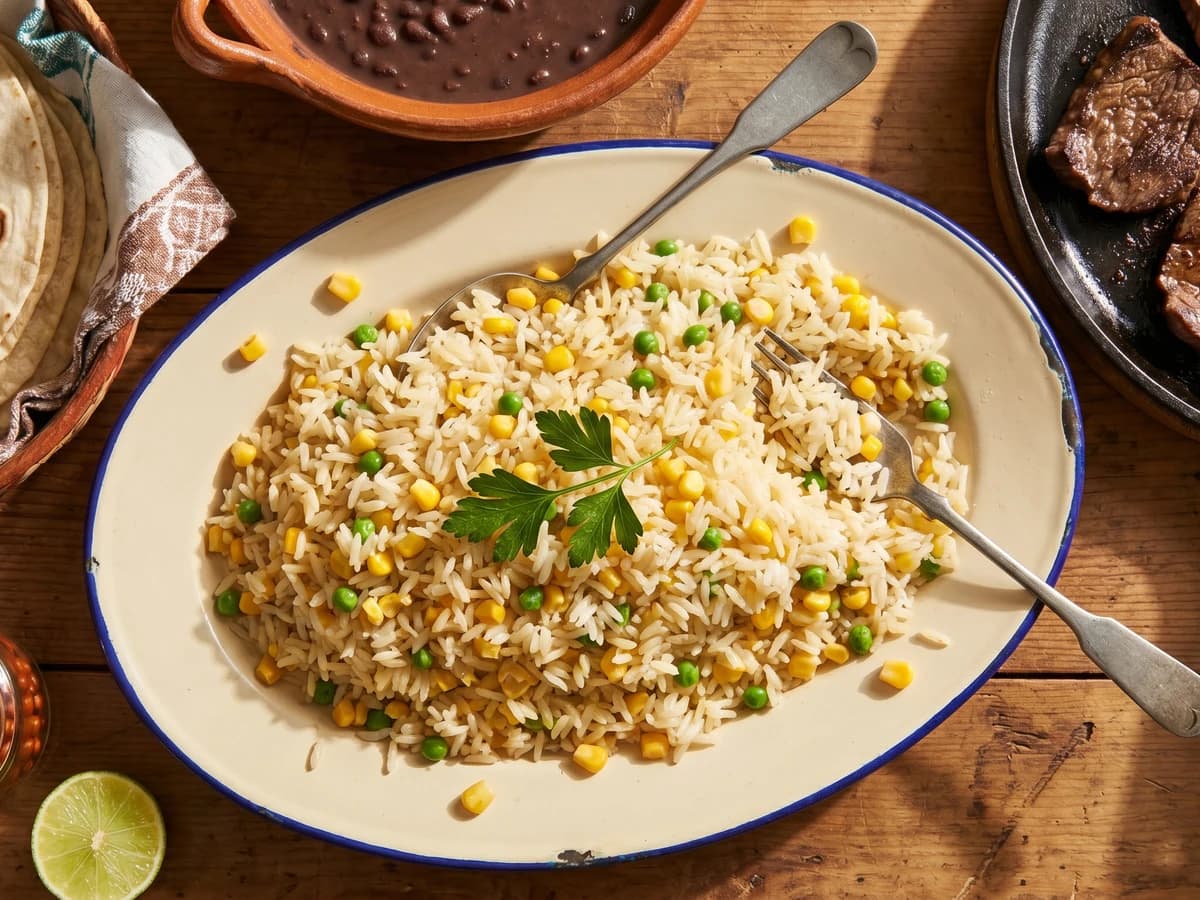
Sonora's white rice, toasted in butter and steamed with sweet corn and tender peas. The clean, quiet partner to a plate of carne asada, not the red rice of central Mexico.

Chef Lupita
Yucatán's white rice with sweet corn kernels, toasted in lard with garlic and onion. The quiet base that holds up against the peninsula's bold achiote-stained stews.