
Chef Lupita
Arroz a la Oaxaqueña
Oaxaca's red rice, stained with tomato and fried in lard, steamed with carrots, ejotes, black beans, and epazote. The side that anchors a Oaxacan family meal and earns its place beside the main.
A cooking platform built around craft, culture, and the stories behind what we eat.

Created by
Oaxacan ejotes braised in fried tomato and white onion, then folded into soft scrambled egg with epazote. The plate a Valles Centrales cook makes when the milpa is generous and lunch is in twenty minutes.
This is a Oaxacan plate. Not the Oaxaca of mole negro and seven complex sauces, the everyday Oaxaca, the Valles Centrales kitchen where a cook walks out to the milpa in the morning, picks what is ready, and figures out lunch by noon. Ejotes con huevo is that kind of dish. Humble, fast, built on what is in front of you.
The ejotes have to be fresh. Snap one in the mercado before you buy. If it bends, walk away. The tomato gets boiled with garlic, white onion, and a chile serrano, then blended and fried in lard until the puree darkens and the fat separates. That frying step is where most cooks fail. Raw tomato sauce tastes flat. Fried tomato sauce tastes like Mexico. La manteca es el sabor and there is no shortcut for that.
Epazote belongs in this dish. Not parsley. Not cilantro. Epazote. It is the herb that grows wild around the milpas of Oaxaca, the one that finishes black beans and folds into squash blossoms. Without it, you have a generic vegetable scramble. With it, you have something with a place on the map.
My mother made a version of this with whatever the corner stall had on Tuesdays, ejotes one week, calabacitas the next, nopales when nopales were good. She would write the variations in pencil in the margin of her notebook: 'mas epazote del que crees.' More epazote than you think. She was right. Saber cocinar es saber vivir.
Ejotes are the immature pods of the common bean (Phaseolus vulgaris), domesticated in Mesoamerica roughly 7,000 years ago and one of the three pillars of the milpa system alongside corn and squash. Eating beans young as a green vegetable, rather than only as a dried pulse, is a regional Mexican practice that runs deepest in Oaxaca, Puebla, and Tlaxcala, where home cooks treat ejotes as a warm-season staple from the same plants that will later yield dried beans for storage. The pairing of ejotes with egg and a fried tomato sofrito reflects the post-conquest integration of European chickens into the milpa economy, producing a dish that is genuinely mestizo: indigenous bean, indigenous tomato, indigenous chile, indigenous epazote, and a colonial egg, all on the same plate.
Quantity
1 pound
ends trimmed, cut into 1-inch pieces
Quantity
3 medium
cored
Quantity
1/2 medium
half left whole, the other half finely diced
Quantity
2
peeled
Quantity
1
stemmed (use 2 if you want more heat)
Quantity
2 tablespoons
Quantity
5
Quantity
1 sprig
leaves only, roughly chopped
Quantity
1 teaspoon, plus more to taste
Quantity
to taste
Quantity
for serving
warmed
Quantity
for serving
| Ingredient | Quantity |
|---|---|
| fresh ejotes (green beans)ends trimmed, cut into 1-inch pieces | 1 pound |
| ripe Roma tomatoescored | 3 medium |
| white onionhalf left whole, the other half finely diced | 1/2 medium |
| garlic clovespeeled | 2 |
| fresh chile serranostemmed (use 2 if you want more heat) | 1 |
| manteca de cerdo (pork lard) | 2 tablespoons |
| large eggs | 5 |
| fresh epazoteleaves only, roughly chopped | 1 sprig |
| kosher salt | 1 teaspoon, plus more to taste |
| freshly ground black pepper | to taste |
| hand-pressed corn tortillas (optional)warmed | for serving |
| salsa de molcajete (optional) | for serving |
Snap one bean in half before you buy. It should break clean with a small pop and the inside should look bright and damp. Limp beans bend instead of breaking and they will stay tough no matter how long you cook them. Wash, trim the ends, and cut into 1-inch pieces. If you do not know the market, you do not know the kitchen.
Bring a medium pot of water to a boil with a generous pinch of salt. Drop in the ejotes and cook for four minutes, just until they turn bright green and the rawness is gone. They should still have bite. Drain and set aside. Do not shock them in ice water. You want them warm when they hit the tomato.
Place the tomatoes, the whole half-onion, garlic, and the serrano in a small saucepan. Cover with water and simmer for eight minutes, until the tomato skins split and slip off and the chile turns a duller green. Drain. Transfer to a blender with a half teaspoon of salt and blend until smooth but not foamy. This is your base. Asi se hace y punto.
Heat the lard in a wide cazuela or heavy skillet over medium until it shimmers. Pour in the tomato puree. It will sputter and hiss. Step back. Cook for five to seven minutes, stirring now and then, until the puree darkens from bright orange-red to a deeper brick color and the lard starts to separate at the edges. Raw tomato puree tastes thin and metallic. Fried, it tastes like the dish you remember from your tia's stove. La manteca es el sabor.
Stir the diced raw onion into the salsa and cook for two minutes until softened. Add the drained ejotes and the chopped epazote. Toss to coat every bean. Lower the heat to medium-low, cover partially, and braise for six to eight minutes. The beans will drink the salsa and turn glossy. Taste for salt now.
Crack the eggs into a bowl. Beat them with a pinch of salt and a few cracks of pepper until the yolks and whites are uniform. Pour them straight into the cazuela with the beans. Do not stir for the first thirty seconds. Let the bottom set. Then drag a wooden spoon across the pan in long, slow folds, lifting the cooked egg from the bottom and letting the wet egg slide underneath.
Pull the pan off the heat while the egg still looks slightly wet on top. The residual heat will finish it. Overcooked egg turns rubbery and ruins the dish. Serve immediately, family-style, in the cazuela. Set warm corn tortillas and a molcajete of salsa on the table. The egg, the bean, the salsa, all in one taco. Recetas probadas y garantizadas.
1 serving (about 290g)
Culinary guides, cultural storytelling, and the editorial depth that makes cooking meaningful.
Discover Culinary ExplorerChef Lupita
Oaxaca's red rice, stained with tomato and fried in lard, steamed with carrots, ejotes, black beans, and epazote. The side that anchors a Oaxacan family meal and earns its place beside the main.
Chef Lupita
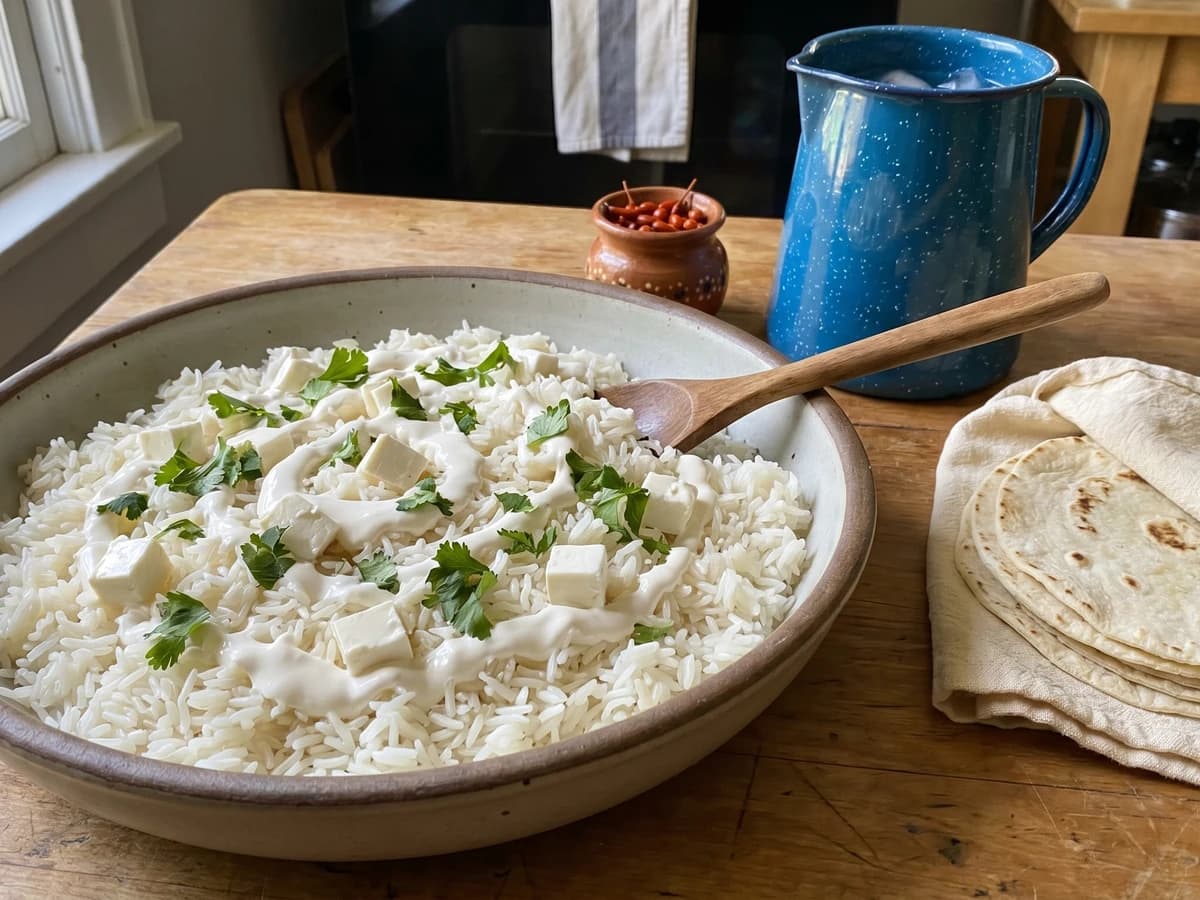
Sinaloa's home-cook white rice topped with cold cubes of cream cheese that soften into the warm grain, finished with crema and a sprinkle of chiltepin at the table. The trick that makes a side dish feel like a small luxury.
Chef Lupita
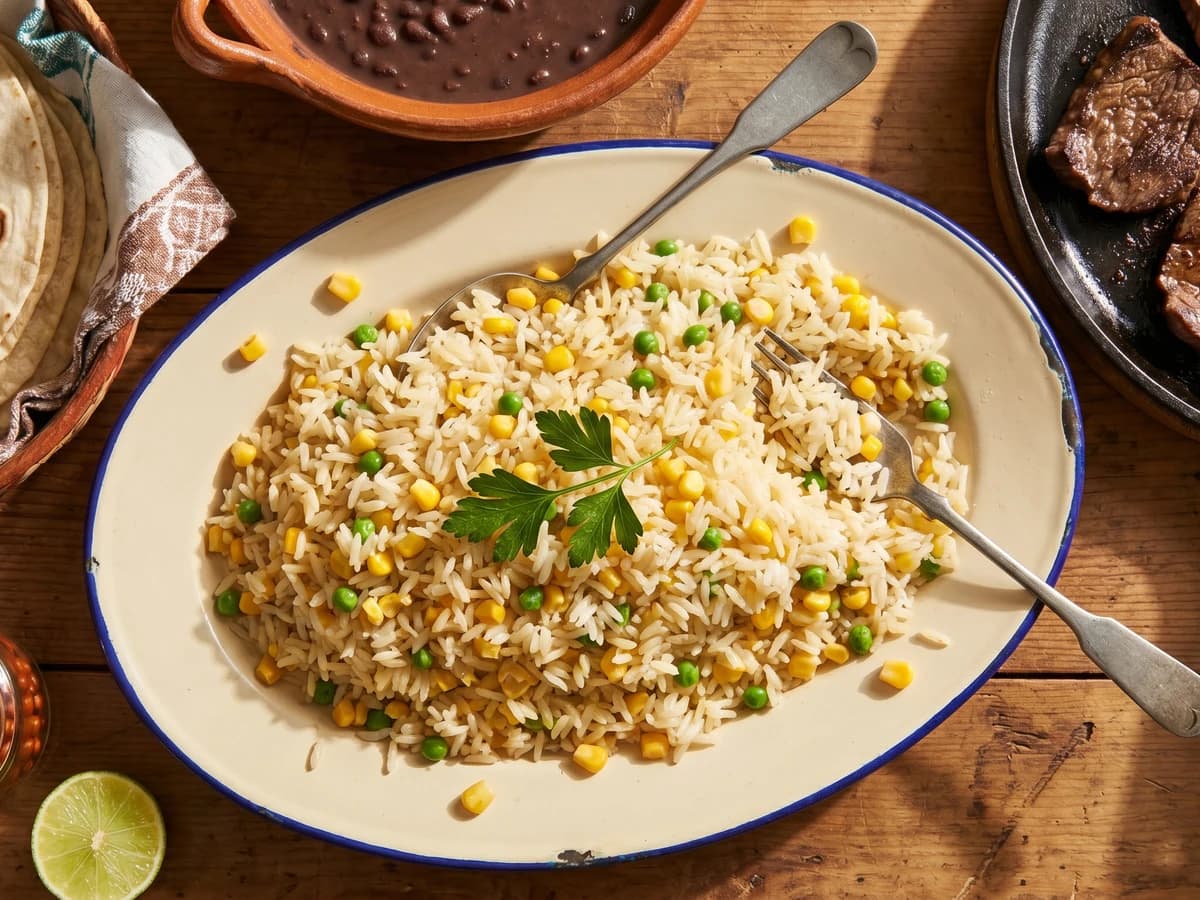
Sonora's white rice, toasted in butter and steamed with sweet corn and tender peas. The clean, quiet partner to a plate of carne asada, not the red rice of central Mexico.

Chef Lupita
Yucatán's white rice with sweet corn kernels, toasted in lard with garlic and onion. The quiet base that holds up against the peninsula's bold achiote-stained stews.