Culinary Explorer
A cooking platform built around craft, culture, and the stories behind what we eat.
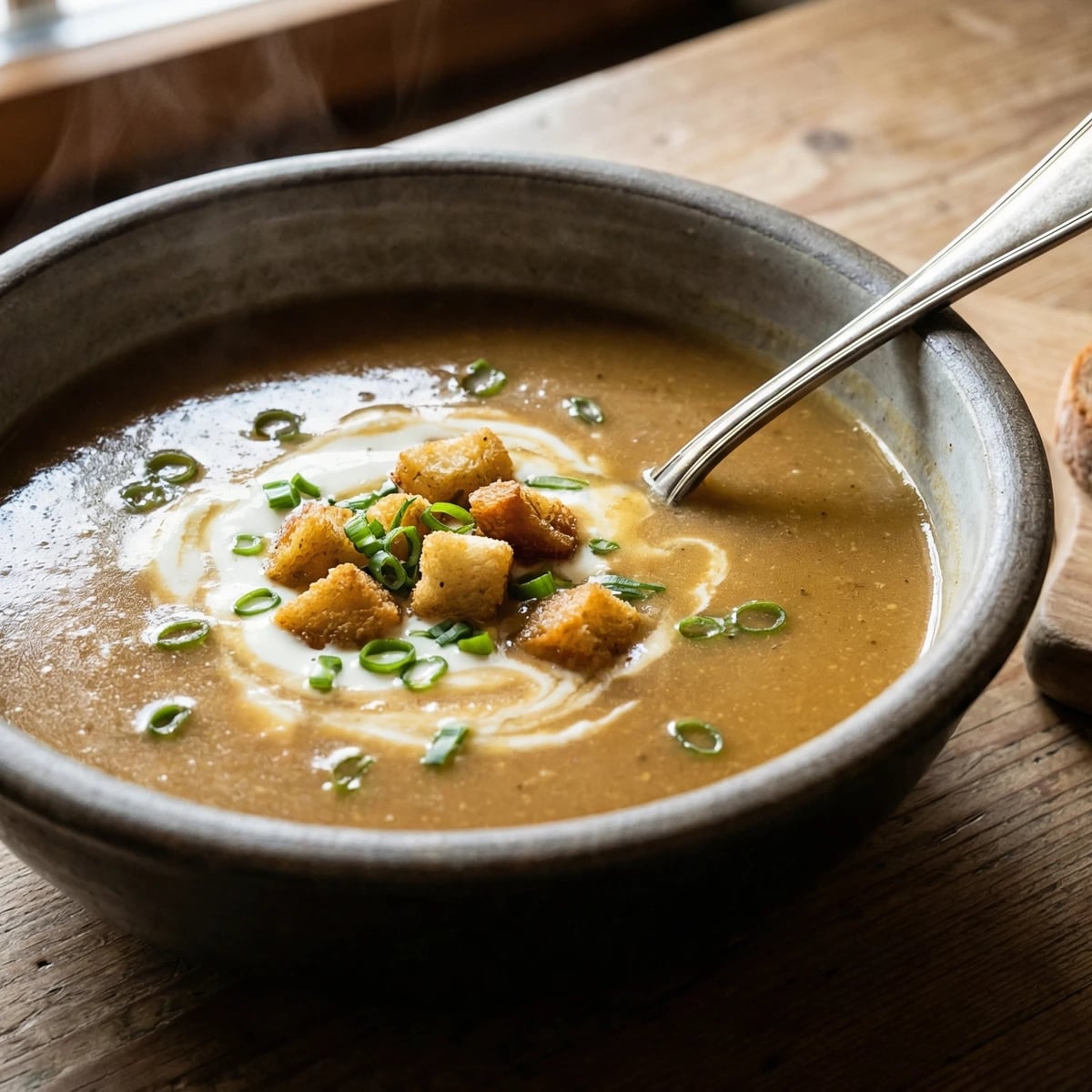
Einbrennsuppe
Created by Chef Elsa
Flour browned slowly in lard until it smells like toasted hazelnuts, thinned with good broth, warmed with caraway. The soup Austrian grandmothers made when the cupboard was nearly bare and the family still needed feeding.
In my grandmother Eva's kitchen, there was a hierarchy of soups. At the top sat Rindsuppe, the golden beef broth that took all Sunday morning. Somewhere near the bottom, in terms of effort and cost at least, sat Einbrennsuppe. Flour, fat, caraway, broth. That's the whole recipe. Eva could make it in twenty minutes from what she always had on hand, and she did, often on cold Tuesday evenings when nobody had time for anything grand.
But Gretel always said: don't confuse simple with unimportant. Einbrennsuppe is the soup that kept Austrian farm families fed through long winters when meat was scarce and the pantry held flour, lard, and not much else. The technique at its heart, the Einbrenn, is a roux browned slowly until it turns nutty and fragrant. That roux is one of the foundations of Austrian cooking. You'll find it thickening gravies, binding sauces, and giving body to dozens of soups across every region. Master this one pot and you've learned a principle that unlocks half the savoury kitchen.
The caraway is everything here. That sharp, earthy, almost anise-edged spice runs through Austrian cooking the way garlic runs through the Mediterranean. It blooms in the hot fat and perfumes the whole bowl. If you think you don't like caraway, I'd ask you to try it once in this soup before you decide. Toasted in lard and softened by broth, it becomes something gentler than the raw seed. Something that smells like an Alpine Gasthaus on a January evening, which is exactly what it should smell like.
Ingredients
lard or unsalted butter
Quantity
50g
onion
Quantity
1 medium
finely diced
plain flour
Quantity
60g
| Ingredient | Quantity |
|---|---|
| lard or unsalted butter | 50g |
| onionfinely diced | 1 medium |
| plain flour | 60g |
Where cooking meets culture.
Culinary guides, cultural storytelling, and the editorial depth that makes cooking meaningful.
Discover Culinary Explorer