
Chef Takumi
Aji Fry (アジフライ, panko-fried horse mackerel)
Aji fry is weeknight fish with no mystery: fresh horse mackerel opened cleanly, breaded lightly, and fried until the panko crackles while the flesh stays sweet.
A cooking platform built around craft, culture, and the stories behind what we eat.
Created by
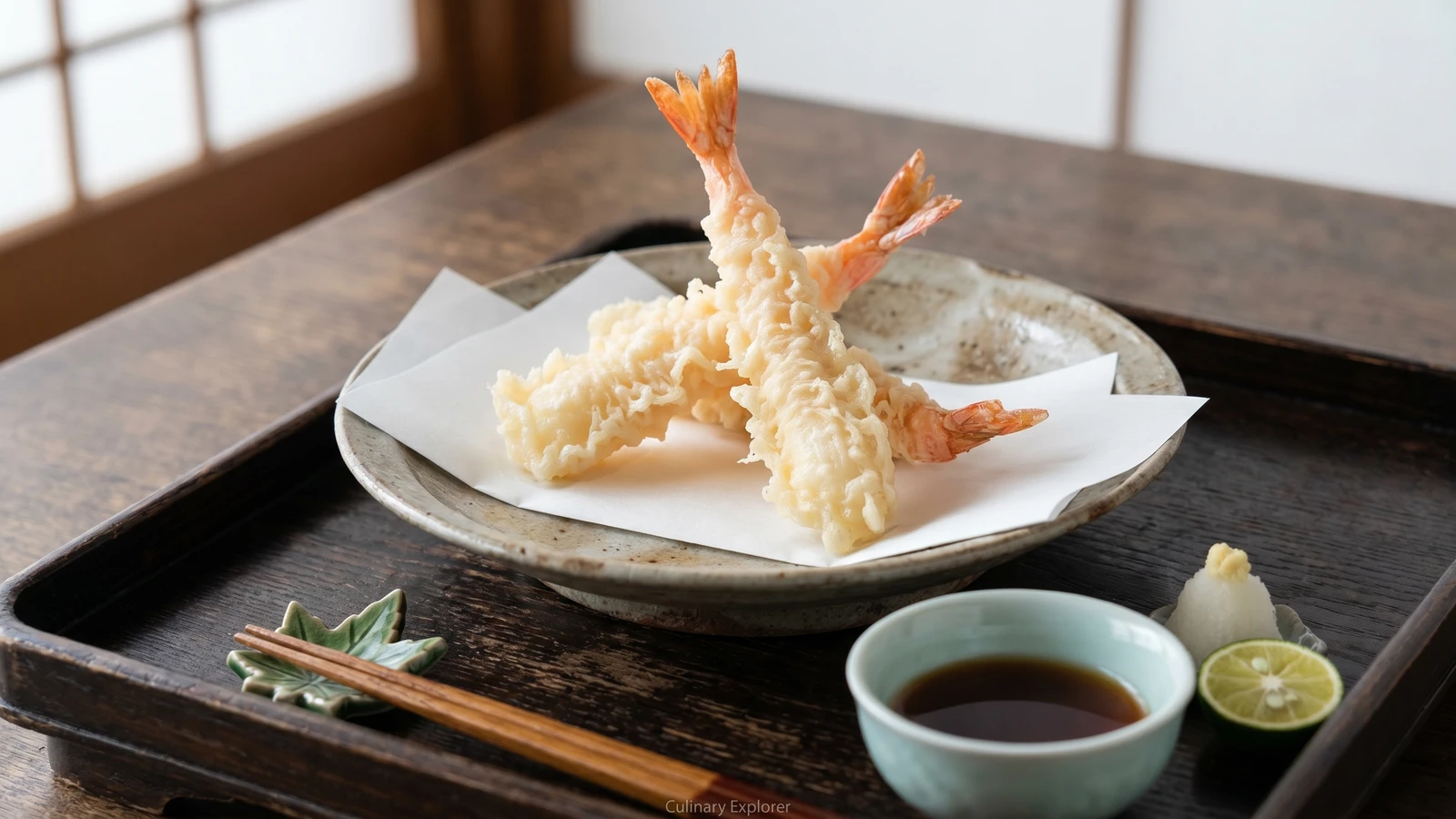
Shrimp tempura is not a restaurant trick. Keep the batter cold, the oil hot, and fry one piece at a time until each shrimp turns pale gold and light.
Tempura frightens people because the good ones look weightless. They imagine a secret hand. There is one, but it's a small secret: cold batter meets hot oil, and the shrimp leaves before the crust has time to grow heavy.
Ebi no tempura is a dish of restraint. The batter is barely mixed, lumpy on purpose. Mix it smooth and you wake the flour's gluten, which gives you bread rather than lace. Keep it cold and loose, and the hot oil sets it at once, making those fine ragged edges we like.
Begin with the shrimp, not the bowl of batter. Use firm, sweet shrimp that smell clean, never sharp or tired. The little cuts across the belly are not vanity. Shrimp curls because the muscle tightens in hot oil, and those cuts let it lie long enough for the batter to set evenly. Scrape the water from the tail, too, unless you enjoy being scolded by hot oil.
At the table, tempura should not wait politely in a heap. Fry in small batches and serve as each piece is ready, with tentsuyu, the dashi-soy dipping broth, and grated daikon. This is honmono made reachable: no heavy sauce, no disguise, only a good shrimp, a clean stock, and timing you can learn in one careful evening.
Tempura entered Japan in the sixteenth century through Portuguese traders and missionaries active around Nagasaki, though the word's route is debated between Portuguese tempero and the Christian tempora. By the late Edo period, it had become a food of Edo's streets, with seafood and vegetables fried in deep pots of sesame oil and eaten quickly at stalls. Shrimp suited the Edo taste especially well: clean seafood from the bay, a pale crust, and a dipping broth that seasoned without hiding the ingredient.
Quantity
12 (about 450g)
headless, thawed if frozen
Quantity
1 tablespoon
for cleaning
Quantity
1 teaspoon
for cleaning
Quantity
1 cup
clear konbu and katsuobushi stock
Quantity
1/4 cup
Quantity
1/4 cup
Quantity
2 inches
grated and lightly drained
Quantity
1
cut into wedges
Quantity
1
chilled
Quantity
enough to make 1 cup liquid with the egg
Quantity
1 cup (120g)
chilled and sifted
Quantity
1/4 cup
for dusting
Quantity
6 cups
or 5 cups neutral oil plus 1 cup light sesame oil
Quantity
for serving
| Ingredient | Quantity |
|---|---|
| large shell-on shrimpheadless, thawed if frozen | 12 (about 450g) |
| potato starch (katakuriko)for cleaning | 1 tablespoon |
| sea saltfor cleaning | 1 teaspoon |
| ichiban dashiclear konbu and katsuobushi stock | 1 cup |
| mirin | 1/4 cup |
| shōyu (Japanese soy sauce) | 1/4 cup |
| daikongrated and lightly drained | 2 inches |
| sudachi or lemon (optional)cut into wedges | 1 |
| large eggchilled | 1 |
| ice water | enough to make 1 cup liquid with the egg |
| cake flour or low-protein flourchilled and sifted | 1 cup (120g) |
| cake flour or potato starchfor dusting | 1/4 cup |
| neutral frying oilor 5 cups neutral oil plus 1 cup light sesame oil | 6 cups |
| fine sea salt (optional) | for serving |
Put the mirin in a small saucepan and bring it to a brief simmer for about 30 seconds. Add the dashi and shōyu, warm it through, then take it off the heat. Don't boil it down. Tentsuyu should season the shrimp lightly, not bully it. Keep the grated daikon separate so each person can stir in what they like.
Peel the shrimp, leaving the final tail segment attached. Devein them with the point of a knife. Toss the shrimp with the potato starch and salt until the surface feels tacky, then rinse under cold water and pat very dry. The starch pulls away surface slime and odor, and the drying matters because wet shrimp make batter slide and oil spit.
Trim the sharp tip from each tail fan, then scrape the tail gently with the back of the knife to press out trapped water. This small, fussy-looking act has a plain reason: water inside the tail bursts in hot oil. Wipe the tails dry again.
Lay each shrimp belly-up and make 4 or 5 shallow crosswise cuts along the underside, only halfway through. Turn it over and press gently along the back until you feel the fibers relax. The cuts release the muscle's curl, so the shrimp fries long and even instead of tightening into a small comma.
Pour the oil into a tempura nabe or heavy pot to a depth of about 2 inches. Heat to 170 to 175°C, or 340 to 350°F, and set a wire rack over a tray. If you have no thermometer, a drop of batter should sink slightly, then rise quickly with lively bubbles. Oil too cool makes a greasy coat. Oil too hot browns the batter before the shrimp cooks.
Beat the chilled egg lightly in a cold bowl, then add enough ice water to make 1 cup of liquid. Add the sifted flour and stir with chopsticks about 10 to 12 strokes. Leave lumps. Smooth batter is not a virtue here, because overmixing builds gluten and turns lace into a tough coat. If the kitchen is warm, set the bowl over ice while you fry.
Dust 2 shrimp very lightly with the extra flour or potato starch, shaking off anything loose. Dip each shrimp in the cold batter and slide it into the oil away from you. Fry 90 seconds to 2 minutes, turning once, until the crust is pale ivory-gold, the tail is coral, and the shrimp is opaque through the center. If you want a lacy coat, flick a few drops of batter over the shrimp in the first 20 seconds. Pull it before it browns deeply.
Lift the shrimp to the rack and let excess oil fall away. A rack keeps the underside crisp better than a flat towel. Serve at once with warm tentsuyu, grated daikon, and sudachi or lemon if you have it. For a quieter table, offer fine salt as well. Tempura is best the moment it leaves the oil, so fry, serve, and keep moving.
1 serving (about 235g)
Culinary guides, cultural storytelling, and the editorial depth that makes cooking meaningful.
Discover Culinary ExplorerChef Takumi
Aji fry is weeknight fish with no mystery: fresh horse mackerel opened cleanly, breaded lightly, and fried until the panko crackles while the flesh stays sweet.
Chef Takumi
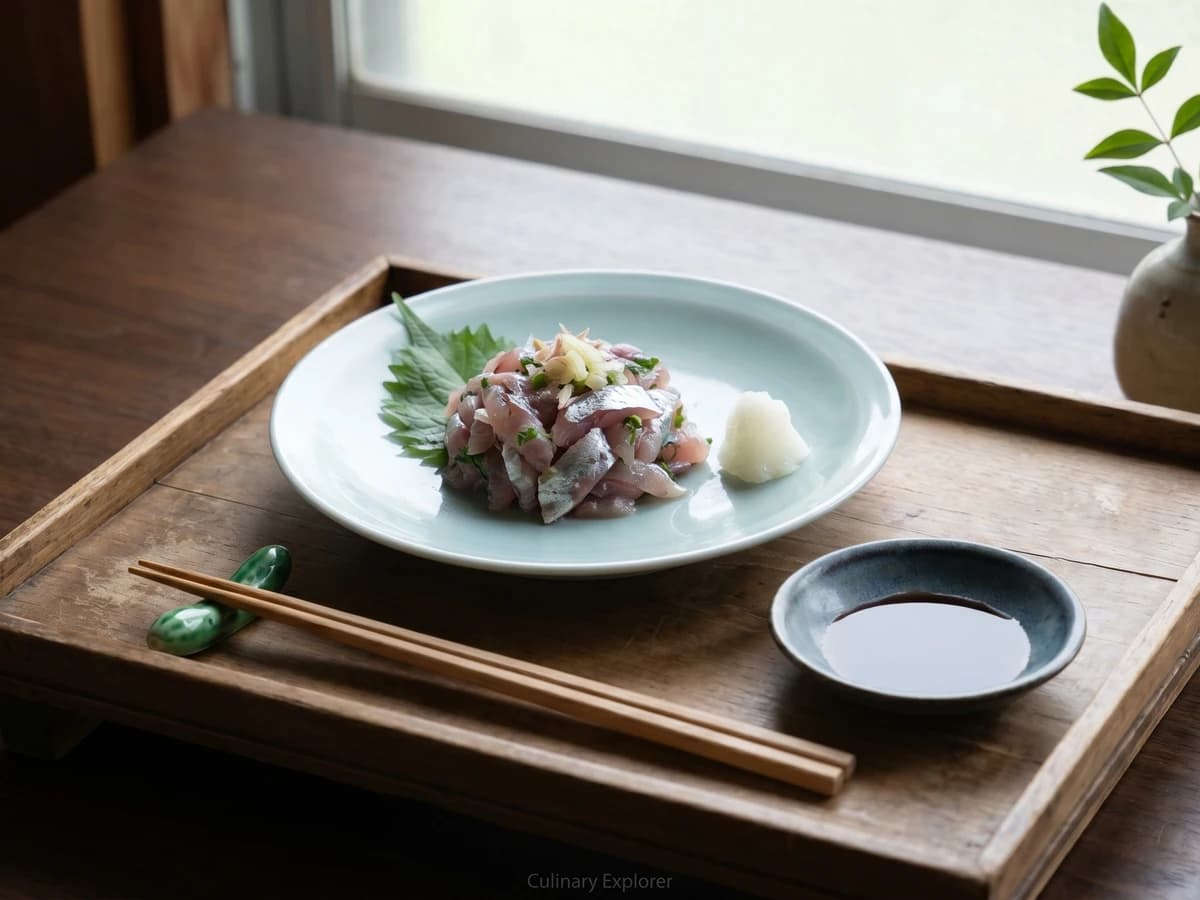
Summer horse mackerel, chopped just enough to catch ginger and scallion, becomes a cool, clean main dish with rice. The secret is fresh fish and a knife that does not bruise it.
Chef Takumi
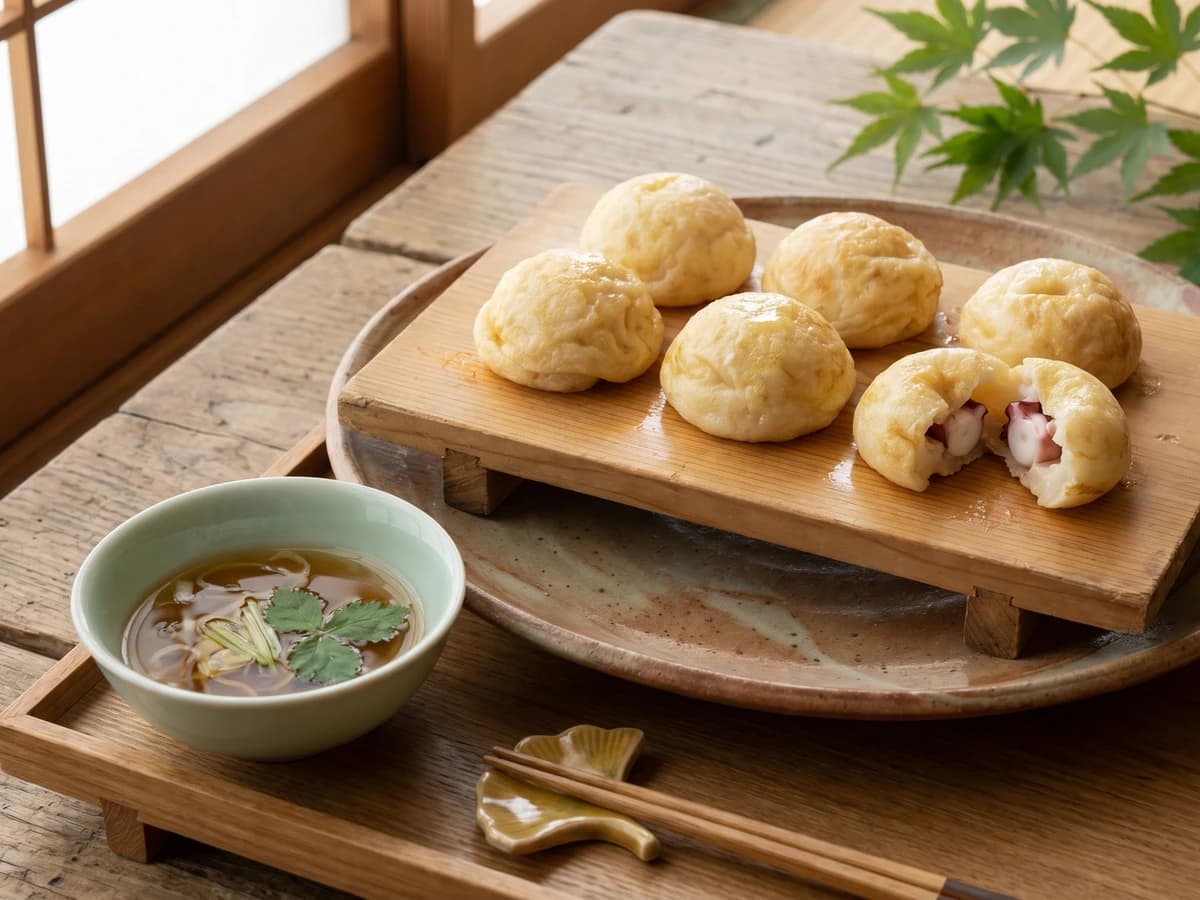
Akashi-yaki is not sauced takoyaki. It is egg-rich batter, tender octopus, and clear dashi, cooked pale and soft so each ball can be dipped like a small custard dumpling.

Chef Takumi
A whole anago looks like a test of nerve. It is mostly good sourcing, a dry skin, cold batter, and oil hot enough to leave the eel sweet under its lace.