
Chef Takumi
Amerikan Doggu (アメリカンドッグ, corn dog)
A sausage on a stick, sweet batter, clean hot oil, and no cornmeal. Amerikan doggu is festival food made plain, with the batter thick enough to cling.
A cooking platform built around craft, culture, and the stories behind what we eat.
Created by
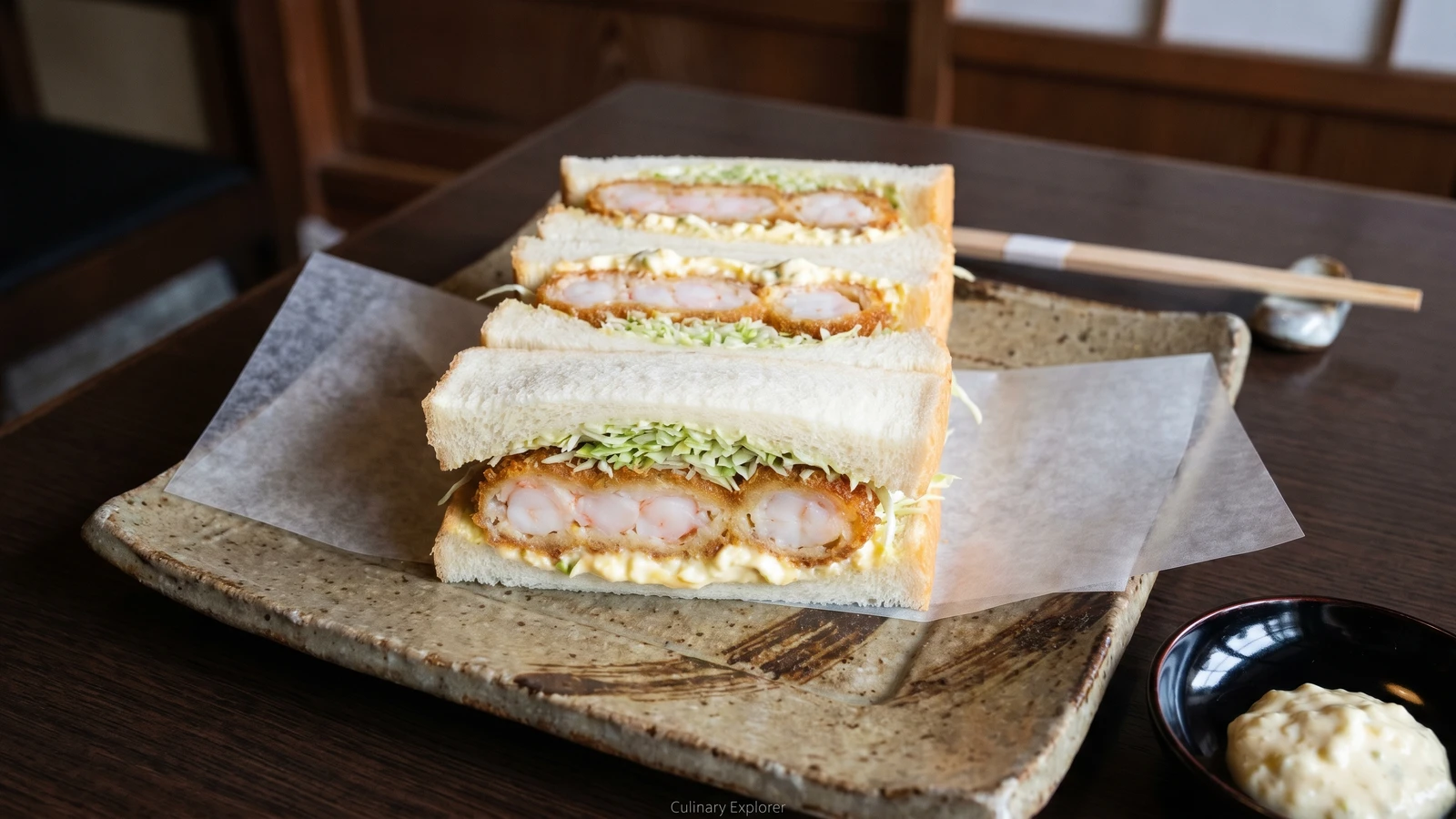
A shrimp cutlet sandwich lives or dies on texture: sweet pieces of shrimp bound just enough, panko kept crisp, soft shokupan, cold cabbage, and tartar used as a seasoning, not a blanket.
Shrimp is generous until you ask it to behave like meat. Grind it smooth and it bounces. Leave it whole and it slips out of the bread. For ebi katsu sando, the good middle is the whole matter: some shrimp minced until sticky to bind, some left in pieces so the sandwich still tastes plainly of shrimp.
You may think the frying is the hard part. It isn't. Keep the mixture cold, coat it lightly, and fry at a steady 170 C so the panko browns at the same pace the center turns opaque. Too hot and the crust races ahead. Too cool and the cutlet drinks oil, which is a miserable end for good shrimp and an unnecessary one.
This is yōshoku, modern Japanese food with a Western shape and Japanese discipline. The bread should be soft shokupan, the cabbage cut fine and dried well, the tartar present but not smothering. Honmono here is plain to see: sweet shrimp, crisp panko, cool cabbage, nothing hidden under sauce. Build the sandwich neatly, press it just long enough to settle, and cut with a clean knife. Leave it room, even in a lunch box.
The katsu sando belongs to yōshoku, the Western-format foods adopted and naturalized in Japan after the Meiji period. A commonly cited origin for the cutlet sandwich is Ginza Isen in Tokyo in 1935, where small tonkatsu sandwiches were made so geisha and theater people could eat them neatly between engagements. Ebi katsu followed the same twentieth-century logic of breaded cutlet, shredded cabbage, and soft shokupan, especially in delis, bento shops, and kissaten.
Quantity
450g
peeled, deveined, tails removed, and patted dry
Quantity
1/2 teaspoon
divided
Quantity
1 tablespoon
Quantity
1 tablespoon
Quantity
1 tablespoon
for the cutlet mixture
Quantity
1 large
Quantity
1 pinch
Quantity
1/2 cup
Quantity
2 large
beaten
Quantity
2 cups
Quantity
as needed
for a 3cm depth
Quantity
2
finely chopped
Quantity
1/3 cup
for tartar
Quantity
2 tablespoons
finely chopped, rinsed, and squeezed dry
Quantity
2 tablespoons
finely chopped
Quantity
1 teaspoon
Quantity
1/2 teaspoon
Quantity
8 slices
preferably 8-slice thickness
Quantity
2 cups
very finely shredded, rinsed, and dried
Quantity
1 tablespoon
for the bread
| Ingredient | Quantity |
|---|---|
| raw shrimppeeled, deveined, tails removed, and patted dry | 450g |
| fine sea saltdivided | 1/2 teaspoon |
| sake (optional) | 1 tablespoon |
| katakuriko (potato starch) | 1 tablespoon |
| Japanese mayonnaisefor the cutlet mixture | 1 tablespoon |
| egg white | 1 large |
| white pepper | 1 pinch |
| all-purpose flour | 1/2 cup |
| eggsbeaten | 2 large |
| fresh panko | 2 cups |
| neutral frying oilfor a 3cm depth | as needed |
| hard-boiled eggsfinely chopped | 2 |
| Japanese mayonnaisefor tartar | 1/3 cup |
| onionfinely chopped, rinsed, and squeezed dry | 2 tablespoons |
| rakkyō (pickled scallions) or cucumber picklefinely chopped | 2 tablespoons |
| rice vinegar | 1 teaspoon |
| karashi (Japanese mustard) (optional) | 1/2 teaspoon |
| shokupanpreferably 8-slice thickness | 8 slices |
| green cabbagevery finely shredded, rinsed, and dried | 2 cups |
| softened unsalted butter (optional)for the bread | 1 tablespoon |
Pat the shrimp very dry and check it honestly before you begin. It should smell clean and faintly sweet, never sharp or ammonia-like. Mince half the shrimp with a knife until sticky, then chop the other half into small, pea-sized pieces. The minced shrimp binds the cutlet without making it heavy, and the larger pieces give you the sweet bite that tells you this is shrimp, not filler.
Put the minced and chopped shrimp in a chilled bowl with 1/4 teaspoon salt, the sake if using, katakuriko, 1 tablespoon mayonnaise, egg white, and white pepper. Stir firmly in one direction until the mixture turns tacky and holds together. Keep it cold. Warm shrimp turns slack, and a slack cutlet spreads in the oil before the crust has time to set.
Stir together the hard-boiled eggs, 1/3 cup mayonnaise, onion, rakkyō or pickle, rice vinegar, karashi if using, and the remaining 1/4 teaspoon salt. Rinsing and squeezing the onion matters because raw onion water makes tartar harsh and loose. You want a clean, creamy sauce that seasons the shrimp, not one that soaks the bread.
Shred the cabbage as finely as you can, rinse it briefly in cold water, then dry it thoroughly in a spinner or towel. The cabbage is doing quiet work here: it cools the fry, catches a little tartar, and keeps the sandwich from feeling heavy. Wet cabbage ruins the crumb of the shokupan, so be stricter with drying than seems reasonable.
Divide the shrimp mixture into 4 flat patties, each a little smaller than a slice of bread. Keep them about 1.5cm thick so the centers cook through before the panko gets too dark. Dust each patty in flour, dip in beaten egg, then coat with panko, pressing gently so the crumbs cling without compacting. Let them rest on a tray for 5 minutes while the oil heats.
Heat 3cm of oil to 170 C (340 F). Fry 2 cutlets at a time, turning once, until the panko is deep golden and the center is fully opaque, about 3 to 4 minutes. Drain on a wire rack, not paper towels, so the underside stays crisp. If the oil is too hot, the crust races ahead while the center lags. Too cool, and the panko drinks oil.
Leave the shokupan untoasted. Soft bread is part of the dish, not a missed step. Spread a very thin layer of butter on the bread if you are packing the sandwiches, then add tartar, a small bed of dry cabbage, one shrimp cutlet, and a little more tartar. Don't drown it. Honmono here is sweet shrimp, crisp panko, and cool cabbage, with nothing hidden under sauce.
Top with the second slice of bread, cover with parchment, and set a light board or plate over the sandwiches for 2 minutes. This settles the layers so the cut is clean, but a heavy press will crush the panko you just protected. Trim the crusts if you want the kissaten look, then cut each sandwich in half or thirds with a sharp knife wiped between cuts.
1 serving (about 360g)
Culinary guides, cultural storytelling, and the editorial depth that makes cooking meaningful.
Discover Culinary ExplorerChef Takumi
A sausage on a stick, sweet batter, clean hot oil, and no cornmeal. Amerikan doggu is festival food made plain, with the batter thick enough to cling.

Chef Takumi
Atsuyaki tamago sando looks like a trick of the kissaten counter, but it is only soft bread, clear dashi, patient eggs, and one brave warm cut.
Chef Takumi
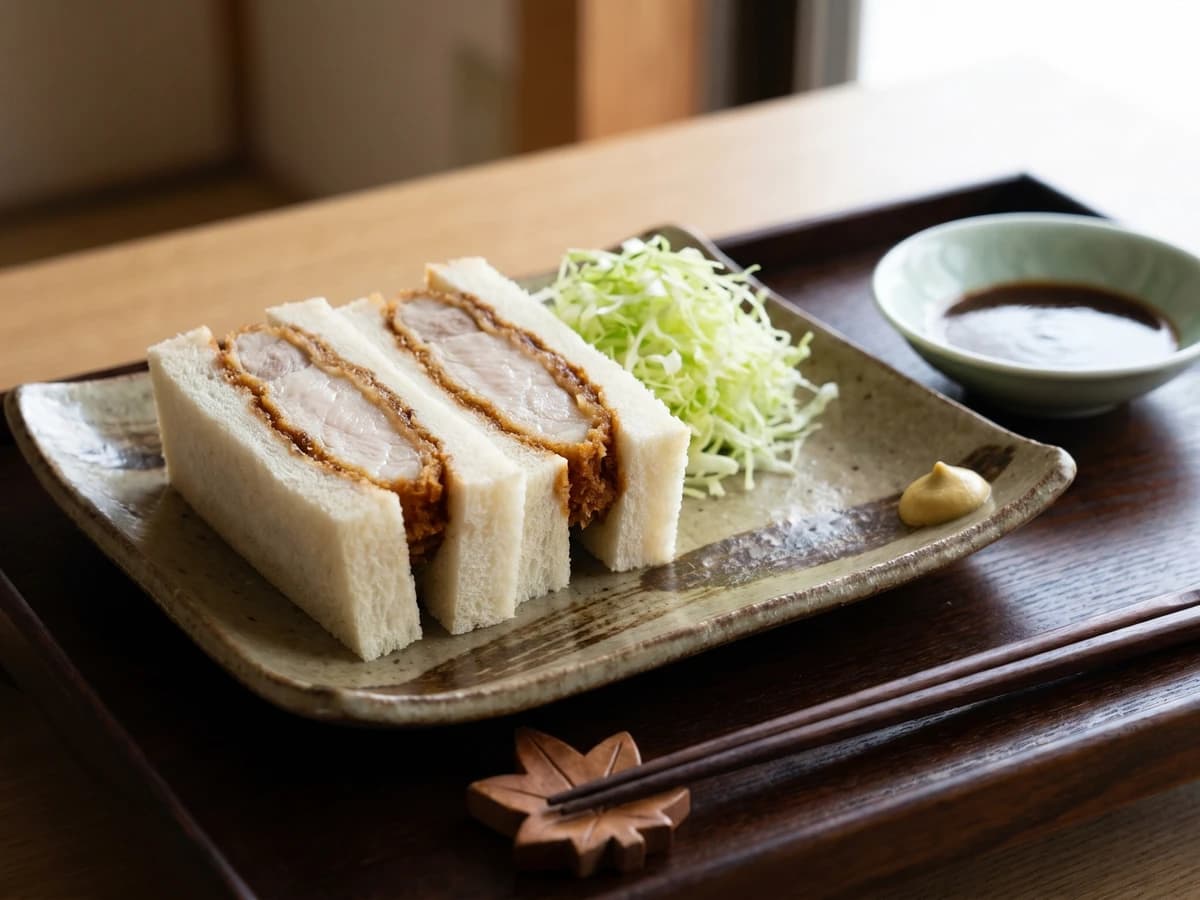
A good chicken katsu sando is decided before assembly: pound the cutlet thin, fry it crisp, then sandwich it while the crumb still has its bite.

Chef Takumi
A Sapporo bakery roll with a plain secret: good chikuwa, tuna mayo that isn't wet, and soft bread wrapped loosely enough to rise around it.