
Chef Lupita
Acitrón de Cidra Conventual
Puebla's convent-style acitrón, made from cidra peel instead of endangered biznaga, built through repeated syrup soakings until the cubes turn firm, translucent, and ready for rosca or chiles en nogada.
A cooking platform built around craft, culture, and the stories behind what we eat.
Created by
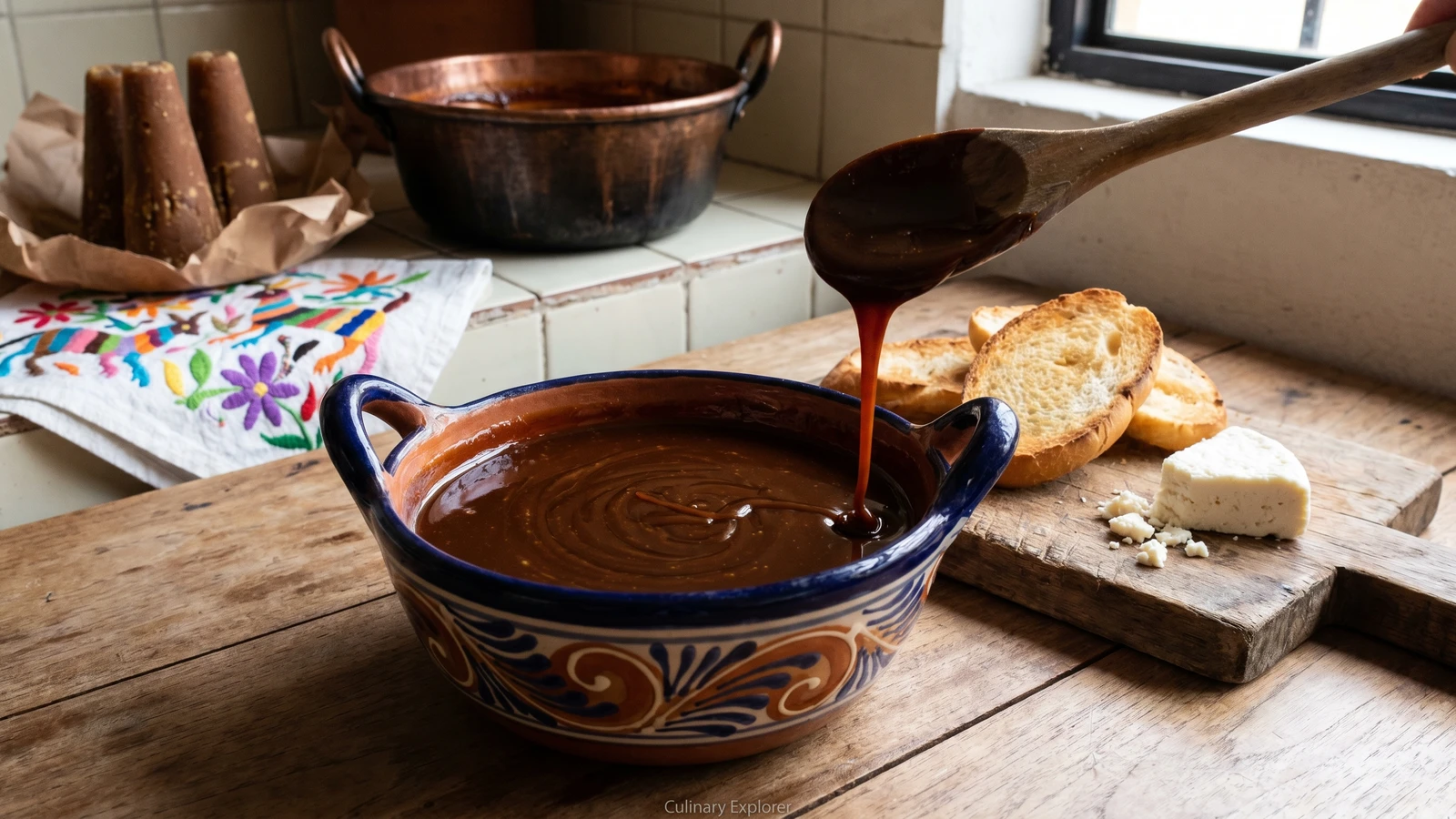
Guanajuato's Bajío market dulce de leche, whole leche de vaca and piloncillo reduced in a copper cazo until the spoon leaves a path, thick enough for bolillo and sold by the kilo.
Guanajuato, in the Bajío, is where this dulce de leche con piloncillo belongs: between the dairy haciendas, the Celaya cajeta counters, and the dulcería de barrio where sweets are weighed by the kilo. This is not Cajeta Quemada de Santa Rosa, and it is not a convent custard. The technique speaks the language of the cajeteros of Celaya, Salgado, La Tradicional, Coronel Sánchez, but this version is the cow-milk dulce de leche of the market table.
The Bajío became one of New Spain's strongest dairy regions in the 17th and 18th centuries because the mining centers of Guanajuato, San Luis Potosí, and Querétaro were fed by nearby haciendas. Celaya's cajeta, traditionally made with goat milk and packed in small wooden cajetes, was recognized as a regional sweet by the 19th century; cow-milk dulce de leche with piloncillo belongs to the same hacienda and mercado economy but is not the same dish. Piloncillo came from colonial sugarcane trapiches, and its dark cane flavor is why this version tastes deeper than white-sugar cajeta.
Quantity
3 liters
preferably not ultra-pasteurized
Quantity
500 grams
chopped or grated
Quantity
1, about 3 inches
Quantity
1/2 teaspoon
dissolved in 2 tablespoons cool milk
Quantity
1/4 teaspoon
Quantity
for serving
split and toasted
Quantity
for serving
| Ingredient | Quantity |
|---|---|
| whole cow's milk (leche de vaca entera)preferably not ultra-pasteurized | 3 liters |
| piloncillo oscurochopped or grated | 500 grams |
| raja de canela mexicana | 1, about 3 inches |
| baking soda (bicarbonato de sodio)dissolved in 2 tablespoons cool milk | 1/2 teaspoon |
| fine sea salt | 1/4 teaspoon |
| bolillo or telera (optional)split and toasted | for serving |
| queso fresco de rancho (optional) | for serving |
Use a clean copper cazo if you have one, the kind used for milk sweets and sugar work in the Bajío. If the copper has any green spots, do not use it. Use a wide heavy stainless pot instead. Put a small ceramic plate in the freezer now so you can test the punto later.
Pour the leche de vaca into the cazo. Add the canela and salt. Warm over medium heat until tiny bubbles gather at the edge and the milk smells sweet and clean. Do not boil hard. Milk that boils like soup climbs, scorches, and makes you scrub the stove. Ask any señora at the Mercado Hidalgo de Guanajuato.
Add the chopped piloncillo by handfuls, stirring with a long wooden cuchara until it dissolves completely. Piloncillo is not brown sugar. It tastes of cane, minerals, and the trapiche. If you see grit or cane fiber in the milk, strain the mixture into a clean cazo and continue. That is market cooking, not a defect.
Stir the dissolved bicarbonato into the milk. The mixture will rise and foam, so keep your spoon moving and do not panic. The bicarbonato protects the milk from curdling and helps the dulce take on that deep Bajío color. This is one of the quiet tricks of the dulceros.
Lower the heat to medium-low and cook, uncovered, stirring every few minutes at first and more often as it thickens. Scrape the bottom and the sides of the cazo each time. The color will move from café con leche to chestnut, and the bubbles will get slower and heavier. No me vengas con atajos. Condensed milk will not give you this flavor.
After about two hours, remove the canela. Drag the spoon across the bottom of the cazo. When the path stays open for two seconds before the dulce closes back in, start testing. Drop a little onto the frozen plate. It should hold a soft mound and wrinkle when pushed with your finger. A thermometer should read about 222F for spoonable dulce or 224F to 225F for the thicker mercado style that pulls from the cazo.
Pull the cazo from the heat. Let the bubbling settle for five minutes, then pour the dulce into clean glass jars or clay tazones. Do not scrape in any scorched bits if the bottom caught. It will thicken as it cools. Serve with toasted bolillo, a spoon, and queso fresco de rancho if you have it. Recetas probadas y garantizadas.
1 serving (about 110g)
Culinary guides, cultural storytelling, and the editorial depth that makes cooking meaningful.
Discover Culinary ExplorerChef Lupita
Puebla's convent-style acitrón, made from cidra peel instead of endangered biznaga, built through repeated syrup soakings until the cubes turn firm, translucent, and ready for rosca or chiles en nogada.

Chef Lupita
Ciudad de México's Tulyehualco alegría is popped huautli folded into piloncillo honey, pressed with peanuts, pepitas, and raisins, then cut into the rectangular bars that built a pueblo's identity.

Chef Lupita
Oaxaca's pre-Columbian amaranth bar, popped on a hot comal and bound with piloncillo, honey, and the sacred Zapotec grain that the Spanish tried, and failed, to outlaw.

Chef Lupita
Querétaro's mercado candy of popped amaranto pressed with dark piloncillo syrup, pepitas, pecans, and cacahuate, a Bajío sweet that respects the seed before it decorates the table.