
Chef Lupita
Acitrón de Cidra Conventual
Puebla's convent-style acitrón, made from cidra peel instead of endangered biznaga, built through repeated syrup soakings until the cubes turn firm, translucent, and ready for rosca or chiles en nogada.
A cooking platform built around craft, culture, and the stories behind what we eat.
Created by
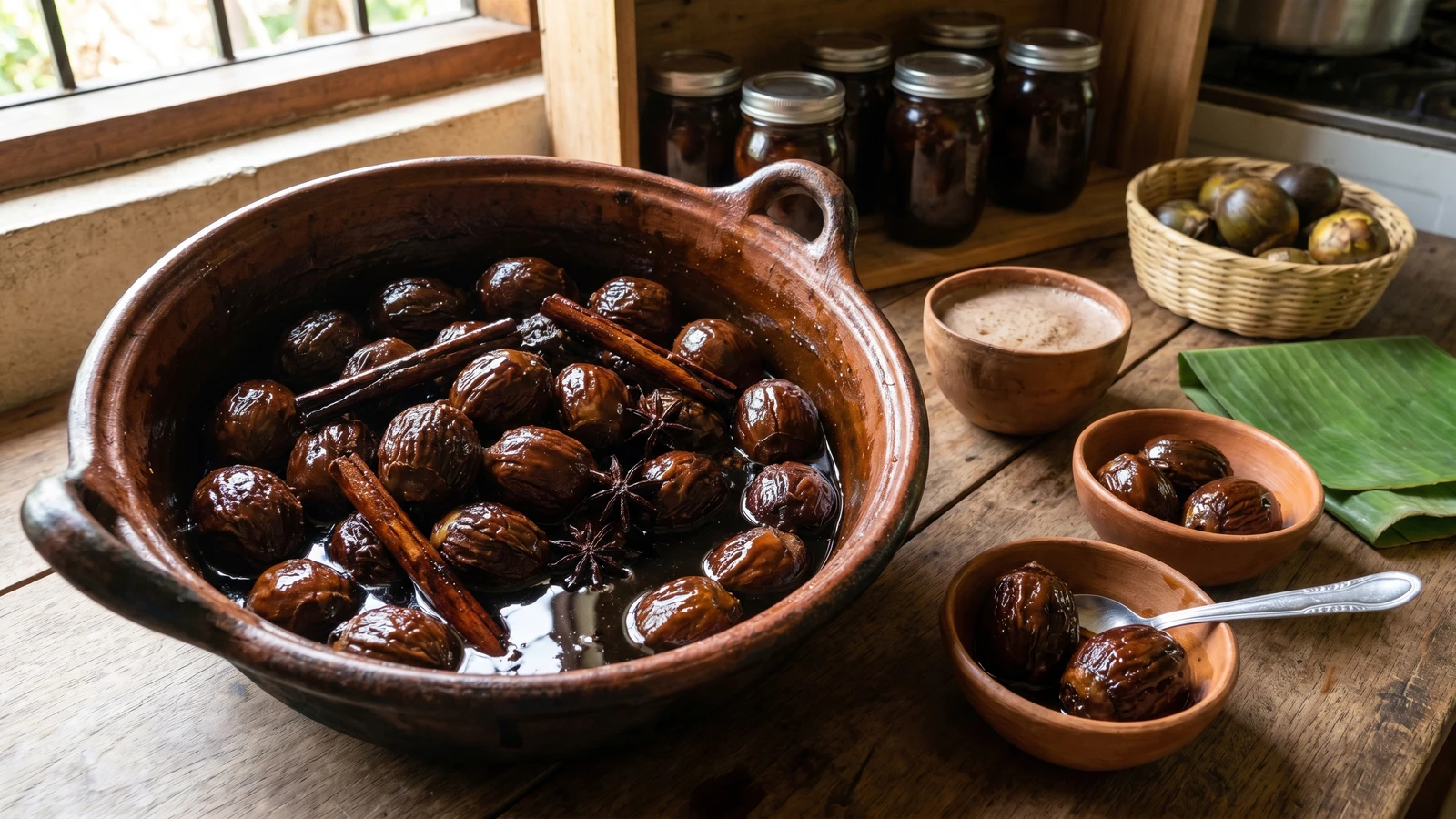
Tabasco's Chontalpa preserve of coyol palm fruit, slow-cooked in piloncillo and canela until the fibrous pulp drinks the syrup and the fruit is eaten by cracking, sucking, and taking your time.
Tabasco, especially the Chontalpa and the river country around the Grijalva, is where this dulce belongs. Cocoyol grows in the hot, humid lowlands where palm, cacao, banana, and cane have fed people longer than any supermarket aisle has existed. This is not pastry. This is fruta en dulce, cooked until the fruit becomes dark, sticky, and patient.
The cocoyol fruit is stubborn. Good. Some foods should argue back. You wash it, nick it, simmer it first in plain water, then cook it slowly with piloncillo, canela, and star anise until the syrup turns the color of wet clay and the pulp around the hard stone softens. The center stays hard. Do not bite like a fool. You crack, suck, scrape with your teeth, and let the syrup do what it came to do.
I learned this kind of dulce from women who cooked by the pot, not by the plated dessert. In Villahermosa and in small Chontal kitchens, a jar of cocoyol in syrup sits ready for visits, holidays, and the kind of afternoon when coffee is not enough. Cada estado, su propia cocina. Tabasco gives you palm fruit, piloncillo, humidity, and time. No me vengas con atajos.
Cocoyol, from the coyol palm (Acrocomia aculeata), has been eaten across southeastern Mexico since before the colonial sugar economy, first as a wild palm fruit and later as a preserved sweet once cane sugar and piloncillo became common in regional kitchens. In Tabasco and neighboring parts of Campeche, Chiapas, and Yucatan, fruit preserves became tied to home dulcerias because the climate demanded preservation before refrigeration was reliable. The Tabasco version is distinguished by long simmering in piloncillo syrup with canela and anise, producing a dark preserve meant to be eaten by hand, not sliced like European candied fruit.
Quantity
2 pounds
washed well
Quantity
8 cups, plus more as needed
Quantity
1 1/2 pounds
chopped
Quantity
2
Quantity
3
Quantity
4
Quantity
1 strip
white pith removed
Quantity
1/2 teaspoon
| Ingredient | Quantity |
|---|---|
| fresh cocoyol palm fruitwashed well | 2 pounds |
| water | 8 cups, plus more as needed |
| piloncillochopped | 1 1/2 pounds |
| Mexican cinnamon sticks (canela) | 2 |
| whole star anise | 3 |
| whole cloves | 4 |
| fresh orange peelwhite pith removed | 1 strip |
| kosher salt | 1/2 teaspoon |
Rinse the cocoyol fruit under running water and scrub away any soil clinging to the skin. Discard any fruit that smells fermented or has soft rotten spots. This preserve depends on the fruit staying whole, so start clean.
With a small heavy knife, make one shallow cut or firm tap in each cocoyol, just enough to open the skin without splitting the fruit apart. The syrup needs a door. If you leave the fruit completely sealed, it cooks on the outside and stays dull inside.
Put the cocoyol in a heavy pot and cover with the 8 cups of water. Bring to a steady simmer and cook for 45 minutes, until the outer pulp begins to yield when pressed with a spoon. This first cooking softens the fruit before the sugar goes in. Sugar tightens fruit if you add it too early. Preguntale a las senoras del mercado.
Add the chopped piloncillo, canela, star anise, cloves, orange peel, and salt to the pot. Stir until the piloncillo dissolves. The liquid should turn deep brown and smell of cane, spice, and palm fruit. Reduce the heat to low.
Cook uncovered at a low simmer for 2 1/2 to 3 hours, stirring every 20 minutes so the fruit cooks evenly. Add a little hot water if the syrup drops below the top layer of fruit before the cocoyol is tender. The syrup should thicken slowly, not scorch. When ready, the fruit will look glossy and dark, and the outer flesh will give under pressure. The inner stone remains hard. Asi se hace y punto.
Turn off the heat and let the cocoyol rest in its syrup for at least 4 hours, or overnight if you planned properly. This is when the flavor settles into the fruit. A rushed dulce tastes sweet on the surface and empty inside. Saber cocinar es saber vivir.
The next day, bring the pot back to a low simmer for 20 to 30 minutes, until the syrup coats a spoon and falls in slow drops. Remove the orange peel if it starts tasting bitter. Leave the canela and star anise in the jar if you like the look, but do not pretend they are garnish. They are seasoning.
Spoon the cocoyol and syrup into clean glass jars while still warm, making sure the fruit is covered. Serve at room temperature in small clay bowls. To eat, crack or bite carefully into the softened outer shell, suck the syrupy pulp, and discard the hard center. This is not a fork dessert. It is Tabasco in your hands.
1 serving (about 180g)
Culinary guides, cultural storytelling, and the editorial depth that makes cooking meaningful.
Discover Culinary ExplorerChef Lupita
Puebla's convent-style acitrón, made from cidra peel instead of endangered biznaga, built through repeated syrup soakings until the cubes turn firm, translucent, and ready for rosca or chiles en nogada.

Chef Lupita
Ciudad de México's Tulyehualco alegría is popped huautli folded into piloncillo honey, pressed with peanuts, pepitas, and raisins, then cut into the rectangular bars that built a pueblo's identity.

Chef Lupita
Oaxaca's pre-Columbian amaranth bar, popped on a hot comal and bound with piloncillo, honey, and the sacred Zapotec grain that the Spanish tried, and failed, to outlaw.

Chef Lupita
Querétaro's mercado candy of popped amaranto pressed with dark piloncillo syrup, pepitas, pecans, and cacahuate, a Bajío sweet that respects the seed before it decorates the table.