Culinary Explorer
A cooking platform built around craft, culture, and the stories behind what we eat.
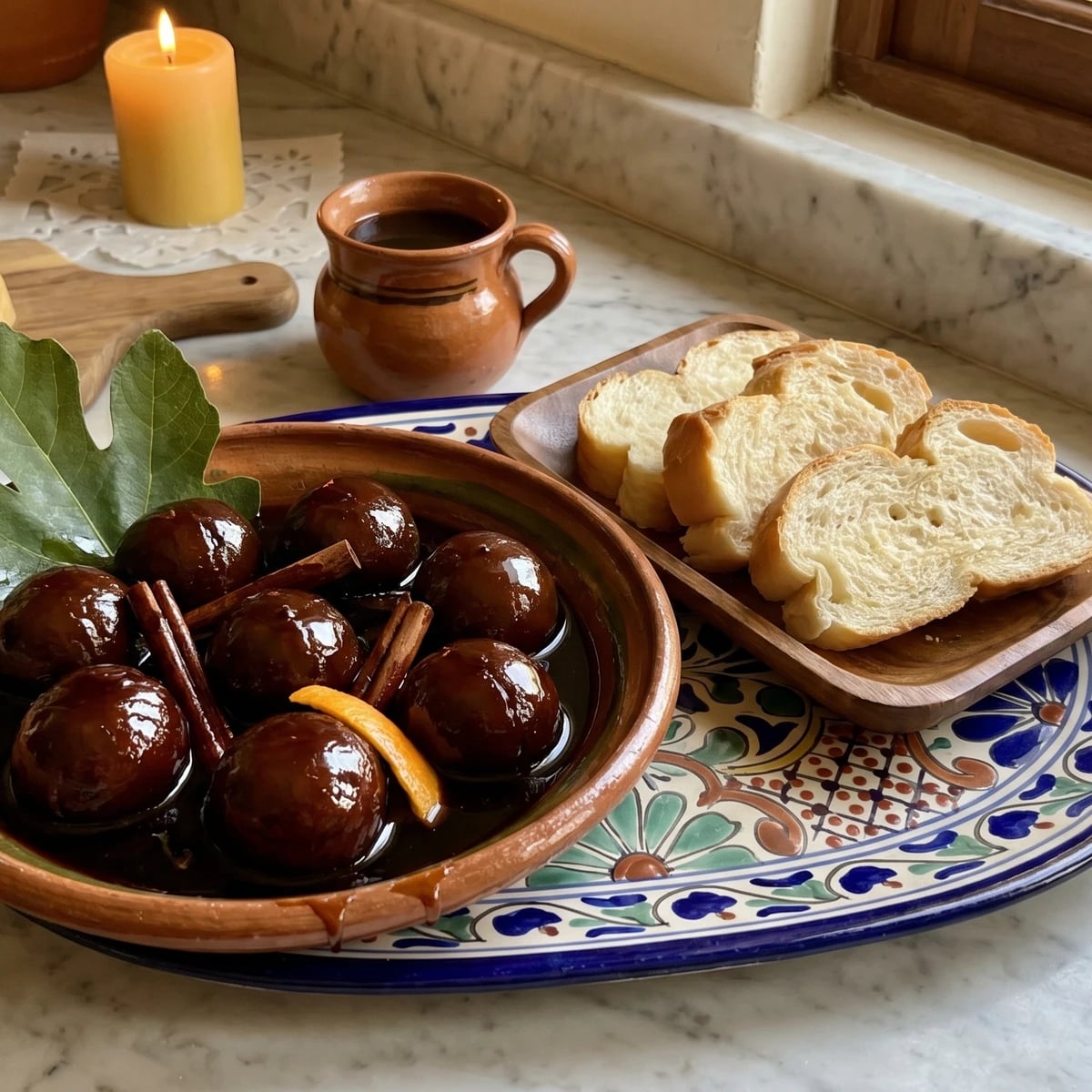
Dulce de Ciruela Campechana
Created by Chef Lupita
Campeche's signature dulce de almíbar, built on wild ciruela de monte, piloncillo, and fresh hojas de higo, cooked low and slow until the syrup runs dark as molasses and the fruit holds the perfume of the canela.
This is from Campeche. Not from Yucatán next door, not from Tabasco below it, from Campeche, where the dulcerías of the historic center have been making fruit in almíbar the same way for four generations. The Peninsula has a serious sweet tradition that most of Mexico forgets exists, and Campeche is its quiet capital.
The fruit is ciruela de monte. Wild jocote. Spondias purpurea. This is not the European plum and it is not the round red ciruela you find in U.S. supermarkets. It is a small oval fruit the size of a quail egg, with a thin skin that turns from green to yellow to deep red, a single large pit, and a tart-sweet flesh that holds up to hours of slow cooking. The trees grow wild across the Yucatán Peninsula and the fruit appears in the mercados of Campeche, Mérida, and Valladolid from late spring through early summer. If you cannot find ciruela de monte where you live, wait for the season or find a Yucatecan mercado. Do not substitute Italian prune plums and call it the same dish. It is not.
The other ingredient that makes this dulce is the hoja de higo, fresh fig leaf, laid in the pot above and below the fruit. The leaves give the almíbar a green, almost coconut perfume that lifts the heaviness of the piloncillo and turns the syrup into something you cannot identify by smell alone. Pregúntale a las señoras del mercado Lucas de Gálvez and they will tell you the same thing: sin hoja de higo, no es dulce campechano.
My mother never made this. Jalisco does not have ciruela de monte. I learned this from Doña Aurelia in the Mercado Principal of Campeche, who keeps a copper cazo on the back burner of her stall and adds fruit to it whenever the season turns. She wrote down the proportions for me on the back of a paper bag in 2014. She told me the only secret was time. Saber cocinar es saber vivir, and saber esperar también.
Ingredients
wild ciruela de monte (Spondias purpurea)
Quantity
3 pounds
firm and just barely yielding
piloncillo cono
Quantity
2 pounds
broken into rough chunks
water
Quantity
2 cups
| Ingredient | Quantity |
|---|---|
| wild ciruela de monte (Spondias purpurea)firm and just barely yielding | 3 pounds |
| piloncillo conobroken into rough chunks | 2 pounds |
| water | 2 cups |
Where cooking meets culture.
Culinary guides, cultural storytelling, and the editorial depth that makes cooking meaningful.
Discover Culinary Explorer