
Chef Lupita
Acitrón de Cidra Conventual
Puebla's convent-style acitrón, made from cidra peel instead of endangered biznaga, built through repeated syrup soakings until the cubes turn firm, translucent, and ready for rosca or chiles en nogada.
A cooking platform built around craft, culture, and the stories behind what we eat.
Created by
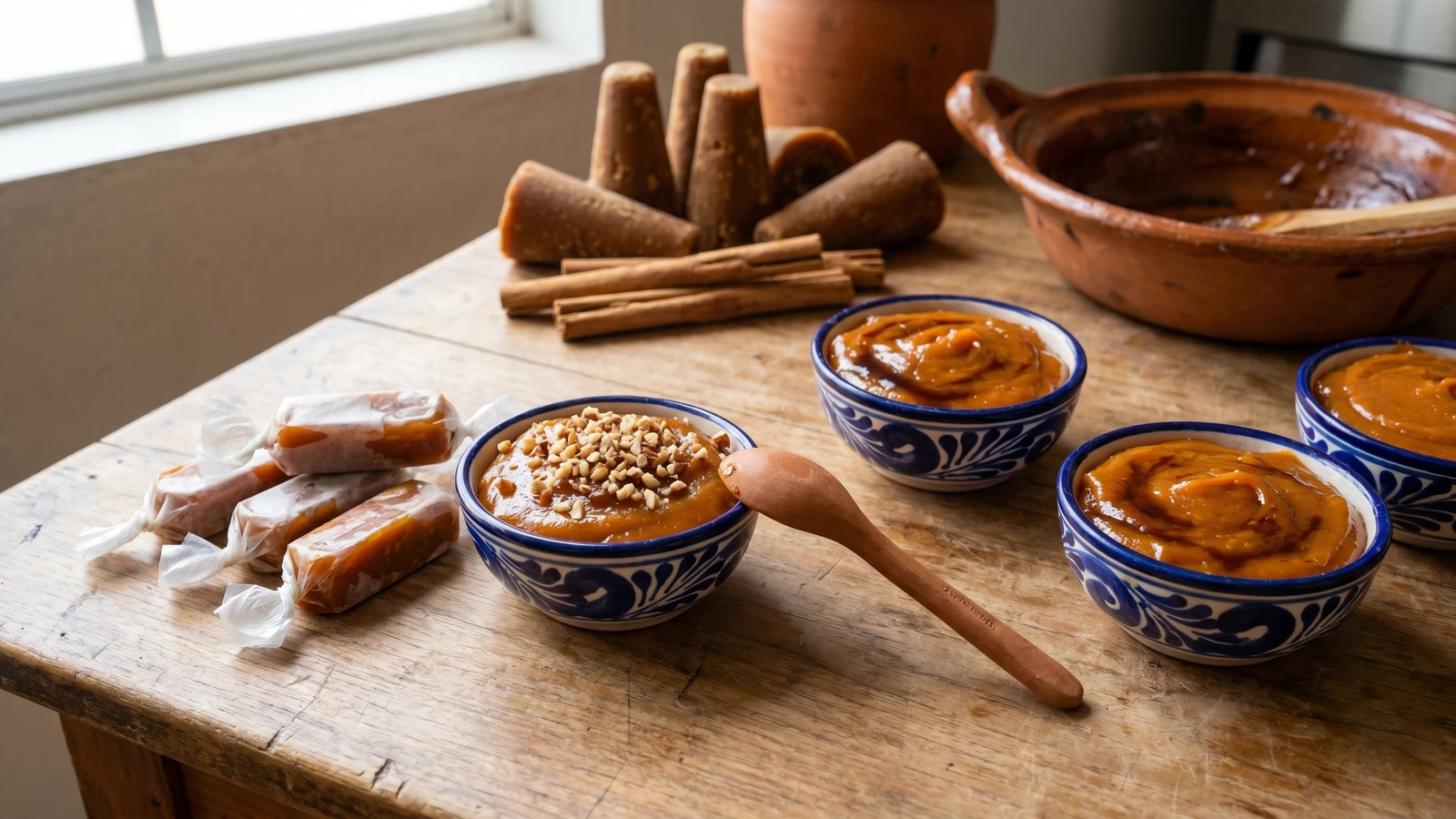
Puebla's colonial dulceria candy made from camote, piloncillo, canela, orange zest, and lime, cooked slowly until the spoon stands in the paste.
Puebla owns this candy. Walk the Calle de los Dulces in the historic center and you'll see camotes wrapped in waxed paper, stacked in boxes, sold beside tortitas de Santa Clara and jamoncillo. This is not a side dish with marshmallows. No me vengas con eso. This is a poblano confection, patient and old, made from sweet potato cooked until it becomes paste.
The ingredient that matters is camote amarillo, sweet potato with dense orange flesh. It takes the piloncillo and canela well, and it gives the candy body without needing gelatin or tricks. The syrup must cook down slowly. If you rush it, the paste stays loose. If you walk away, it scorches. La cocina no es decoración, es trabajo.
I learned this version from a señora near the Mercado La Acocota who sold sweets by weight before Christmas. She used piloncillo instead of white sugar when she wanted a darker, deeper candy for the holiday table. She served it in little copitas, not because it was fancy, but because the candy is rich and a spoonful is enough. Cada estado, su propia cocina.
Camote is a pre-Columbian American root, but Puebla's camote candy belongs to the colonial convent dulceria tradition that developed in the 17th and 18th centuries around convents such as Santa Clara and Santa Rosa. The famous camotes poblanos, often shaped into small logs and wrapped in paper, became a commercial specialty of Puebla's historic center by the 19th century. The dish shows the meeting of native sweet potato with Spanish sugar-confection techniques and Mexican piloncillo syrup.
Quantity
2 pounds
scrubbed
Quantity
10 ounces
chopped
Quantity
1 cup
Quantity
1
Quantity
2 wide strips
with no white pith
Quantity
1 tablespoon
Quantity
1/4 teaspoon
Quantity
1 teaspoon paste or seeds from 1/2 bean
Quantity
2 tablespoons
finely chopped
| Ingredient | Quantity |
|---|---|
| camote amarilloscrubbed | 2 pounds |
| piloncillochopped | 10 ounces |
| water | 1 cup |
| Mexican canela stick | 1 |
| orange zestwith no white pith | 2 wide strips |
| fresh lime juice | 1 tablespoon |
| fine sea salt | 1/4 teaspoon |
| pure vanilla paste or vanilla bean seeds (optional) | 1 teaspoon paste or seeds from 1/2 bean |
| toasted pecans (optional)finely chopped | 2 tablespoons |
Place the scrubbed camotes in a pot and cover with water by one inch. Simmer until a knife slides through the thickest part without resistance, 35 to 45 minutes depending on size. Do not peel them first. The skin protects the flesh from getting watery.
Drain the camotes and let them sit until you can handle them. Peel off the skins while they are still warm. Mash the flesh very smooth with a potato masher, then press it through a sieve if you want a finer dulceria texture. Lumps are for a family pot. Smooth paste is for candy.
In a wide heavy cazuela or Dutch oven, combine the piloncillo, water, canela, orange zest, lime juice, and salt. Cook over medium heat, stirring until the piloncillo dissolves. Let it bubble gently for 8 to 10 minutes, until the syrup smells of canela and orange and coats the spoon lightly.
Remove the canela and orange zest. Stir the mashed camote into the syrup. Lower the heat to medium-low and cook, stirring with a wooden spoon, until the mixture thickens into a glossy paste, 35 to 45 minutes. Scrape the bottom constantly near the end. It is ready when the spoon leaves a clean path across the bottom of the pot for two seconds.
Stir in the vanilla only if using it. Taste. The lime should sharpen the sweetness without announcing itself. Spoon the hot paste into small copitas for a soft dulce, or spread it 3/4 inch thick on a parchment-lined tray for a sliceable candy. Let it cool completely at room temperature.
For copitas, serve once cool with a few toasted pecans if you like. For sliceable dulce, let the tray sit uncovered in a dry place for 8 to 12 hours, then cut into rectangles and wrap in waxed paper. Recetas probadas y garantizadas, but only if you let the candy set.
1 serving (about 105g)
Culinary guides, cultural storytelling, and the editorial depth that makes cooking meaningful.
Discover Culinary ExplorerChef Lupita
Puebla's convent-style acitrón, made from cidra peel instead of endangered biznaga, built through repeated syrup soakings until the cubes turn firm, translucent, and ready for rosca or chiles en nogada.

Chef Lupita
Ciudad de México's Tulyehualco alegría is popped huautli folded into piloncillo honey, pressed with peanuts, pepitas, and raisins, then cut into the rectangular bars that built a pueblo's identity.

Chef Lupita
Oaxaca's pre-Columbian amaranth bar, popped on a hot comal and bound with piloncillo, honey, and the sacred Zapotec grain that the Spanish tried, and failed, to outlaw.

Chef Lupita
Querétaro's mercado candy of popped amaranto pressed with dark piloncillo syrup, pepitas, pecans, and cacahuate, a Bajío sweet that respects the seed before it decorates the table.