
Chef Joost
Appelpannenkoek
The apple pannenkoek is supper pretending to be breakfast: a plate-wide Dutch pancake, tart apple softened into the batter, and cinnamon sugar doing honest work.
A cooking platform built around craft, culture, and the stories behind what we eat.
Created by
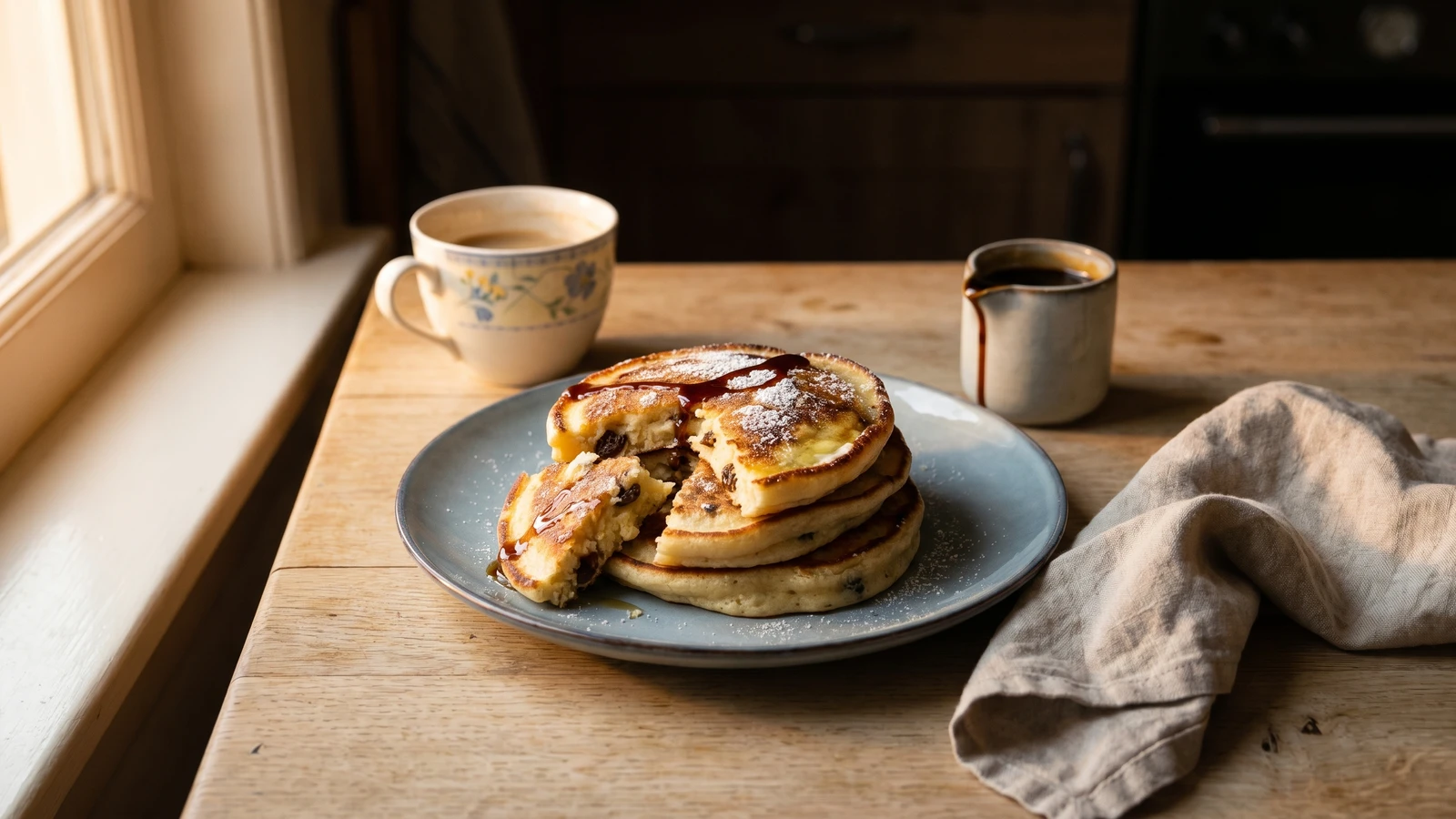
The name means exactly what the pan can hold: three small yeasted pancakes, fat with raisins, born from thrift and made for a table that expects seconds.
In my grandmother's second notebook, the recipe sits in the handwriting she used for things everyone was supposed to know already. Drie-in-de-pan. Three in the pan. No poetry pretending to be mysterious, no Latin hiding in the cupboard. The name already tells you the method, which is sometimes the most Dutch kind of etymology: look at the pan, count to three, eat while warm.
But let me tell you a secret. These are not ordinary pancakes made smaller. They belong to the older family of yeasted batter cakes, thicker and more patient, the sort of breakfast that could make a little flour, milk, and a handful of raisins feel generous. A country that learned thrift from damp fields and hard winters became very good at this trick. The raisins swell in the batter, the yeast gives a soft chew, and the edges brown in butter until they taste faintly nutty.
The method asks for one virtue: waiting. Let the batter rise until it looks alive and pocked with bubbles, then stir it down gently and fry small rounds, three at a time, because that is the size of the promise. Hou het altijd simpel, always keep it simple. Butter, batter, patience, and a little sugar at the table.
Drie-in-de-pan appears in Dutch household cookery as a thrifty pan-baked batter dish, related to older yeasted pancakes and raisin cakes made before chemical baking powder became common in home kitchens. Its name is literal rather than ornamental: three small pancakes were cooked together in one frying pan, a practical size for even browning and quick serving. The dish belongs especially to domestic breakfast and midday tables, where enriched batter turned modest staples into something festive without asking the household purse for much.
Quantity
250g
Quantity
7g
Quantity
25g
Quantity
1/2 teaspoon
Quantity
300ml
Quantity
1 large
Quantity
75g
Quantity
25g
melted, plus more for frying
Quantity
to serve
Quantity
to serve
| Ingredient | Quantity |
|---|---|
| all-purpose flour | 250g |
| instant yeast | 7g |
| sugar | 25g |
| fine salt | 1/2 teaspoon |
| lukewarm milk | 300ml |
| egg | 1 large |
| raisins | 75g |
| buttermelted, plus more for frying | 25g |
| powdered sugar (optional) | to serve |
| Dutch stroop or maple syrup (optional) | to serve |
Whisk the flour, yeast, sugar, and salt together in a large bowl. Beat the lukewarm milk with the egg, then stir it into the flour until you have a thick, smooth batter. Stir in the melted butter and raisins. The batter should drop slowly from the spoon, not pour like ordinary pancake batter.
Cover the bowl and leave it in a warm place for about one hour, until the batter looks swollen and pocked with small bubbles. This is where the old character of the dish comes from; the yeast makes the pancakes thick and tender, while the raisins plump quietly inside.
Set a wide frying pan over medium heat and melt in a small knob of butter. The butter should foam and settle, then smell nutty, not dark. Stir the risen batter once or twice to even it out without beating all the life from it.
Spoon three small mounds of batter into the pan, each about eight centimetres wide. Cook for two to three minutes, until the edges are set, the bottoms are deep golden, and small bubbles show on top. Turn them carefully and cook the second side for another two minutes.
Move the pancakes to a warm plate and repeat with the remaining batter, adding a little butter as needed. Serve with powdered sugar and, if the table asks for it, a thin thread of stroop. Three in the pan, many on the plate. That is the arithmetic.
1 serving (about 60g)
Culinary guides, cultural storytelling, and the editorial depth that makes cooking meaningful.
Discover Culinary ExplorerChef Joost
The apple pannenkoek is supper pretending to be breakfast: a plate-wide Dutch pancake, tart apple softened into the batter, and cinnamon sugar doing honest work.

Chef Joost
The name is plain because the dish is plainspoken: eggs, bacon, onion, and yesterday's potato, folded into the sort of meal that kept a farm kitchen moving.

Chef Joost
The boerenpannenkoek is the pancake that stopped pretending to be breakfast: bacon, ham, onion, mushrooms, pepper, and cheese folded into one wide, honest Dutch meal.

Chef Joost
The delicate end of the Dutch pancake family: thin flensjes, rolled rather than stacked, made from a plain batter that proves how much a humble table can hold.