
Chef Thomas
A Ploughman's Salad
The old pub ploughman's, shaken loose from its board and laid across butter lettuce with a sharp mustard dressing, for the kind of lunch that feels like you've given yourself the afternoon off.
A cooking platform built around craft, culture, and the stories behind what we eat.
Created by Chef Thomas
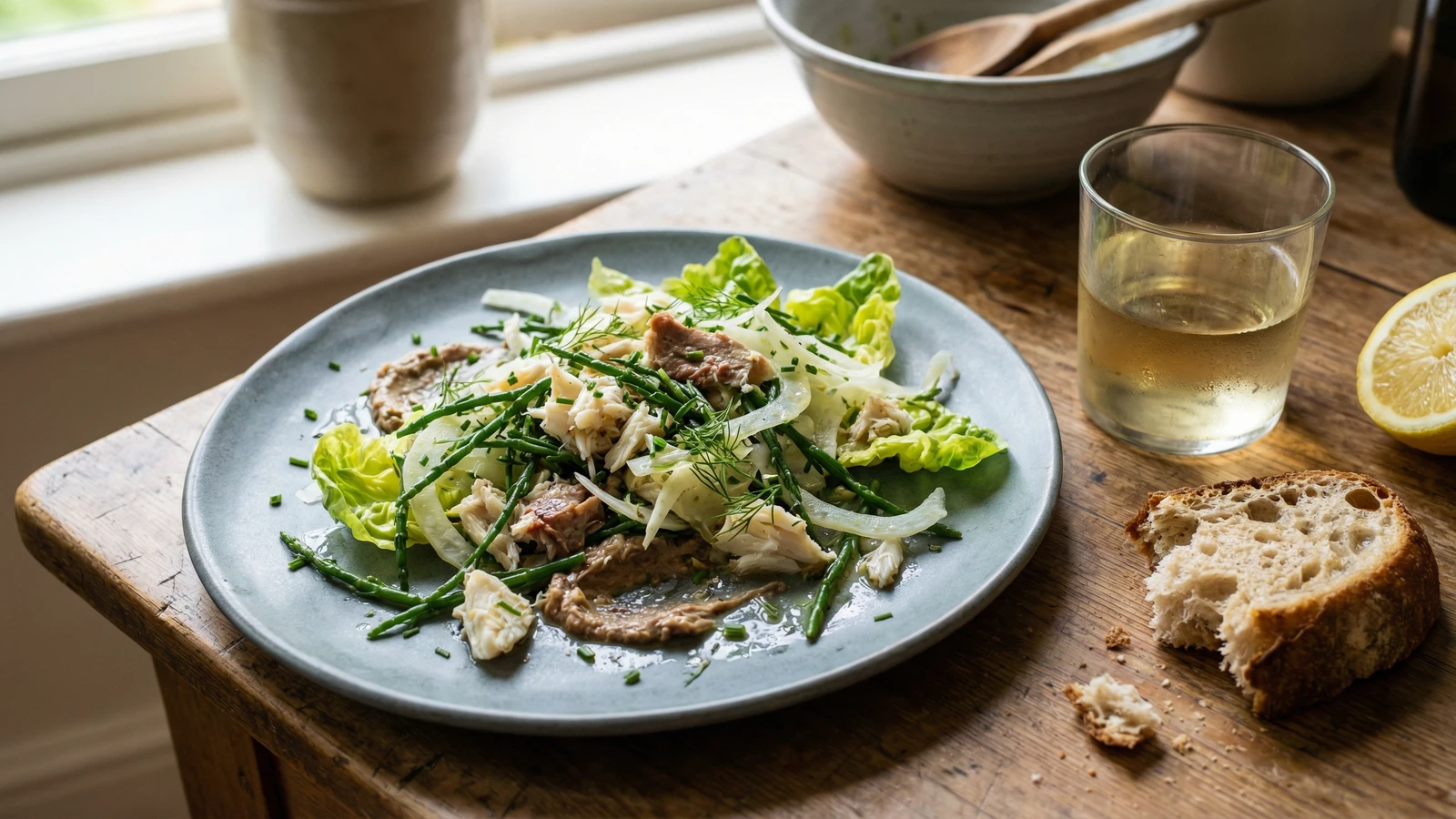
Sweet crab meat, white and brown, scattered over blanched samphire and paper-thin fennel on soft lettuce. A plate that tastes of the coast and asks for nothing but good ingredients and a lemon.
Samphire turns up at the fishmonger in June, bundled in loose handfuls, smelling of salt marshes. That's when you know the coast is calling. If the samphire is there, the crab won't be far behind, and the fennel is already sitting in the market looking pale and cool as glass.
This is a plate of assembly, not construction. You blanch the samphire for less than a minute. You shave the fennel thin enough to read through. You dress the crab with lemon and mustard and almost nothing else, because crab that needs disguising isn't crab worth buying. The brown meat goes on in rich, savoury smears. The white meat sits in clean, sweet flakes. Between them they carry every flavour the sea has to offer.
I made this for the first time on a Saturday in July, years ago. The kitchen window was open. The crab came from a man at the market who'd driven in that morning from the coast, the shells still cold from the cool box. I wrote it down in the notebook: crab, samphire, fennel, the smell of lemon on my hands. There are few better feelings than putting a plate like this in front of someone on a warm evening when the light is still good and the wine is cold.
The market decides what goes on the plate. If you can find good crab and a handful of samphire, the rest is a conversation, not a contract. Your kitchen, your rules.
Quantity
2 whole, or 300g mixed crab meat
white and brown meat separated
Quantity
150g
woody ends trimmed
Quantity
1 large
shaved thinly, fronds reserved
Quantity
1 head
leaves separated and washed
Quantity
1
zested and juiced
Quantity
3-4 tablespoons
Quantity
1 teaspoon
Quantity
small pinch
Quantity
to taste
Quantity
to taste
Quantity
a few
finely snipped
| Ingredient | Quantity |
|---|---|
| dressed crabswhite and brown meat separated | 2 whole, or 300g mixed crab meat |
| samphirewoody ends trimmed | 150g |
| fennel bulbshaved thinly, fronds reserved | 1 large |
| butterhead lettuceleaves separated and washed | 1 head |
| lemonzested and juiced | 1 |
| extra virgin olive oil | 3-4 tablespoons |
| Dijon mustard | 1 teaspoon |
| cayenne pepper | small pinch |
| fine sea salt | to taste |
| black pepper | to taste |
| chives (optional)finely snipped | a few |
Scoop the brown meat into a small bowl. It should be rich, creamy, and the colour of wet sand. Add the Dijon mustard, a good squeeze of lemon juice, the cayenne, and a thread of olive oil. Mash it together with a fork until it's smooth and loose enough to spread. Taste it. The brown meat carries the real depth of the crab, savoury and mineral, almost like the sea itself. Season only if it needs it. Often it doesn't.
Tip the white meat onto a plate and go through it gently with your fingers. You're looking for fragments of shell or cartilage, the tiny translucent shards that hide in the flakes. Take your time. One piece of shell in a mouthful of crab can undo the whole thing. Once you're satisfied, put the white meat in a bowl. Add a squeeze of lemon, a little olive oil, and a grind of black pepper. Toss it gently. Leave it alone.
Bring a small pan of water to a rolling boil. No salt. Samphire carries enough of its own. Drop the samphire in and count to forty, maybe a minute if the stems are thick. You want it bright green and tender with a bit of resistance, not limp. Drain and run it under cold water to stop the cooking. Shake it dry. It should taste of the sea and snap gently between your teeth.
Halve the fennel and slice it as thinly as you can manage. A mandoline if you have one, a sharp knife and patience if you don't. You want it translucent, almost paper-thin, so it curls on itself. Drop the slices into a bowl of cold water with a squeeze of lemon. This keeps them crisp and stops them browning. Drain and pat dry when you're ready to assemble.
In a small bowl or jar, combine two tablespoons of lemon juice with three tablespoons of your best olive oil. Add the lemon zest and a pinch of salt. Whisk with a fork or shake until it comes together. It should taste bright and clean, a counterpoint to the richness of the crab. Nothing more is needed.
Lay the butterhead lettuce leaves across a large serving plate or divide them between four plates. They should look like soft, pale cups waiting to be filled. Scatter the shaved fennel and blanched samphire across the lettuce. Spoon the brown crab meat in small, rough dollops among the greenery. Then arrange the white meat over and around, keeping it in loose flakes rather than packing it down. Drizzle the dressing over everything. Finish with the reserved fennel fronds and a scattering of snipped chives. Bring it to the table with lemon halves and let people help themselves. This is not a dish that benefits from precision. It wants to look generous and slightly windswept, as if the sea had a hand in arranging it.
1 serving (about 240g)
Culinary guides, cultural storytelling, and the editorial depth that makes cooking meaningful.
Discover Culinary ExplorerChef Thomas
The old pub ploughman's, shaken loose from its board and laid across butter lettuce with a sharp mustard dressing, for the kind of lunch that feels like you've given yourself the afternoon off.

Chef Thomas
Double-podded broad beans and sweet peas, dressed simply with torn mint, lemon, and good olive oil. The kind of bowl that tastes the way a June garden smells.

Chef Thomas
Celeriac cut into pale matchsticks and dressed in sharp mustard and crème fraîche, the sort of thing you make on a Sunday and find yourself eating from the bowl with a fork on Tuesday.

Chef Thomas
Bitter chicory leaves carrying sharp apple, crumbled Stilton, and toasted walnuts, dressed with cider vinegar and honey. A winter salad that earns its place at the table when the garden has shut up shop.