
Chef Jeong-sun
Aehobak-bokkeum (Korean Stir-Fried Zucchini)
Tender Korean zucchini half-moons cooked quickly over real heat, seasoned with salted shrimp so the squash tastes deeper than oil and still clean enough for a weeknight table.
A cooking platform built around craft, culture, and the stories behind what we eat.
Created by
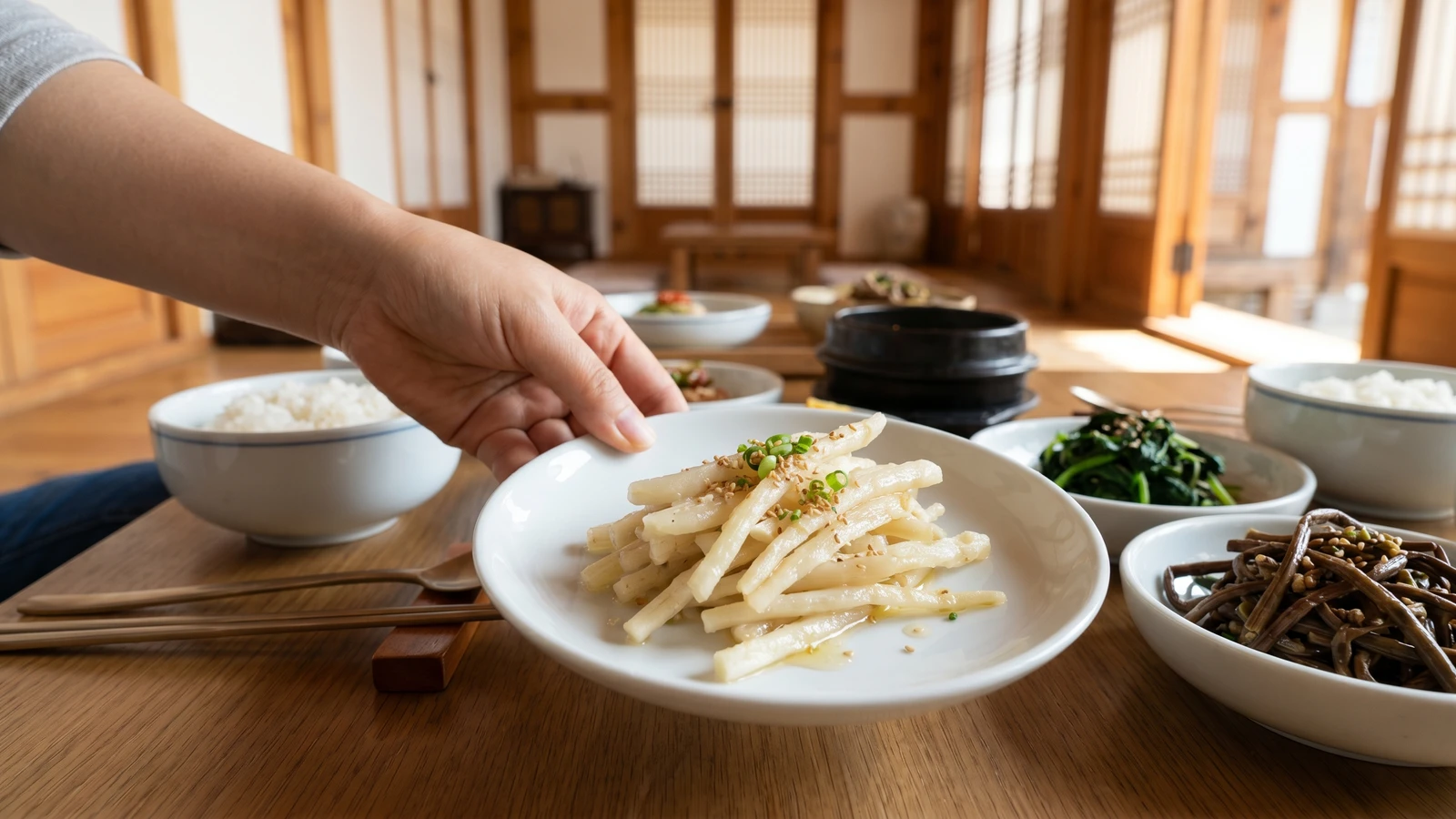
Pale bellflower root softened by salt, rinsing, and a brief sauté, the white doraji namul that belongs beside rice and on the rite table.
Doraji-namul lives or dies before it ever reaches the pan. Bellflower root has a good bitterness, the kind that wakes up rice, but if you leave it wild it takes over the bowl. My teacher made us salt it, rub it, rinse it, taste it, and only then cook. 눈동냥, 귀동냥: borrowing with the eyes and ears. You learned the dish by watching how hard the hands worked.
This is the cooked white doraji, not the red, spicy doraji-saengchae (raw seasoned bellflower root). It sits with the pale namul on a family table, and it also appears on charye and jesa tables, where the seasoning is kept quiet and the color stays clean. If you are cooking for a rite table, leave out the garlic and scallion. If you are cooking for dinner, use the small measured amount here. Times change, the table changes, but the root still needs the same handling.
Tonight this dish asks for patience, not difficulty. Split the thick pieces to one even width, rub them with salt until they bend, then rinse until the bitterness is clear but not erased. Let it taste like itself. A namul should not disappear under seasoning; it should remind you what grew in the ground.
Doraji, the root of Platycodon grandiflorus, has long been used in Korea as both food and medicinal herb, valued especially for its bitter saponins and its association with the mountain table. Cooked white doraji-namul is one of the classic samsaek-namul, three-color vegetables often prepared for charye and jesa tables with spinach or other greens and gosari (bracken). The spicy raw version, doraji-saengchae, is a separate preparation, usually seasoned with gochugaru or gochujang and vinegar rather than kept pale.
Quantity
300g
split into 1/4-inch thick strips
Quantity
1 tablespoon
for rubbing
Quantity
1 teaspoon
for rubbing
Quantity
2 teaspoons
Quantity
1 teaspoon
Quantity
1 small clove
minced
Quantity
1 tablespoon
finely chopped
Quantity
1 teaspoon
Quantity
1/4 teaspoon, plus more as needed
Quantity
3 tablespoons
Quantity
1 teaspoon
| Ingredient | Quantity |
|---|---|
| peeled fresh doraji (bellflower root)split into 1/4-inch thick strips | 300g |
| coarse sea saltfor rubbing | 1 tablespoon |
| sugarfor rubbing | 1 teaspoon |
| neutral oil | 2 teaspoons |
| toasted sesame oil | 1 teaspoon |
| garlic (optional)minced | 1 small clove |
| scallion (optional)finely chopped | 1 tablespoon |
| guk-ganjang (Korean soup soy sauce) | 1 teaspoon |
| fine sea salt | 1/4 teaspoon, plus more as needed |
| water or mild anchovy-kelp broth | 3 tablespoons |
| toasted sesame seeds | 1 teaspoon |
If your doraji is whole, peel it and split each root lengthwise into strips about 1/4 inch thick and 2 to 3 inches long. Keep the width even, because thick pieces stay harsh while thin ones collapse. If you bought pre-peeled doraji, sort through it and split any heavy pieces by hand.
Put the doraji in a bowl with the coarse salt and sugar. Rub it firmly with both hands for 3 to 4 minutes, until the strips grow slightly limp and release moisture. This is not roughness for its own sake. The rubbing bruises the root just enough for the bitter edge to come out in the rinse.
Rinse the doraji in three changes of cold water, squeezing lightly each time. Cover with fresh cold water and soak 15 minutes, then drain and squeeze dry in your hands. Do not soak for hours. You are taming the bitterness, not washing away the root's character.
In a clean bowl, toss the drained doraji with the guk-ganjang and fine salt. Add the minced garlic and scallion only if this is for an everyday table, not a rite table. Seasoning before the pan lets the salt enter the root instead of sitting on the outside.
Heat the neutral oil in a skillet over medium heat. Add the doraji and stir for 2 minutes, keeping it pale. Add the water or mild broth, cover, and cook 3 minutes, until the strips are tender but still have a little bite. If the pan dries too fast, add 1 tablespoon more water. Browning is not wanted here.
Uncover and stir until the moisture is almost gone, about 1 minute. Turn off the heat, add the sesame oil and toasted sesame seeds, and toss once. Taste one strip. Add salt in pinches only if it tastes flat. Serve warm, at room temperature, or chilled as banchan.
1 serving (about 75g)
Culinary guides, cultural storytelling, and the editorial depth that makes cooking meaningful.
Discover Culinary ExplorerChef Jeong-sun
Tender Korean zucchini half-moons cooked quickly over real heat, seasoned with salted shrimp so the squash tastes deeper than oil and still clean enough for a weeknight table.

Chef Jeong-sun
Tender Korean summer zucchini softened gently in the pan with saeujeot for salt and depth, finished with sesame so the vegetable stays sweet, green, and plainly itself.

Chef Jeong-sun
A bittersweet spring green from the southern shore, blanched just until pliant, then seasoned lightly so its clean coastal bitterness stays alive on the rice table.

Chef Jeong-sun
Torn king oyster or shiitake mushrooms, browned until their own water disappears, then finished with soy, garlic, sesame oil, and onion for a quiet banchan that earns its place.