
Chef Jeong-sun
Aehobak-guk (애호박국, Korean Zucchini Soup)
A clean summer soup of Korean zucchini and salted shrimp, built on quick anchovy-kelp broth and finished before the half-moons lose their shape on a weeknight table.
A cooking platform built around craft, culture, and the stories behind what we eat.

Created by
The weeknight soybean paste stew built on a clean anchovy-kelp broth, thick-cut vegetables, and restraint: enough doenjang to hold the bowl together, not enough to bury it.
The mistake with doenjang-jjigae is easy to see: a pot gone dark and salty because someone believed more doenjang means more Korean. My teacher would push that bowl back with two fingers. The paste is not meant to bury the broth. It should fasten anchovy, kelp, tofu, zucchini, onion, and chili into one clean bowl.
At my mother's table, this stew came out when the rice was almost done, not before. It is weeknight food, the kind people forget to record because everyone thinks they know it. That is how it disappears. One spoon becomes three, rice-rinsing water changes by habit, garlic is guessed, and later a student cannot make her grandmother's pot after the grandmother is gone.
Tonight it asks for simple exactness. Remove the anchovy guts. Pull the kelp before it turns bitter. Cut the potato thinner than the zucchini, because they do not cook at the same speed. Start with 3 tablespoons doenjang for 3 1/2 cups broth, then taste before adding the last teaspoon. 손맛 (hand-taste) is real. I measure it anyway, so it can be handed on.
Doenjang belongs to Korea's jang (fermented sauce and paste) tradition, made by fermenting soybean meju, soaking it in brine, then separating the liquid ganjang (soy sauce) from the remaining paste. Joseon household manuals, including Jang Gye-hyang's Eumsik Dimibang from the late seventeenth century, show how central fermented soybean seasonings were in the kitchen, but doenjang-jjigae itself remained an everyday home pot more than a court dish. Its shape changes by region and pantry: coastal homes may add clams, inland homes potato or mushrooms, but the spine is always broth, paste, and rice beside it.
Quantity
3 1/2 cups
Quantity
1 piece, about 4 inches square
Quantity
10
heads and guts removed
Quantity
3 tablespoons, plus up to 1 teaspoon more if needed
Quantity
1 small, about 120g
peeled and cut into 1/4-inch half-moons
Quantity
1/2 medium, about 100g
cut into 1/2-inch wedges
Quantity
1/2, about 150g
cut into 1/2-inch half-moons
Quantity
4
stems removed and caps sliced
Quantity
1 block, 300g
cut into 3/4-inch cubes
Quantity
2 cloves
minced
Quantity
1/2 teaspoon
Quantity
1
sliced on the diagonal
Quantity
2
cut into 1-inch lengths
| Ingredient | Quantity |
|---|---|
| water or second rice-rinsing water (ssal-tteumul) | 3 1/2 cups |
| dried kelp (dasima) | 1 piece, about 4 inches square |
| large dried anchovies (myeolchi)heads and guts removed | 10 |
| doenjang (Korean fermented soybean paste) | 3 tablespoons, plus up to 1 teaspoon more if needed |
| potatopeeled and cut into 1/4-inch half-moons | 1 small, about 120g |
| onioncut into 1/2-inch wedges | 1/2 medium, about 100g |
| Korean zucchini (aehobak)cut into 1/2-inch half-moons | 1/2, about 150g |
| fresh shiitake mushrooms (optional)stems removed and caps sliced | 4 |
| medium-firm tofucut into 3/4-inch cubes | 1 block, 300g |
| garlicminced | 2 cloves |
| gochugaru (Korean chili flakes) (optional) | 1/2 teaspoon |
| green chili or Cheongyang chilisliced on the diagonal | 1 |
| scallionscut into 1-inch lengths | 2 |
Snap the heads from the dried anchovies and pinch out the dark guts. This takes three minutes and saves the broth from bitterness. Cut the vegetables before the pot goes on: potato thin enough to cook through, zucchini thick enough to keep its shape, tofu in cubes that will not break at the first stir.
Put the water or rice-rinsing water, kelp, and cleaned anchovies into a ttukbaegi or 2-quart pot over medium heat. When the water reaches a gentle simmer, pull out the kelp right away. Kelp left too long turns the broth slick and bitter. Simmer the anchovies 8 minutes more, then lift them out.
Set a small strainer over the pot and press 3 tablespoons doenjang through it into the broth. This is not for prettiness. It keeps hard lumps of paste from hiding at the bottom, where one spoonful becomes too salty and the next tastes thin. Stir in the gochugaru now if you want a little warmth and color.
Add the potato and onion. Simmer 5 to 6 minutes, until the potato edges begin to soften but the slices are not falling apart. These go first because they need time, and because onion sweetens the broth as it cooks.
Add the zucchini and shiitake mushrooms, if using. Simmer 4 minutes. Do not boil hard. A good doenjang-jjigae has vegetables you can still recognize in the spoon, not a pot of softened scraps.
Slide in the tofu and scatter the minced garlic over the broth. Simmer gently for 3 to 4 minutes, just until the tofu is warmed through. Taste before you add anything. If the broth tastes flat, add 1 teaspoon more doenjang. If it tastes too salty, add 1/4 cup water and let it come back to a simmer.
Lay the sliced chili and scallions on top and turn off the heat. Let them soften in the pot's heat instead of cooking them dull. Carry the ttukbaegi straight to the table with rice. Write down the amount of doenjang you used when it tastes right. Memory is a borrowed bowl.
1 serving (about 360g)
Culinary guides, cultural storytelling, and the editorial depth that makes cooking meaningful.
Discover Culinary ExplorerChef Jeong-sun
A clean summer soup of Korean zucchini and salted shrimp, built on quick anchovy-kelp broth and finished before the half-moons lose their shape on a weeknight table.
Chef Jeong-sun
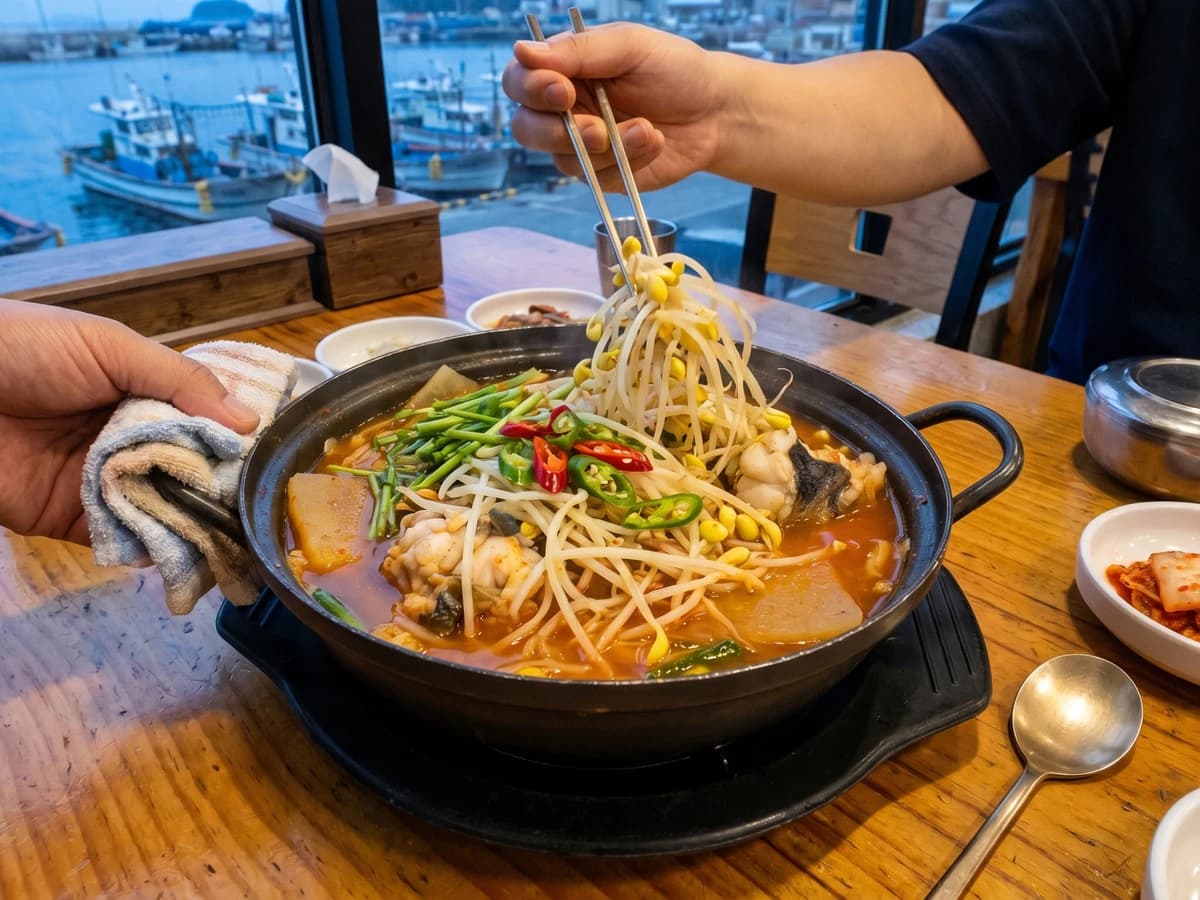
A Masan coast monkfish stew with firm white meat, gelatin at the bones, soybean sprouts for crunch, and a red broth seasoned to carry the fish, not bury it.

Chef Jeong-sun
A weeknight fish roe stew with radish and crown daisy in a clean spicy broth, where the whole success depends on adding the roe late enough that it sets tender, not chalky.

Chef Jeong-sun
Late-summer mallow leaves rubbed with salt until the bitter green water runs off, then simmered in a clean doenjang broth with dried shrimp, the quiet soup a Korean weeknight deserves.