Chef Juliana
Chimia de Fruta
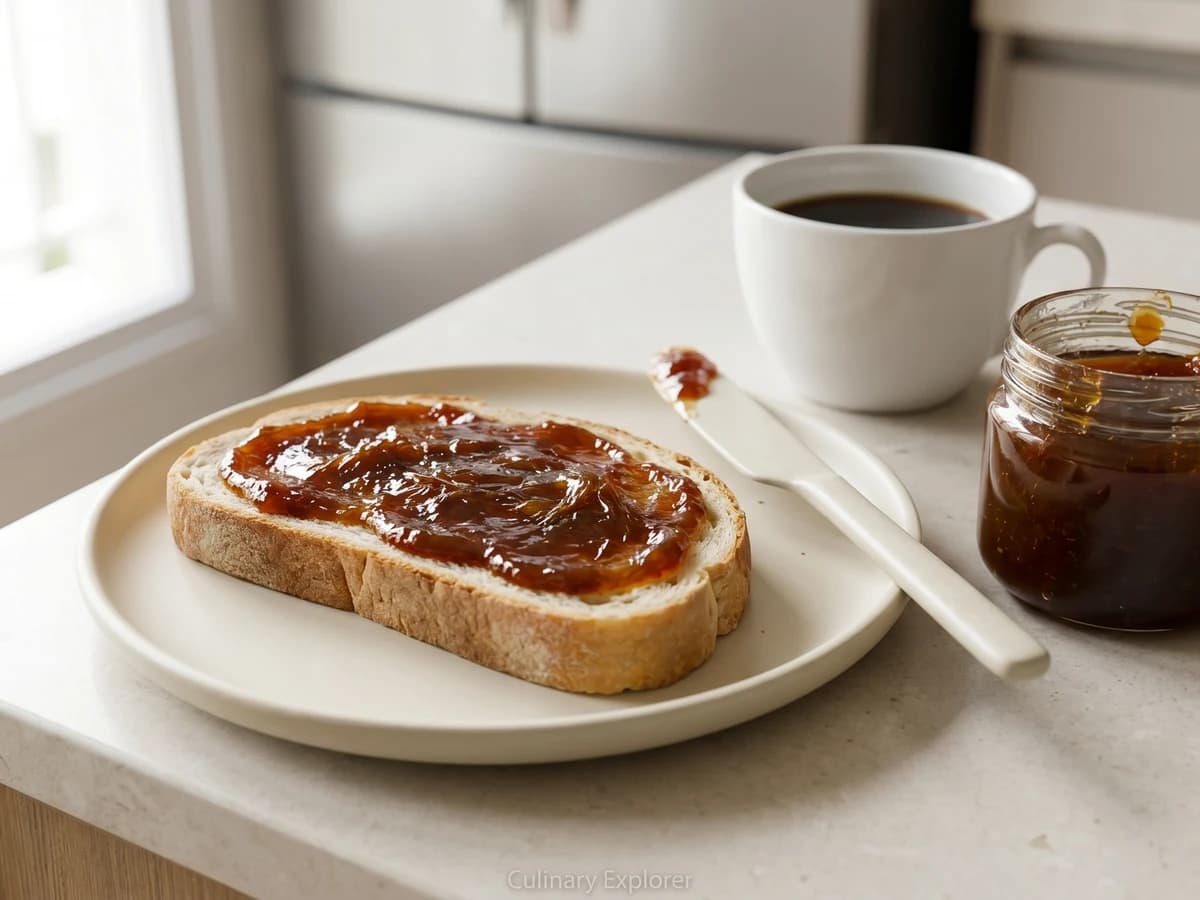
You don't need a factory jar to put something good on bread. Fruit, sugar, lemon, and patience turn into chimia, the kind of comida de verdade that makes breakfast behave.
A cooking platform built around craft, culture, and the stories behind what we eat.
Created by
You think this is old-lady magic. It isn't. Grate the green papaya, cook it slowly in syrup, and learn the ponto that turns firm fruit into doce de verdade.
You see a hard green papaya and hear that little voice: isso não é pra mim. Good. Bring the voice to the counter. A gente is going to make it useful, because this sweet is not talent, not mystery, not something born in the hand of one chosen aunt. Cozinhar não é dom, é um aprendizado, and preserves are one of the best teachers because they show you exactly when they're ready.
I love this kind of doce because it belongs to the same intelligence as the everyday Brazilian plate. Rice, beans, something from the pan, something green, and then a spoonful of sweet from a jar after lunch, not because the day was fancy, but because someone thought ahead. The pê-efe feeds you now. The pantry feeds you later. That's comida de verdade doing its quiet work.
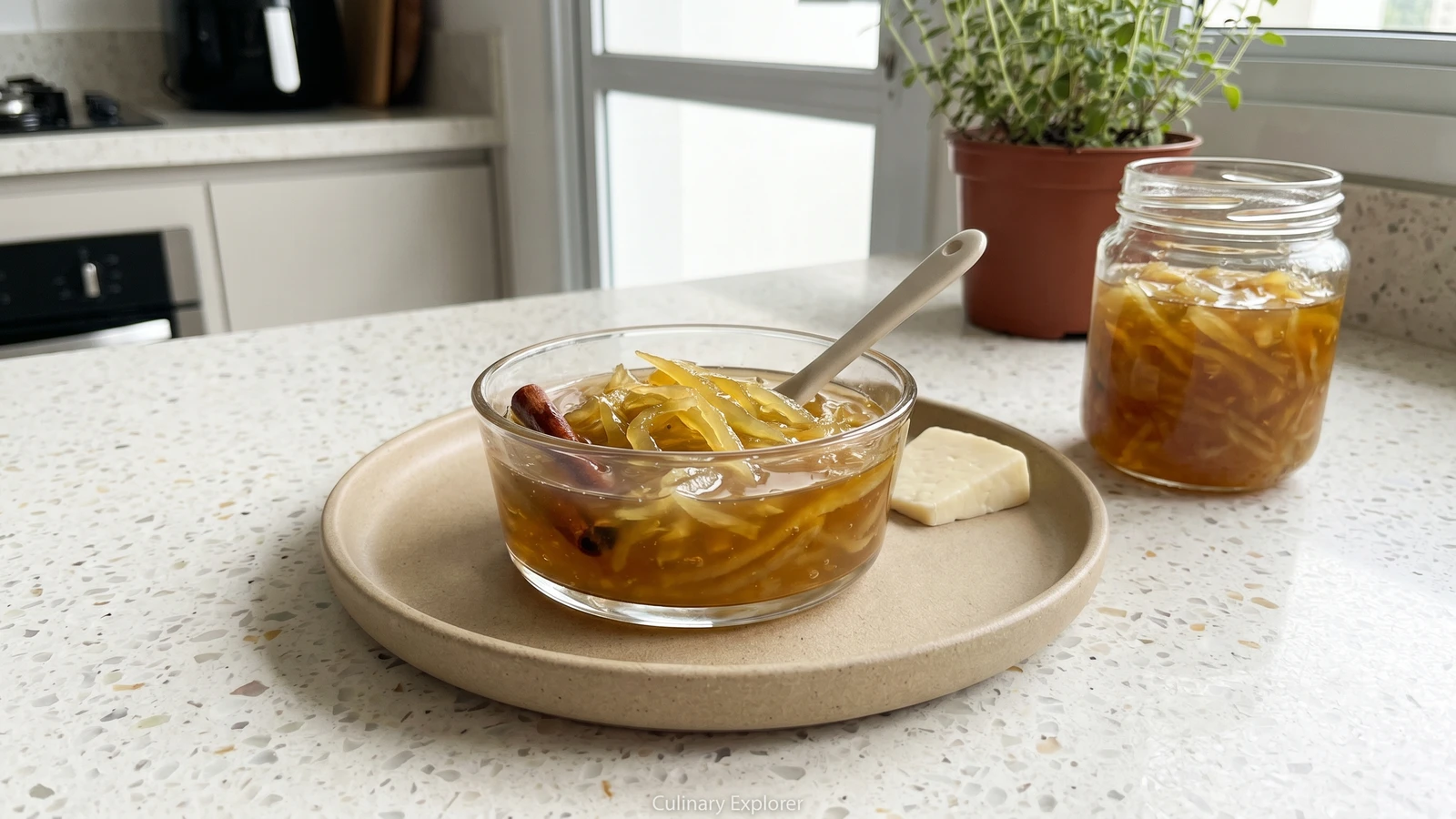
The method is plain. You peel and grate the green papaya, soak it to calm the bitterness and rinse away the sticky sap, then cook it in a heavy syrup with cinnamon and cloves until the shreds turn glassy and chewy. The ponto is the whole game: for doces em calda, the fruit must go translucent and the syrup must fall from the spoon in a slow thread. Stop too early and it's watery. Push too far and you've made sugar glue. Anota aí: watch the fruit, not your anxiety.
This is the home version, in a heavy pot on a gas stove, not a tacho de cobre nobody owns. The Mineira doceiras of São Bartolomeu, Sabará, Serra da Canastra, and Araxá carry preserve traditions much deeper than any one recipe I can hand you. I defer to them. What I'm giving you is a recipe that works, so your first jar can come out proud, glossy, and unmistakably Brazilian.
Doce de mamão verde belongs to the preserve-and-compote tradition of Minas Gerais, where farm kitchens turned harvests into sweets that could last beyond the season. During the gold-rush period, sugar, fruit, and patient cooking became part of the pantry logic of Minas: preserve what ripened, serve it later with queijo Minas, and make hospitality from storage. Towns and regions such as São Bartolomeu, Sabará, Serra da Canastra, and Araxá are still associated with doceiras and sweet-making traditions, especially fruit preserves, goiabada, doce de leite, and compotes in syrup.
Quantity
1 large, about 1.2 kg whole or 900 g peeled and seeded
peeled, seeded, and coarsely grated
Quantity
8 cups
for soaking
Quantity
1 tablespoon
for soaking
Quantity
4 cups
Quantity
2 cups
for the syrup
Quantity
2
Quantity
6
Quantity
1 tablespoon
| Ingredient | Quantity |
|---|---|
| green papayapeeled, seeded, and coarsely grated | 1 large, about 1.2 kg whole or 900 g peeled and seeded |
| waterfor soaking | 8 cups |
| saltfor soaking | 1 tablespoon |
| granulated sugar | 4 cups |
| waterfor the syrup | 2 cups |
| cinnamon sticks | 2 |
| whole cloves | 6 |
| lime juice | 1 tablespoon |
Put on gloves if your skin is sensitive, because green papaya has a sticky white sap that can bother some hands. Peel the papaya, split it open, scrape out the seeds, and grate the firm flesh on the coarse holes of a box grater. You want long, sturdy shreds, not mush, because those shreds are what turn chewy and translucent in the syrup.
Put the grated papaya in a large bowl with 8 cups water and 1 tablespoon salt. Toss it with your hands, then let it sit for 30 minutes. The water will feel a little slippery and the papaya will relax. This soak pulls away some of the raw bitterness and sticky sap, so the finished doce tastes clean instead of harsh.
Drain the papaya and rinse it under running water until the water no longer feels salty. Grab handfuls and squeeze firmly, but don't crush them to pulp. The shreds should be damp, not dripping. Too much water thins the syrup and makes you cook forever waiting for a ponto that keeps running away from you.
In a heavy 4-liter pot, combine the sugar, 2 cups water, cinnamon sticks, and cloves. Bring to a boil over medium heat, stirring only until the sugar dissolves. Once it boils, stop fussing with it. Let it bubble for 8 to 10 minutes, until the syrup looks clear and slightly thicker. This gives the papaya a syrup to cook in, not plain sweet water.
Add the squeezed papaya to the syrup and stir until every shred is glossy. Keep the pot at a gentle simmer, not a wild boil, and cook uncovered for 45 to 60 minutes, stirring now and then. Watch the color and texture: the papaya will go from pale green and opaque to yellow-green, glassy, and chewy. That's the sign. A hard boil breaks the shreds and throws sugar up the sides of the pot, which is how people create drama and then blame the fruit.
When the papaya looks translucent, drag a spoon through the pot and lift it over the surface. The syrup should fall in a slow, shiny thread and coat the spoon lightly, while the shreds stay suspended instead of sinking in watery liquid. Add the lime juice and cook 2 minutes more. The lime sharpens the sweetness and helps keep the syrup from tasting flat.
Turn off the heat and let the doce rest in the pot for 10 minutes, so the bubbling settles and the fruit drinks in a little more syrup. Spoon it into clean jars, making sure the papaya is covered by syrup. Cool completely, then refrigerate. It will thicken as it cools, because sugar always has the last word.
Serve cold or at room temperature, in a small bowl, with a spoonful of syrup. If you have queijo Minas, put a slice beside it and don't overthink dinner's ending. The sweet, chewy papaya and the salty cheese understand each other without your help.
1 serving (about 125g)
Culinary guides, cultural storytelling, and the editorial depth that makes cooking meaningful.
Discover Culinary ExplorerChef Juliana
You don't need a factory jar to put something good on bread. Fruit, sugar, lemon, and patience turn into chimia, the kind of comida de verdade that makes breakfast behave.

Chef Juliana
You think preserves belong to grandmothers and copper pots. Wrong. A heavy pot, ripe pumpkin, sugar, coconut, and attention to the ponto get you there.

Chef Juliana
You don't need a copper pan or a grandmother watching your elbow. Green figs, sugar, cloves, and patience make a glossy preserve that waits in the fridge for the next pê-efe.

Chef Juliana
You don't need a copper pot or a grandmother watching over your shoulder. You need ripe jabuticabas, a heavy pan, and the patience to learn the ponto.