
Chef Juliana
Ambrosia Baiana
You think curdled milk means you ruined dessert. Good. Tonight you'll do it on purpose, with lemon, yolks, cravo, and sugar, until the pot turns into golden gruminhos.
A cooking platform built around craft, culture, and the stories behind what we eat.
Created by
You think this needs a copper tacho and a grandmother watching the fire. It doesn't. Milk, sugar, a heavy pot, and the discipline to learn the ponto.
You have that little voice, I know it. Isso não é pra mim. The pan will burn, the milk will spill, the Mineira auntie will appear from nowhere and judge your spoon. Let her rest. Cozinhar não é dom, é um aprendizado, and doce de leite is one of the clearest lessons a kitchen can give: heat, time, attention, ponto.
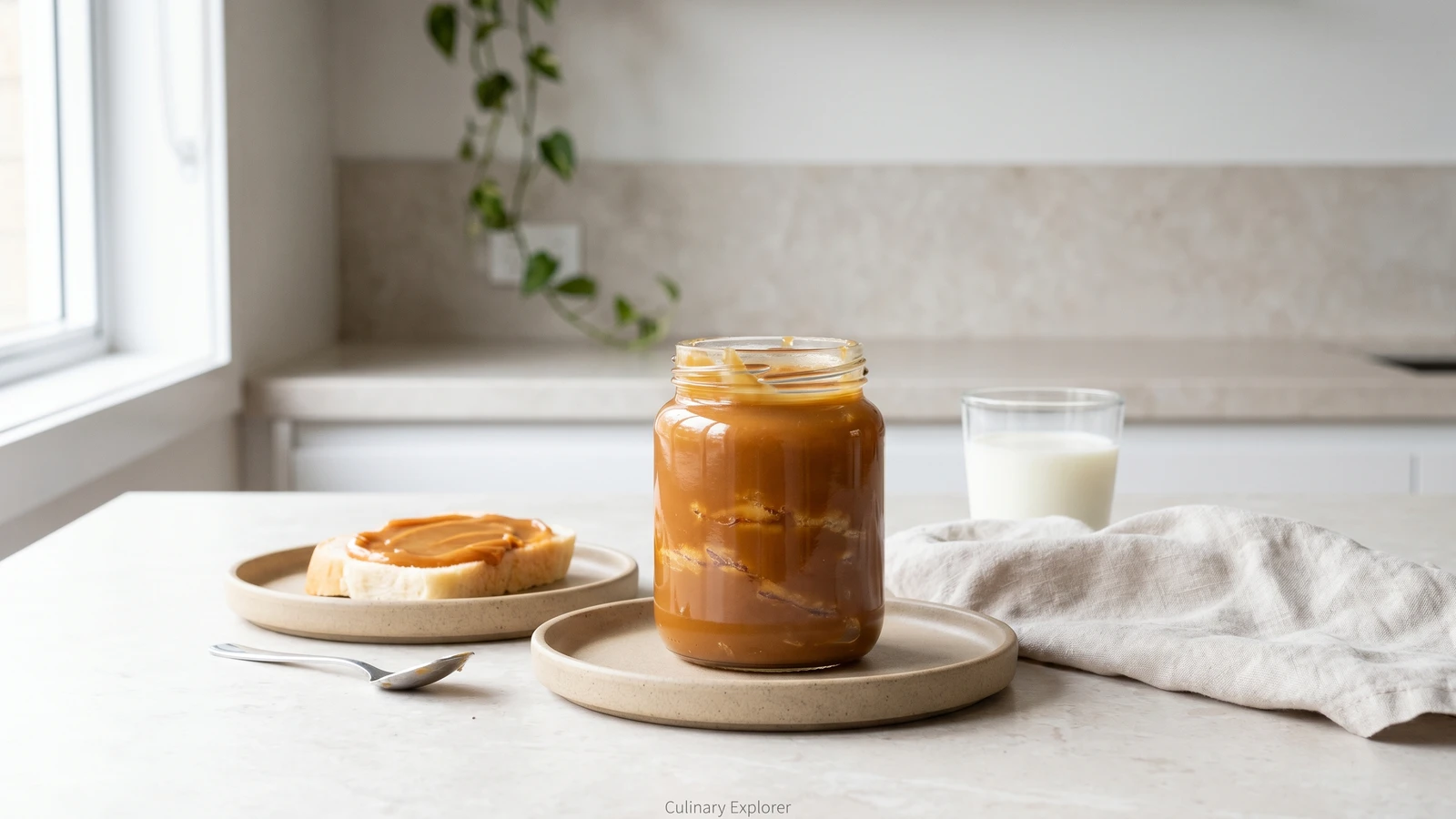
I learned to cook as a grown woman, writing everything down in a cheap caderno because nobody had made the steps plain enough for me. So anota aí: this is not magic in a copper tacho. It's milk and sugar losing water slowly until they turn thick, glossy, and amber. The baking soda is tiny but useful, because it helps the milk brown and keeps it from turning grainy. Too much and it tastes like soap, so don't get creative there.
Dessert belongs beside comida de verdade, not outside it like a guilty little secret. A good pê-efe solves the meal, rice, beans, the thing beside them, something green, and then a spoonful of doce de leite can make the table softer. That's Brazilian home cooking too. Not a powder, not a squeeze bottle pretending to be tradition. A real sweet, made from real milk, slow enough to teach you something.
You'll stir more near the end, because the end is where the milk gets ideas. Drag the spoon across the bottom. When the mixture opens a clean path and lets you see the pan for a second before closing back in, you have ponto cremoso. Not hard candy, not soup. Spreadable, spoonable, yours.
Minas Gerais built a famous sweet pantry from farm milk, fruit harvests, and sugar, especially from the gold-rush period onward, when preserves and compotes turned abundance into food that lasted. Doce de leite belongs to that Mineira table beside goiabada, doces em calda, marmelada, and pingo de leite, carried by generations of doceiras in places such as São Bartolomeu, Sabará, Serra da Canastra, and Araxá. The copper tacho is traditional and useful for large batches, but the home version works in a heavy pot because the real test is still the ponto.
Quantity
8 cups
Quantity
2 cups
Quantity
1/4 teaspoon
Quantity
1/8 teaspoon
| Ingredient | Quantity |
|---|---|
| whole milk | 8 cups |
| granulated sugar | 2 cups |
| baking soda | 1/4 teaspoon |
| fine salt | 1/8 teaspoon |
Use a heavy 5-liter pot, wider than you think you need, and set a small plate in the freezer for testing later. Milk climbs when it boils, because it likes drama. The extra space keeps your stove from becoming dessert before you do.
Pour in the milk, sugar, baking soda, and salt. Stir over medium heat until the sugar dissolves and you can no longer feel grains scraping the bottom, about 3 to 5 minutes. Dissolving first helps the caramel cook evenly instead of leaving sugar crystals waiting to make trouble.
Raise the heat just until the milk foams and starts to rise, then lower it immediately to a gentle bubble. Watch it closely for the first few minutes. Milk boils over fast, and then you learn humility with a sponge. The goal is steady evaporation, not a volcano.
Let it cook uncovered, stirring every 5 to 10 minutes with a wooden spoon or silicone spatula, scraping the bottom and corners each time. The mixture will look pale for a long while, then turn beige, then amber. This slow loss of water is what thickens the doce de leite, so don't rush the heat and scorch the milk solids.
When the mixture is honey-colored, glossy, and reduced by more than half, stay with the pot and stir almost constantly. Scrape the bottom in long strokes. If you see darker flecks sticking before they dissolve back in, lower the heat. The end burns because it has less water to protect it.
Drag the spoon across the bottom of the pot. For ponto cremoso, the spoon should open a clean path and show you the pan beneath for one second before the doce de leite slowly flows back. Drop a little on the cold plate too: it should mound softly and hold a line when you push it with your finger. Stop there, because it thickens as it cools.
Take the pot off the heat and stir for 2 minutes so the texture calms down and turns glossy. If you want it extra smooth, pass it through a fine sieve while warm. Spoon into clean jars, let cool, and refrigerate. The color should be deep amber, the texture soft enough for a spoon but thick enough to sit on bread without running away.
1 serving (about 38g)
Culinary guides, cultural storytelling, and the editorial depth that makes cooking meaningful.
Discover Culinary ExplorerChef Juliana
You think curdled milk means you ruined dessert. Good. Tonight you'll do it on purpose, with lemon, yolks, cravo, and sugar, until the pot turns into golden gruminhos.

Chef Juliana
You are not ruining the milk. You're curdling it on purpose, slowly, until sugar, eggs, cinnamon, and patience turn cheap ingredients into dessert.

Chef Juliana
You think curdled milk means failure. Not here. Milk, yolks, sugar, and lemon cook into golden curds in amber whey, a Minas sweet where the ponto teaches the whole recipe.

Chef Juliana
You already trust rice for dinner. Trust it for dessert: cook it gently with milk, coconut, and canela until each grain turns soft, creamy, and impossible to blame on lack of talent.