Chef Freja
Aebleflaesk
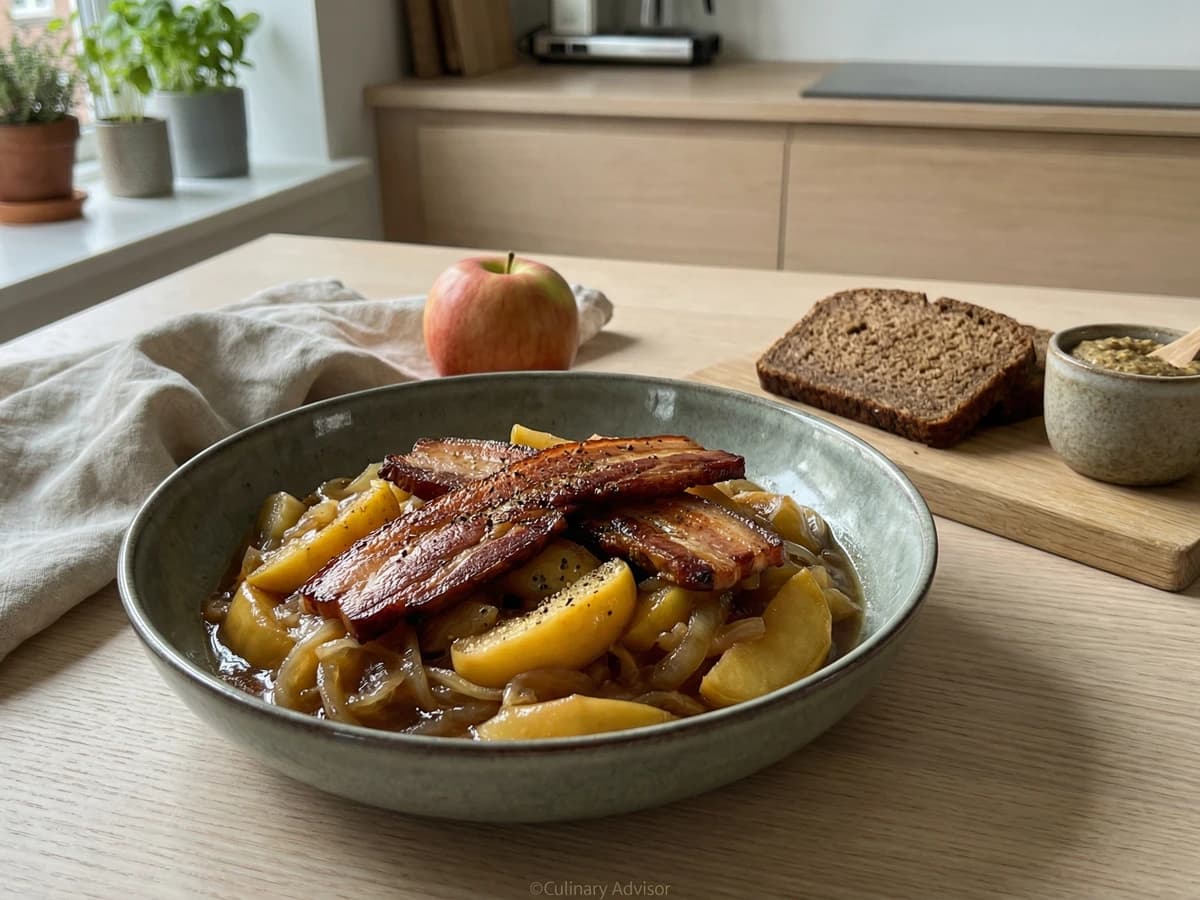
The Fyn autumn supper where thick pork belly renders slowly into its own fat, then meets apples and onions that cook down into a deep amber tangle. Sweet, salt, and the oldest pairing in the Danish larder.
A cooking platform built around craft, culture, and the stories behind what we eat.
Created by Chef Freja
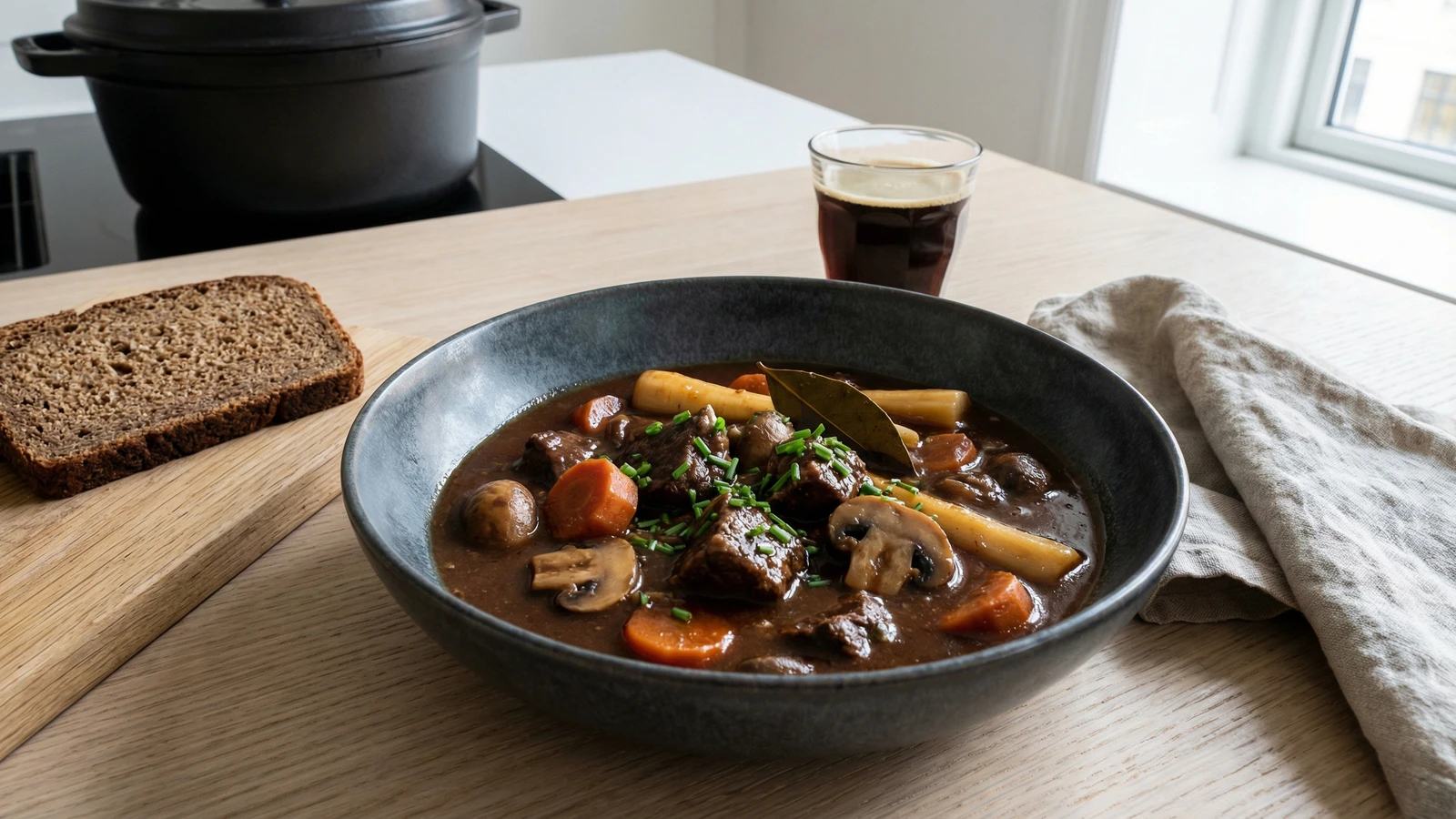
The Danish winter stew that takes its name from the pot. Beef browned hard, dark porter and strong coffee poured over, three hours of slow braising until the sauce is nearly black and the meat gives at a touch.
Winter in Denmark has a specific sound. It's the low hum of a heavy pot settling on the back of the stove, the lid lifting every hour to check the braise, the quiet that comes when the light has gone by half past three and there's nothing to do but cook slowly and wait. This is the season that belongs to the black pot.
Den sorte gryde means the black pot, and the name is literal, not poetic. You brown beef until it's crusted and dark, you pour in porter and strong coffee, and you let everything go deep and glossy over three hours until the sauce is nearly black and tastes of every winter before this one. Bacon, mushrooms, carrots, parsnips, a few bay leaves. That's the whole story, and the whole story is enough. This is the kind of dish that asks nothing of you except patience and rewards you for it at the table.
What matters most is the browning at the start. Don't crowd the pan. Don't rush it. The color you build on the meat in those first twenty minutes is the color of the finished sauce, and you cannot add it later. Pay attention to the moment when the fond on the bottom of the pot turns mahogany and starts to catch. That's when the beer goes in, and it lifts everything off the base in one dark wave. You'll smell it and you'll understand. Everything else is just time.
Danish brewing has shaped Danish cooking since the monasteries began producing beer in the Middle Ages, and the dark porters that became popular in Copenhagen in the 1800s found their way into the braising pot almost as soon as they reached the household kitchen. The addition of strong coffee to a beef stew is a later Scandinavian touch, a small bitterness that deepens the sauce without drawing attention to itself, borrowed from the way Nordic cooks had long used coffee to enrich dark gravies and gingerbreads. Regional versions of den sorte gryde exist across Jutland and the islands, but they all share the same principle: a dark liquid, a long cook, and a pot heavy enough to hold the heat through a winter afternoon.
Quantity
1.2kg
cut into 4cm cubes
Quantity
200g
cut into thick lardons
Quantity
2 large
roughly chopped
Quantity
3 medium
cut into thick rounds
Quantity
2
cut into thick rounds
Quantity
300g
halved, or quartered if large
Quantity
500ml
Quantity
250ml
Quantity
500ml
Quantity
2 tablespoons
Quantity
2 tablespoons
Quantity
1 tablespoon
Quantity
3
Quantity
4 sprigs
Quantity
30g
Quantity
2 tablespoons
Quantity
to taste
Quantity
freshly ground, to taste
Quantity
small bunch
snipped, to finish
Quantity
to serve
| Ingredient | Quantity |
|---|---|
| beef chuckcut into 4cm cubes | 1.2kg |
| smoked streaky baconcut into thick lardons | 200g |
| yellow onionsroughly chopped | 2 large |
| carrotscut into thick rounds | 3 medium |
| parsnipscut into thick rounds | 2 |
| chestnut mushroomshalved, or quartered if large | 300g |
| dark porter or stout | 500ml |
| strong brewed coffee | 250ml |
| beef stock | 500ml |
| tomato paste | 2 tablespoons |
| plain flour | 2 tablespoons |
| dark brown sugar | 1 tablespoon |
| bay leaves | 3 |
| fresh thyme | 4 sprigs |
| unsalted butter | 30g |
| neutral oil | 2 tablespoons |
| fine sea salt | to taste |
| black pepper | freshly ground, to taste |
| chivessnipped, to finish | small bunch |
| mashed potatoes or rugbrod | to serve |
Warm a heavy Dutch oven over medium heat. Add the bacon lardons with no fat at all. You want them to release their own fat slowly as they crisp. After eight or nine minutes they should be deeply golden and the bottom of the pot should be glossy with rendered fat. Lift the bacon out with a slotted spoon and set it aside. Leave every drop of the fat in the pot. That fat is the first layer of flavor and you'll build everything else on top of it.
Pat the beef cubes completely dry with kitchen paper. Wet meat steams, it doesn't brown. Season generously with salt and pepper, then dust lightly with a tablespoon of the flour. Add a tablespoon of oil to the bacon fat and heat it until it shimmers. Brown the beef in three batches, never crowding the pot. Each batch needs space to sear, not stew. You're looking for a deep mahogany crust on at least two sides of every cube, which takes about four minutes per batch. This is where the color of the finished sauce lives, and you cannot add it later.
With the last batch of beef removed, drop the butter into the pot and add the chopped onions with a good pinch of salt. Lower the heat and cook them gently for ten minutes, stirring often, scraping up the fond as they release their water. The onions should go translucent and then just start to turn golden at the edges. They'll pull all that browned flavor off the bottom of the pot and carry it into the sauce.
Stir in the tomato paste, the remaining tablespoon of flour, and the brown sugar. Cook this paste for two minutes, stirring constantly, until the tomato turns from bright red to brick and smells roasted rather than raw. This step is small but it matters. Raw tomato paste tastes tinny and flat. Cooked tomato paste tastes of depth, and depth is the whole point of this dish.
Pour in the porter slowly. It will foam up the sides of the pot and lift every bit of fond off the base in one dark wave. Stir until the foam settles. Add the coffee and the stock, then return the beef and the bacon along with any juices that have gathered. Tuck in the bay leaves and the thyme sprigs. Bring everything to a gentle simmer. The liquid should come about three quarters of the way up the meat, not cover it completely. Braising isn't boiling.
Cover the pot with the lid slightly ajar and slide it into a 150C oven. A low, steady oven is more forgiving than a stovetop flame, which tends to catch on the base. Braise for two hours. Don't be tempted to lift the lid every ten minutes. The meat needs time and steady heat to give up its toughness and relax into something you can cut with the side of a spoon. This is the joy of waiting, and there's nothing to do in the meantime except the mashed potatoes.
After two hours, pull the pot out and add the carrots and parsnips. Push them down into the sauce so they're mostly submerged. Return the pot to the oven for another forty-five minutes. The roots will cook through and soak up the dark braising liquid, but they'll still hold their shape at the edges. Root vegetables added at the start turn to mush, and mush isn't what this dish wants.
While the stew finishes, heat a wide frying pan over high heat with a small knob of butter. Add the mushrooms in a single layer and don't stir them for the first two minutes. They need to sear, not sweat. When they've taken on color and released their water, season them with salt and tip the whole lot into the stew for the last ten minutes of cooking. Keeping the mushrooms separate until now means they stay meaty and dark instead of going slippery and grey.
Pull the pot from the oven and let it rest on the counter for ten minutes with the lid off. The sauce will settle and deepen. Taste it now. It should be dark, glossy, gently bitter from the coffee, malty from the beer, rich from the beef and bacon. Adjust the salt if it needs it. Fish out the bay leaves and the thyme stems. Ladle the stew over mashed potatoes or alongside thick slices of rugbrod, and scatter with snipped chives. This is winter in a bowl, cooked with love, and the table is where it happens. Tak for mad.
1 serving (about 470g)
Culinary guides, cultural storytelling, and the editorial depth that makes cooking meaningful.
Discover Culinary ExplorerChef Freja
The Fyn autumn supper where thick pork belly renders slowly into its own fat, then meets apples and onions that cook down into a deep amber tangle. Sweet, salt, and the oldest pairing in the Danish larder.

Chef Freja
Warm Danish apple soup for the first cool evenings of autumn. Tart apples simmered with cinnamon and lemon peel, thickened to a soft gloss, and served with cold cream and buttery toasted oats.

Chef Freja
Danish white asparagus velouté with tiny veal meatballs, flour dumplings, and bright green tips scattered on the surface. The Easter soup of Copenhagen, built from five small pans of spring.
Chef Freja
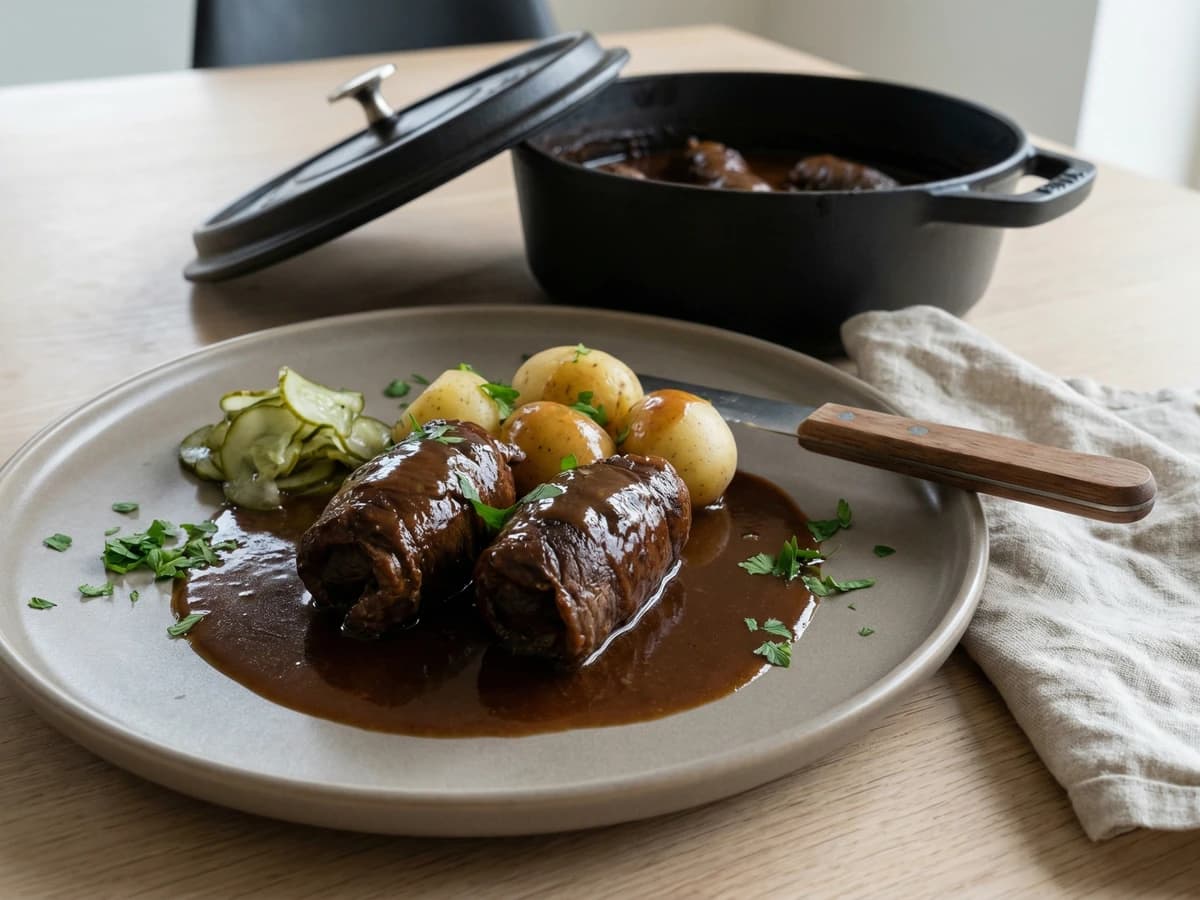
Thin beef slices rolled around bacon and onion, tied with string, and braised slowly in a dark glossy gravy finished with cream and redcurrant jelly. Danish Sunday dinner at its most comforting.