Chef Jeong-sun
Amjuk (Dried-Grain Weaning Porridge)
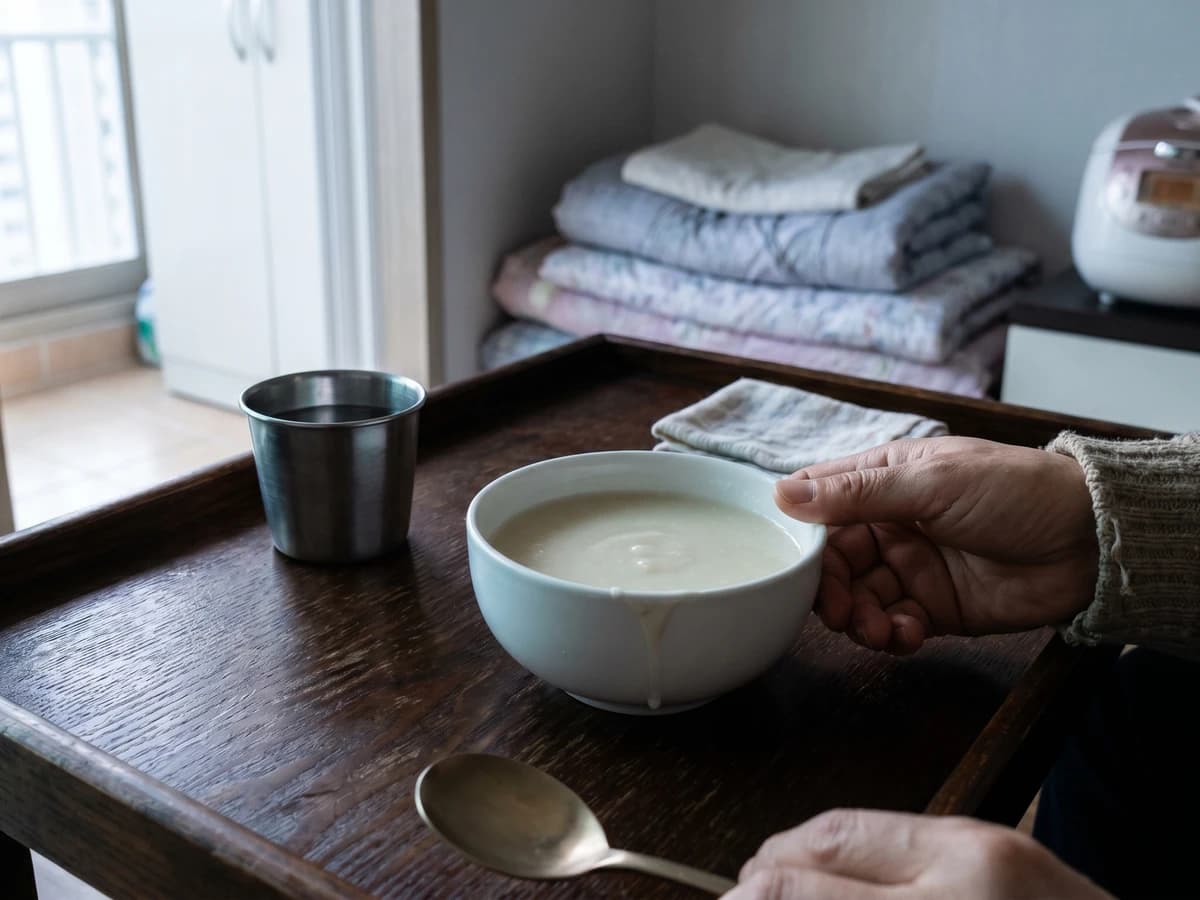
Powdered rice or dried baekseolgi cooked thin in cloudy rice water, an old Korean first-spoon porridge that asks for patience at the sieve and gentleness at the stove.
A cooking platform built around craft, culture, and the stories behind what we eat.

Created by
Red beans cooked until soft, blended smooth, then sweetened with restraint and served warm with chewy saealsim rice balls, the winter bowl that belongs at home and at the market cart.
Danpat-juk belongs to cold weather, especially the hour when dinner has passed but the kitchen is not finished with you. In the market, it waits in a heavy pot near the tteok stall. At home, it is gentler: a bowl in two hands, sweet enough to comfort, not so sweet that the red bean disappears.
The dish lives or dies by the beans. Boil them once and throw that first water away, because red beans carry a bitter edge that has no business in the finished bowl. Then cook them patiently until they crush between your fingers. If you blend half and leave half with a little texture, the porridge tastes like beans, not paste from a packet.
The sugar comes late, after the beans are tender. Add it too early and the skins tighten, and you will stand there wondering why time has stopped. Notebook 42 says 70 grams of sugar for 200 grams of dried beans, then salt measured carefully, because sweetness without salt goes flat. 손맛 is real. I still measure it, so it can be handed on.
Tonight this asks you for patience, not skill. Stir the bottom. Roll the saealsim (새알심, little bird-egg rice balls) small enough to cook through. Taste before the last spoon of sugar. Eat it warm, with someone who came in from the cold.
Patjuk (red bean porridge) is tied closely to Dongji, the winter solstice, when Koreans traditionally ate unsweetened red bean porridge because red was believed to drive away misfortune. Danpat-juk, the sweeter dessert-style version, grew more common through home kitchens, markets, and snack shops as sugar became easier to buy in the twentieth century. The saealsim rice balls keep the older solstice porridge's shape and meaning, even when the bowl is served as comfort food rather than ritual.
Quantity
1 cup (about 200g)
Quantity
10 cups, divided
plus more as needed
Quantity
1/2 teaspoon, divided
Quantity
1/2 cup (about 70g)
Quantity
1/4 cup
plus 1 to 2 teaspoons more if needed
Quantity
1/3 cup (about 70g)
plus 1 to 2 tablespoons to adjust
Quantity
1 tablespoon
Quantity
1/4 teaspoon
Quantity
1 tablespoon
| Ingredient | Quantity |
|---|---|
| dried pat (Korean red beans or adzuki beans) | 1 cup (about 200g) |
| waterplus more as needed | 10 cups, divided |
| fine sea salt | 1/2 teaspoon, divided |
| glutinous rice flour (chapssalgaru) | 1/2 cup (about 70g) |
| boiling waterplus 1 to 2 teaspoons more if needed | 1/4 cup |
| sugarplus 1 to 2 tablespoons to adjust | 1/3 cup (about 70g) |
| honey or jocheong (rice syrup) (optional) | 1 tablespoon |
| fine sea salt, for finishing | 1/4 teaspoon |
| toasted pine nuts (optional) | 1 tablespoon |
Rinse the red beans in several changes of water, rubbing them lightly between your palms. Pick out any cracked stones or shriveled beans. Red bean porridge is plain enough that bad beans have nowhere to hide.
Put the beans in a heavy pot with 4 cups water and bring to a boil over medium-high heat. Boil 5 minutes, then drain and discard that first water. This is not waste. It removes the rough bitterness from the skins and gives the finished porridge a cleaner taste.
Return the drained beans to the pot with 6 cups fresh water. Bring to a boil, lower to a steady simmer, and cook 45 to 60 minutes, stirring now and then, until a bean crushes easily between your fingers. Add 1/2 cup hot water if the level drops below the beans before they soften. Do not add sugar yet, because sugar tightens the skins before the centers are ready.
While the beans simmer, put the glutinous rice flour and 1/4 teaspoon salt in a bowl. Pour in 1/4 cup boiling water and stir with chopsticks until shaggy, then knead by hand when cool enough to touch. Add 1 to 2 teaspoons more boiling water only if dry flour remains. The dough should feel soft like an earlobe, not sticky. Roll into 20 to 24 small balls, each about 2 centimeters wide.
When the beans are fully tender, ladle out 1 cup cooked beans and set them aside for texture. Blend the remaining beans with their cooking liquid until mostly smooth, using an immersion blender in the pot or a regular blender in batches. For a silkier bowl, press the puree through a coarse sieve, but do not strain away all the bean character unless that is the style your table wants.
Return the blended bean base and reserved whole beans to the pot. Stir in 1/3 cup sugar, the optional honey or jocheong, and 1/4 teaspoon salt. Simmer gently 8 to 10 minutes, stirring the bottom often so the bean starch does not catch. Taste now. Add 1 tablespoon more sugar if you want it sweeter, but stop before it tastes like candy. The red bean should still speak.
Bring a small pot of water to a boil and drop in the saealsim. Stir once so they do not stick to the bottom. When they float, cook 1 minute more, then lift them out with a slotted spoon. Floating tells you the outside is cooked; the extra minute finishes the center.
Slide the cooked saealsim into the red bean porridge and simmer 1 minute so they belong to the pot. Adjust thickness with hot water, 2 tablespoons at a time, until it falls from the spoon slowly but does not mound like paste. Taste once more for salt. Serve warm, with toasted pine nuts if you have them.
1 serving (about 360g)
Culinary guides, cultural storytelling, and the editorial depth that makes cooking meaningful.
Discover Culinary ExplorerChef Jeong-sun
Powdered rice or dried baekseolgi cooked thin in cloudy rice water, an old Korean first-spoon porridge that asks for patience at the sieve and gentleness at the stove.

Chef Jeong-sun
A soft summer rice porridge of kneaded mallow greens, dried shrimp, and careful doenjang broth, plain enough for breakfast and exact enough to keep the grit and bitterness out.
Chef Jeong-sun
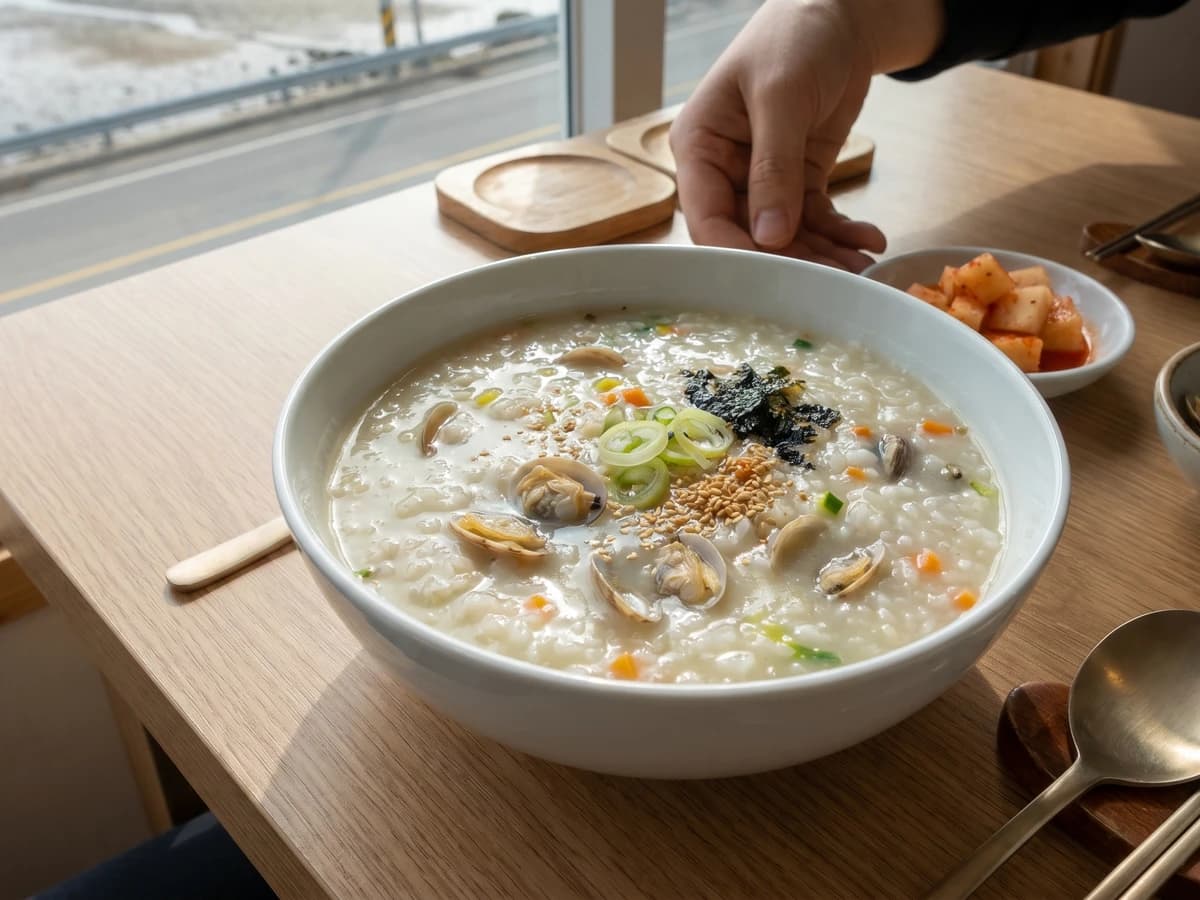
A west-coast clam porridge from Buan's tidal flats: live bajirak opened for their liquor, sesame-slicked rice toasted in the pot, and vegetables cut small enough to comfort without hiding the clams.

Chef Jeong-sun
An autumn juk of boiled chestnuts and soaked short-grain rice, simmered low until smooth and softly sweet, the kind of bowl you set before an elder, a child, or yourself.