Chef Dimitra
Aegean Islands Ladolemono (Λαδολέμονο)
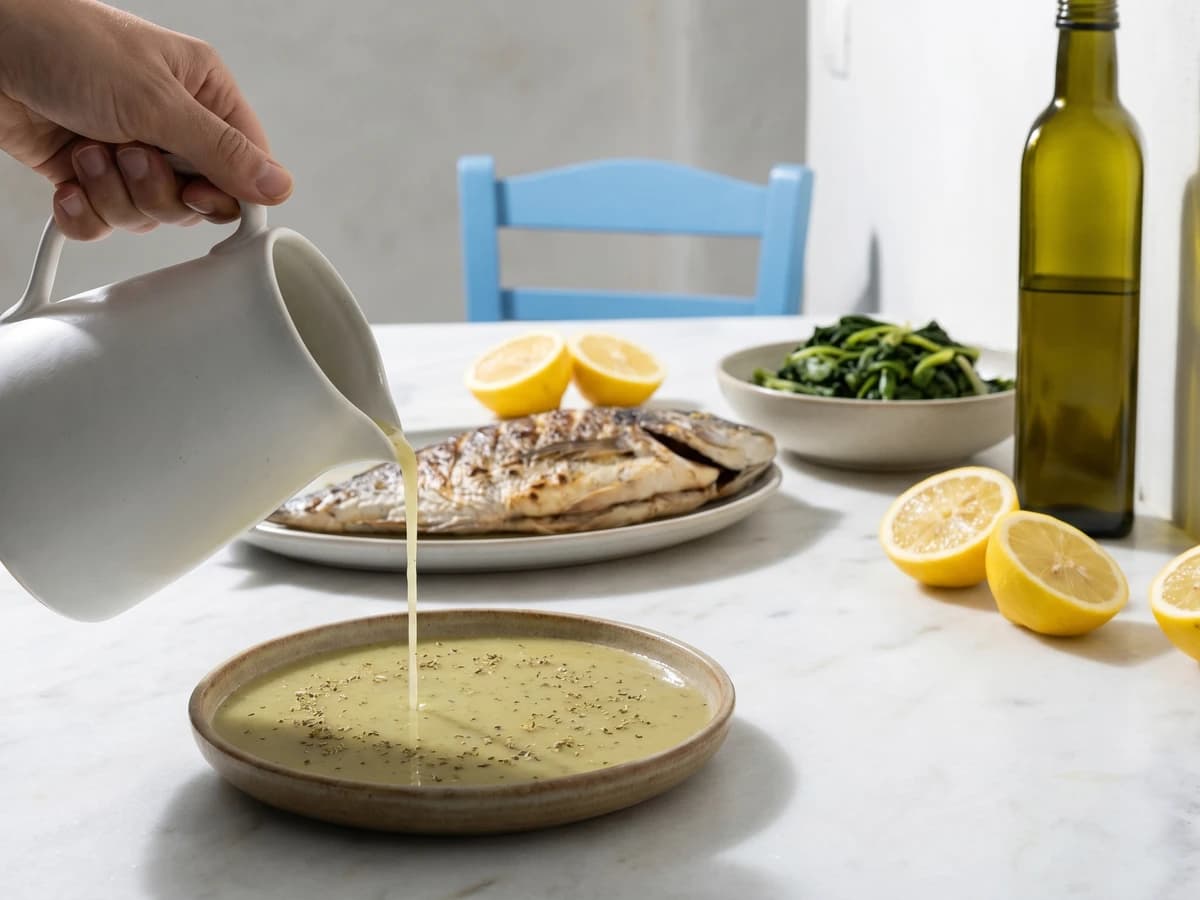
Aegean ladolemono is the quick oil-and-lemon sauce for grilled fish, boiled greens, and potatoes: cloudy when beaten hard, sharp enough to wake everything it touches on the plate.
A cooking platform built around craft, culture, and the stories behind what we eat.
Created by
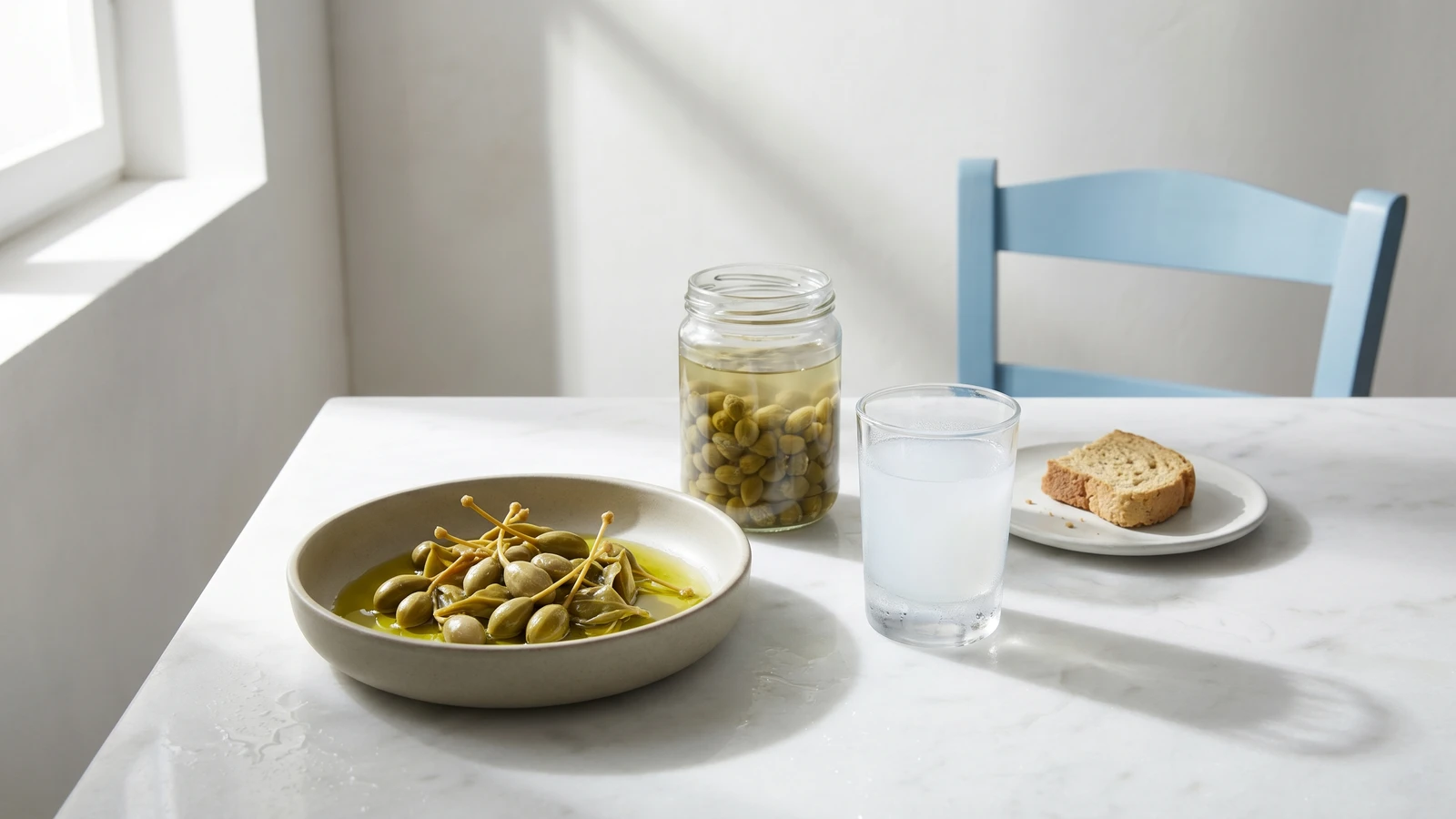
Cycladic caper buds and tender leaves, soaked until their wild bitterness calms, then packed under vinegar and salt for the sharp little pickle that wakes fava and every ouzo table.
Kapari toursi in the Cyclades is the caper bush put by for the year: tight buds, tender leaves, vinegar, salt. On Santorini, Sifnos, Tinos, and the drier islands, you taste it with fava, with beans, beside fried fish, or alone with ouzo. The region is the dish's surname here, because the leaves matter as much as the buds.
The soaking decides everything. Fresh caper buds are brave little things, but straight from the bush they are harsh and green-bitter; vinegar alone doesn't fix that. Cover them with cold water and change it twice a day until the bite settles into a clean sharpness. Then the brine can do its work.
After that, the recipe is plain. Pack the capers and leaves tight, pour over vinegar brine, and wait at least a week. A Sifnos cook once sent me her margin note: five days for small buds, seven for leaves. I kept the note, because it was right.
Kapari toursi belongs especially to the dry Cyclades, where Capparis spinosa grows from stone walls, terraces, and, on Santorini, volcanic ground. Theophrastus and Dioscorides both recorded kapparis in antiquity, but the island pantry kept a more practical knowledge: soak out the bitterness, then hold the short spring and early-summer harvest in salt and vinegar. The leaves are the old regional clue; outside the islands, commercial capers often reduce the plant to buds alone.
Quantity
250g
woody stems removed
Quantity
2 litres per change
for soaking, changed twice daily
Quantity
300ml
Quantity
300ml
for the brine
Quantity
36g
Quantity
2 tablespoons
for serving
| Ingredient | Quantity |
|---|---|
| fresh caper buds and tender caper leaves (kapari)woody stems removed | 250g |
| cold waterfor soaking, changed twice daily | 2 litres per change |
| white wine vinegar, 5% acidity | 300ml |
| waterfor the brine | 300ml |
| fine sea salt | 36g |
| extra virgin Koroneiki olive oil (optional)for serving | 2 tablespoons |
Pick over the caper buds and leaves. Keep tight green buds and young, flexible leaves; discard open flowers, woody stems, yellow leaves, and anything gathered from roadsides or sprayed walls. Rinse well in a bowl of cold water, lifting them out so grit stays behind.
Put the caper buds and leaves in a glass or ceramic bowl and cover with plenty of cold water. Set a small plate on top to keep them submerged. Change the water morning and evening for 5 to 7 days, tasting one bud after day 5. This is the step that decides the pickle: fresh kapari carries a hard bitterness, and water pulls it out before vinegar fixes the flavor in place.
Wash two 250ml jars and their lids well, then rinse with boiling water and let them dry upside down on a clean towel. Put the vinegar, 300ml water, and salt in a small saucepan. Bring to a boil, stir until the salt dissolves, boil for 1 minute, then let the brine cool completely.
Drain the soaked capers and rinse once. Spread them on a clean towel for 20 minutes so they are not dripping. Pack the buds and leaves into the jars, folding the leaves rather than crushing them. Pour over the cooled brine to cover by at least 1cm, tap the jars to release trapped air, and use a small clean weight if the capers float.
Close the jars and refrigerate for at least 7 days before eating. Two weeks is better. The buds darken, the leaves soften, and the brine smells clean and sharp. Keep everything submerged every time you open the jar.
Lift out what you need with a clean spoon. If the pickle tastes too salty for the dish, rinse it briefly and dress it with a little Koroneiki olive oil. Serve with fava Santorinis, boiled beans, fried small fish, dakos, or a plain Lenten plate. This is a refrigerator pickle, not a sealed pantry preserve; keep it cold and use within 6 months.
1 serving (about 50g)
Culinary guides, cultural storytelling, and the editorial depth that makes cooking meaningful.
Discover Culinary ExplorerChef Dimitra
Aegean ladolemono is the quick oil-and-lemon sauce for grilled fish, boiled greens, and potatoes: cloudy when beaten hard, sharp enough to wake everything it touches on the plate.
Chef Dimitra
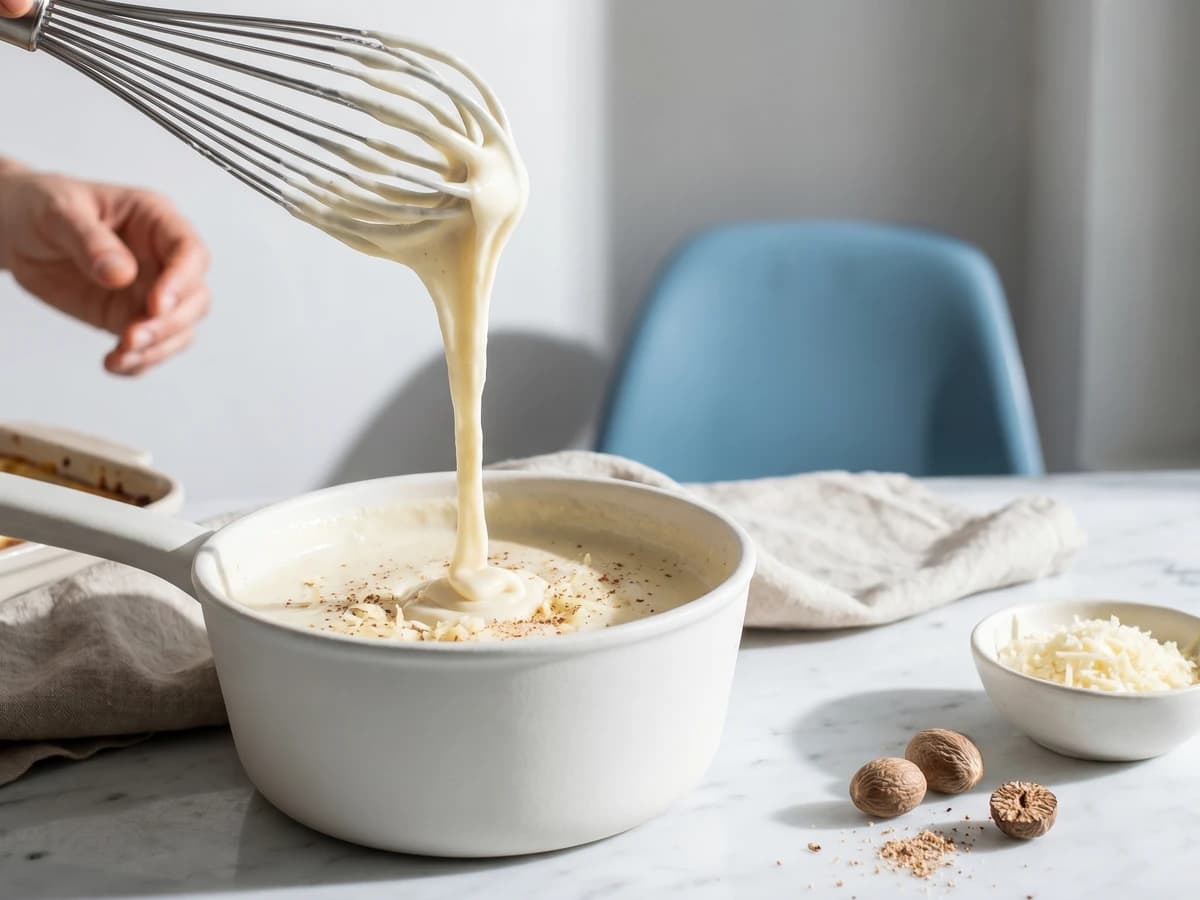
Athens gave Greek baking this thick white crown: a cooked butter-flour sauce enriched with eggs and cheese for moussaka, pastitsio, and the Sunday pan.
Chef Dimitra
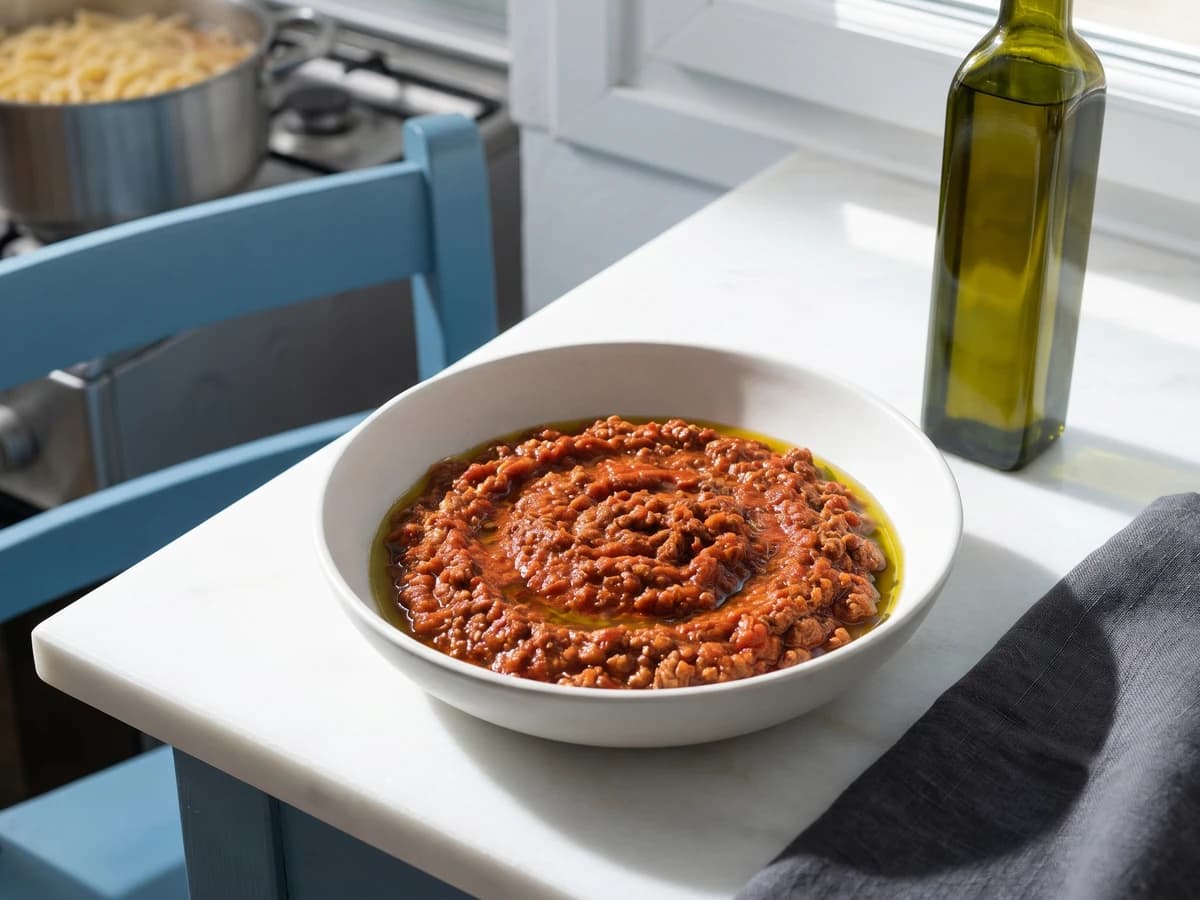
Athenian saltsa kima is minced beef, tomato, cinnamon, and allspice, cooked slowly until the sauce tightens and the green-gold oil pools at the top.
Chef Dimitra
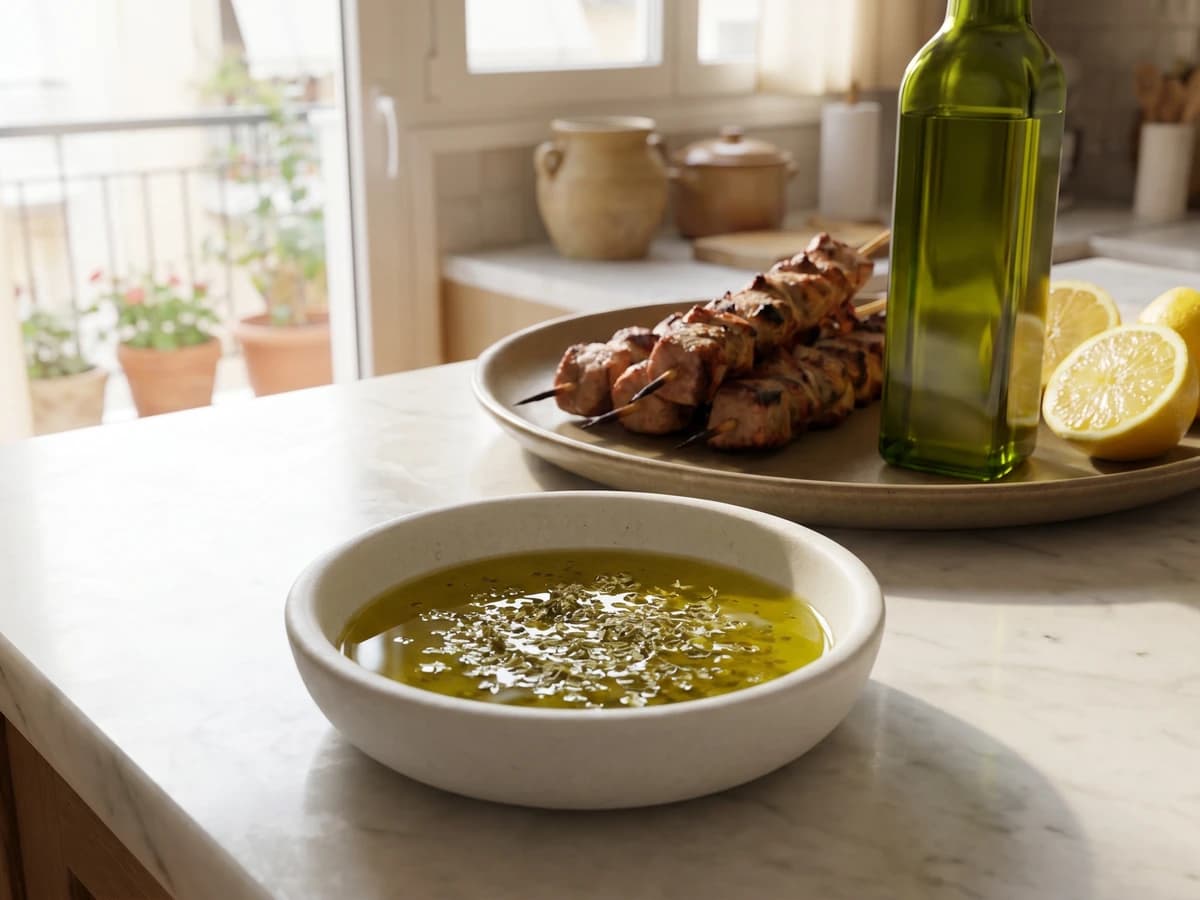
Attica's quick ladorigani is the oil, lemon, and oregano dressing that makes souvlaki taste like souvlaki. Bruise the rigani first, then let good olive oil do its work.