Culinary Explorer

A cooking platform built around craft, culture, and the stories behind what we eat.
Discover Culinary Explorer
Curado de Piña Horneada Putleco

Curado de Piña Horneada Putleco

Created by

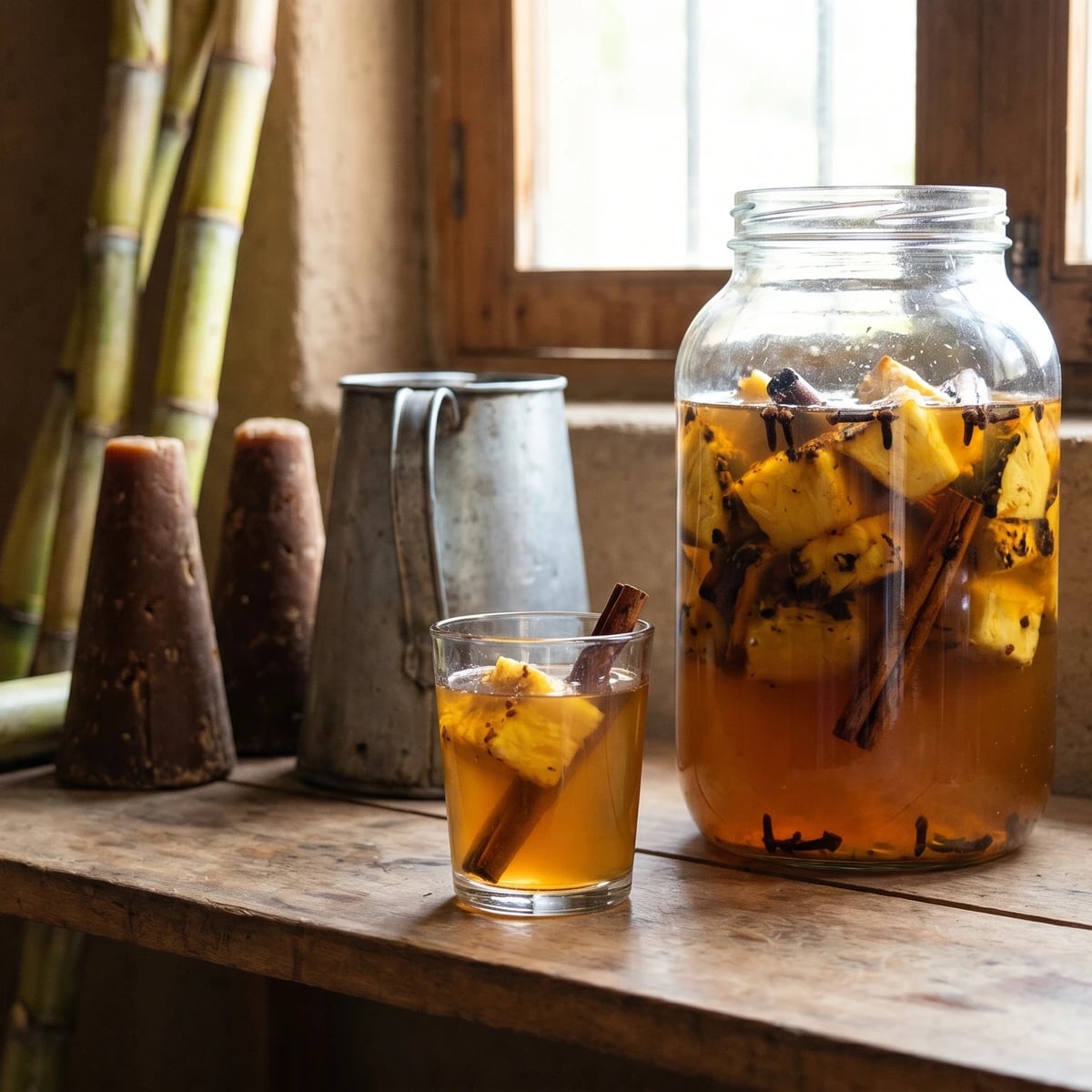
Putla's Carnaval drink from the Oaxacan Mixteca. Ripe pineapple roasted over coals until it chars and caramelizes, then rested for weeks in cane aguardiente with piloncillo and canela. Sweet, smoky, and slow to hit.

Beverages
Mexican
Celebration
Special Occasion
Holiday
30 min
Active Time
1 hr cookP21DT1H30M total
YieldAbout 1.5 liters, 12 to 15 small servings

This is from Putla, in the Mixteca of Oaxaca. Putla Villa de Guerrero, the town that sits at the gateway to the Triqui country, where the Carnaval fills the streets with the chilolos in their masks and the fandango runs until the band can't play anymore. This is the drink they pour at that party. Not mezcal. A curado built from roasted pineapple and aguardiente de caña, the cane spirit they distill in the lowlands of this region.

The pineapple is roasted until the edges char and the sugars turn dark and caramel. That char is the whole point. It's where the smoke comes from. A raw pineapple curado tastes like fruit and alcohol. A roasted one tastes like Putla. Then you rest it for weeks in aguardiente with piloncillo and canela de Ceilán, in a glass jar on a shelf, and you leave it alone. The sugar softens the spirit until the liquor disappears into the sweetness. That's why they call it slow to hit. You drink three small glasses thinking it's gentle, and then the curado reminds you it was never gentle.

I collected this one in Putla during Carnaval, from a family with a row of vitroleros lined up on a wooden shelf, each jar a different fruit, all of them resting for the fiesta. The grandmother told me the aguardiente has to be strong and the piloncillo has to be real, and the rest is patience. No me vengas con atajos. You can't rush a curado. Three weeks is the floor. A month is better. Saber cocinar es saber vivir, and in Putla, setting a jar on the shelf a month before Carnaval is part of knowing how to live.

Aguardiente de caña took root in Oaxaca's lowlands after the Spanish introduced sugarcane in the 16th century, and the Mixteca de la Costa and the coastal strip became centers of small-scale cane distilling alongside the state's much older mezcal traditions. The Carnaval de Putla, held in the days before Lent, is among Oaxaca's most important, distinguished by the chilolos, the masked dancers who move through the streets to brass bands. Curados, seasonal fruit macerated in cane spirit with piloncillo and spices, developed as a way to preserve the harvest and to keep something sweet and strong ready for the fiesta, a practice shared across the Mixteca and the neighboring Costa Chica of Guerrero.

The technique, the tradition, and the story behind every dish.

Discover Culinary Explorer

Ingredients

ripe pineapple

Quantity

1 large (about 4 pounds)

piloncillo

Quantity

350 grams (about 2 small cones or 1 large)

chopped

aguardiente de caña (unaged cane spirit)

Quantity

1.5 liters

canela de Ceilán (Ceylon cinnamon)

Quantity

2 sticks

whole cloves (clavo)

Quantity

4

water

Quantity

1 cup

Equipment Needed

  • Sharp chef's knife and cutting board
  • Wood coals and a grate, or a sheet pan and a hot oven
  • Large (3-liter) clean glass jar or vitrolero with a lid
  • Small saucepan for the piloncillo syrup
  • Fine-mesh strainer or manta de cielo (cheesecloth)

Instructions

  1. 1

    Choose a ripe pineapple

    Pick a pineapple by smell, not by looks. It should be heavy for its size and sweet at the base, with leaves that pull free under a light tug. Carnaval falls in the pineapple's best months, late winter into spring, so for once the calendar is on your side. A pale, hard pineapple will not caramelize and it will give you a thin curado no matter how long you wait. It has to be ripe going in.

    If the pineapples at the market are sour and green right now, don't make this now. Cook what the mercado is selling today and come back when the fruit is sweet. That is how this has always been made.
  2. 2

    Roast until it chars

    Peel the pineapple and cut it into thick rounds, about two fingers wide. Leave the core in. It holds flavor. The traditional way is over wood coals, laid on a grate until the sugars blister, the edges blacken in spots, and the smoke gets into the flesh. That smoke is what makes this a Putla curado and not just fruit drowned in liquor. If you have no fire, roast the rounds on a sheet pan in a hot oven at 220C (425F) for 45 minutes to an hour, turning once, until deeply caramelized and charred at the edges. Don't be timid with the char. Pale roasted pineapple gives you a pale curado.

    The fire is better than the oven. If you ever make this for a real fandango, find the coals. The smoke is half the drink.
  3. 3

    Make the piloncillo syrup

    While the pineapple roasts, put the chopped piloncillo in a small saucepan with the water, the canela, and the cloves. Simmer over medium heat until the piloncillo dissolves completely, about ten minutes. This is piloncillo, not refined sugar. It carries molasses and minerals that white sugar does not, and you will taste the difference in the finished curado. Pull it off the heat and let it cool all the way to room temperature. Hot syrup poured over the spirit cooks off its edge, and you want the aguardiente going in cold and clean.

  4. 4

    Pack the jar

    Cut the roasted pineapple, char and all, into rough chunks and pack them into a large clean glass jar. Pour in the cooled piloncillo syrup along with its canela sticks and cloves. Then add the aguardiente de caña until the fruit is fully submerged. Use real cane aguardiente, the strong unaged kind they distill in these lowlands. The spirit is the spine of this drink. Everything has to stay under the liquid. Any fruit poking above the line will spoil, so weigh it down with a small clean glass or saucer if you need to.

  5. 5

    Rest it for weeks

    Seal the jar and set it somewhere cool and dark, on a shelf away from the sun. Now you wait. Three weeks is the absolute floor. A month is better. Six weeks and you have something serious. Swirl the jar gently every few days so the syrup keeps moving through the fruit. The liquid turns a deep amber-gold as the roasted pineapple and the piloncillo give themselves up to the spirit. No me vengas con atajos. The waiting is the recipe.

  6. 6

    Taste and strain

    After three weeks, taste it off a spoon. It should be sweet, smoky, warm with canela, and the alcohol should be hiding underneath all of it. That hidden alcohol is both the danger and the charm. When it tastes the way you want, strain the curado through a fine-mesh sieve or a square of manta de cielo into clean bottles. Keep a few pieces of the macerated pineapple back to drop into the glasses. Bottled and capped, it holds for months. The aguardiente sees to that.

  7. 7

    Pour it at the fandango

    Serve it in small glasses, never big ones. This is a sipping drink and it is slow to hit. Tell your guests that, or don't, and watch what happens. A piece of the cured pineapple dropped in each glass is how they pour it in Putla when the band starts and the chilolos come through the street. Así se hace y punto.

Chef Tips

  • Pick the pineapple by smell, not by looks. It should be heavy and fragrant at the base, with leaves that pull free easily. Carnaval lands in the pineapple's sweetest months, so the fruit is on your side. A hard, pale pineapple gives you a thin curado no matter how long you wait.
  • Use real aguardiente de caña, the unaged cane spirit they distill in the Oaxacan and Guerrero lowlands. It is the spine of the drink. If you truly cannot find it, an unaged cane spirit like cachaça is the closest cousin. White rum is not the same. It is sweeter and rounder and it changes the drink into something else. A substitution here is a compromise, not an upgrade.
  • Two things people get wrong: they roast the pineapple too lightly, and they don't wait long enough. The char is where the smoke lives, so let it go dark. And three weeks is the floor, not the goal. Set the jar on the shelf a month before you need it.
  • Serve it in small glasses and respect it. The sweetness hides the aguardiente completely, which is why they say it is slow to hit. By the time you feel it, you have already had more than you planned.

Advance Preparation

  • This is a drink you make ahead by design. Start it at least three weeks before Carnaval, and a month or six weeks ahead is better. The longer it rests, the deeper the amber and the rounder the spirit.
  • Once strained and bottled, the curado keeps for months in a cool, dark place. The aguardiente preserves it. Leave a few pieces of the macerated pineapple in the bottle for the glasses.

Frequently Asked Questions

Nutrition Information

1 serving (about 110g)

Calories
370 calories
Total Fat
0 g
Saturated Fat
0 g
Trans Fat
0 g
Unsaturated Fat
0 g
Cholesterol
0 mg
Sodium
10 mg
Total Carbohydrates
35 g
Dietary Fiber
1 g
Sugars
32 g
Protein
0 g

Note: Chef personas and recipes are created with AI assistance. Cook with care: follow safe food-handling practices, check doneness with a thermometer when needed, and adapt for allergies and your kitchen.

Where cooking meets culture.

Culinary guides, cultural storytelling, and the editorial depth that makes cooking meaningful.

Discover Culinary Explorer

More from Chilate, Toritos Jarochos & Café Lechero

Browse the full collection