
Chef Graziella
Fregola
Sardinia's ancient hand-rolled semolina pasta, toasted until golden brown to develop the nutty, almost bread-like flavor that makes it unlike any other pasta in the Italian repertoire.
A cooking platform built around craft, culture, and the stories behind what we eat.

Created by
The hand-braided ravioli of Sardinia's Ogliastra region, each one closed with a wheat-stalk pattern that takes practice to master but announces, to anyone who knows, that someone in the kitchen cared enough to learn.
Italian cooking, as such, does not exist. There is Bolognese cooking and Neapolitan cooking, Venetian and Sicilian, each with its own logic and traditions. And then there is Sardinian cooking, which stands apart even from the Italian mainland, shaped by isolation, by shepherds, by ingredients that grow nowhere else.
Culurgiones come from Ogliastra, the mountainous eastern coast of Sardinia where the land meets the sea in dramatic cliffs. The women there have pinched these wheat-stalk closures for generations. The braid is not decoration. It sealed the pasta completely in an era before refrigeration. Some say it kept evil spirits from entering the filling. What it certainly does is announce that someone took the time to do this properly.
The filling is potato, pecorino sardo, mint, and garlic. Simple ingredients transformed by technique. The mint must be fresh. The pecorino must be Sardinian. The garlic is minimal. I cannot stress this enough. American cooks reach for garlic the way a child reaches for candy. Here, it must barely register.
This is not an easy pasta. The closure technique requires practice. Your first attempts will look clumsy. Make them anyway. The taste will be correct even if the braid is imperfect, and your hands will learn what your eyes cannot teach them.
Culurgiones predate written records in Sardinia, likely originating with the Nuragic civilization over 3,000 years ago. The wheat-stalk closure, called 'spiga,' carried symbolic weight: wheat meant abundance, and the sealed braid was believed to protect the filling from malevolent spirits. In 2016, Culurgiones d'Ogliastra received PGI (Protected Geographical Indication) status from the European Union, recognizing both the specific territory and the traditional hand-braiding technique as essential to the product's identity.
Quantity
500g
Quantity
200ml
Quantity
1 tablespoon
for dough
Quantity
1/2 teaspoon
for dough
Quantity
800g
Quantity
150g
finely grated
Quantity
2 cloves
minced to paste
Quantity
20
finely chopped
Quantity
3 tablespoons
for filling
Quantity
to taste
Quantity
400g canned
crushed by hand
Quantity
3 tablespoons
for sauce
Quantity
1 clove
lightly crushed
Quantity
6
Quantity
for serving
grated
| Ingredient | Quantity |
|---|---|
| semola di grano duro | 500g |
| warm water | 200ml |
| extra virgin olive oilfor dough | 1 tablespoon |
| fine sea saltfor dough | 1/2 teaspoon |
| starchy potatoes | 800g |
| aged pecorino sardofinely grated | 150g |
| garlicminced to paste | 2 cloves |
| fresh mint leavesfinely chopped | 20 |
| extra virgin olive oilfor filling | 3 tablespoons |
| fine sea salt | to taste |
| San Marzano tomatoescrushed by hand | 400g canned |
| extra virgin olive oilfor sauce | 3 tablespoons |
| garliclightly crushed | 1 clove |
| fresh basil leaves | 6 |
| aged pecorino sardograted | for serving |
Mound the semolina on a wooden board and make a well in the center. Add the warm water, olive oil, and salt to the well. Using a fork, begin incorporating the flour from the inner walls of the well, working in circles until a shaggy mass forms. Knead with the heel of your hand for 10 minutes until the dough is smooth, firm, and slightly tacky. This is not northern egg pasta. Semolina dough requires strength. Wrap tightly in plastic and rest at room temperature for 30 minutes.
Boil the potatoes whole in their skins until a knife pierces them easily, about 40 minutes depending on size. Drain immediately. While still hot enough to handle, peel and pass through a ricer or food mill into a large bowl. The potatoes must be riced while hot. Cold potatoes turn gluey. Let the riced potatoes cool to room temperature, spreading them to release steam.
To the cooled potatoes, add the grated pecorino sardo, minced garlic paste, chopped mint, olive oil, and salt. Mix thoroughly with your hands until completely homogeneous. The mixture should hold together when squeezed but not be wet. Taste and adjust salt. The pecorino provides salinity, so proceed cautiously. The garlic should whisper, not shout.
Divide the rested dough into four portions. Work with one at a time, keeping others covered. Roll each portion thin, about 2 millimeters. This is thinner than you expect. The dough is sturdy and can take it. Cut rounds using a 10-centimeter cutter or the rim of a glass. Gather scraps, knead briefly, rest five minutes, and re-roll.
Place a generous tablespoon of filling slightly off-center on each round, toward the bottom third. The filling should be a smooth mound, not a flat disc. Fold the top edge of the dough down toward you, covering the filling, letting the bottom edge remain exposed. Press firmly around the filling to seal the base and remove air pockets.
Here is where patience matters. Starting at one corner of the sealed base, pinch a small fold of the top layer of dough and press it down to seal against the bottom. Move to the opposite side and do the same, overlapping slightly with the first pinch. Continue alternating sides, working upward, each pinch overlapping the previous one like braiding. The pattern should resemble a wheat stalk. Pinch the top closed firmly. The closure is not decoration. It seals the pasta completely.
While shaping the culurgiones, prepare a simple sauce. Heat the olive oil in a wide pan over medium heat. Add the crushed garlic clove and cook until fragrant, about one minute. The garlic must not color. Add the crushed tomatoes and basil leaves. Simmer gently for 20 minutes until the sauce thickens slightly. Remove and discard the garlic clove. Season with salt.
Bring abundant salted water to a gentle boil. Lower the heat so the water simmers rather than rolls violently. Culurgiones are delicate despite their firm dough. Add them in batches of eight to ten. They will sink, then rise. Cook two minutes after they float. Remove with a slotted spoon directly to the waiting sauce.
Toss the cooked culurgiones gently in the tomato sauce to coat. Transfer to warm shallow bowls, six per serving. Grate aged pecorino sardo generously over the top. Serve promptly. The closure, the filling, the sauce: all of this work deserves to be eaten at its best.
1 serving (about 350g)
Culinary guides, cultural storytelling, and the editorial depth that makes cooking meaningful.
Discover Culinary ExplorerChef Graziella
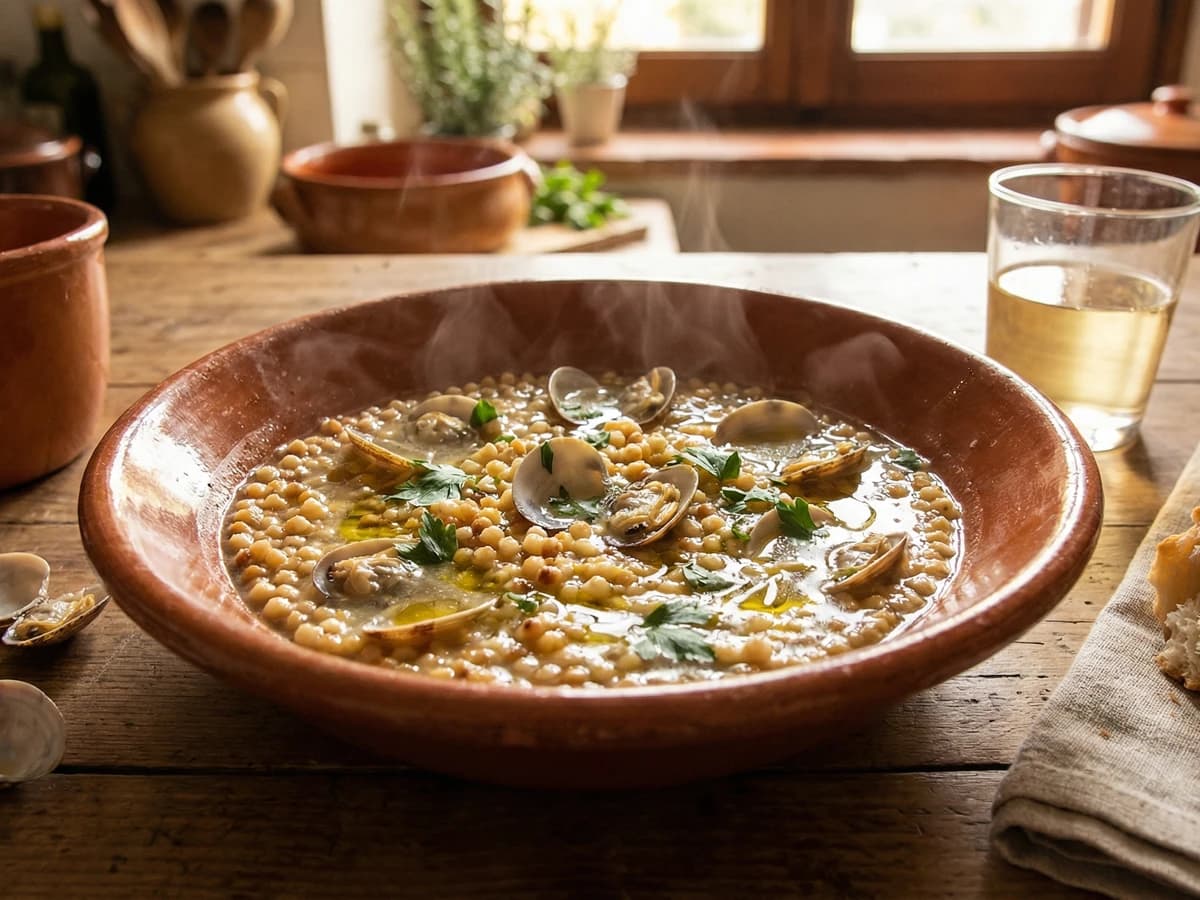
Sardinia's ancient hand-rolled semolina pasta, toasted until golden brown to develop the nutty, almost bread-like flavor that makes it unlike any other pasta in the Italian repertoire.
Chef Graziella
Sardinia's answer to pasta alle vongole: toasted semolina pearls that soak up briny clam liquor and white wine, each bite carrying the wild, windswept taste of the Mediterranean island.

Chef Graziella
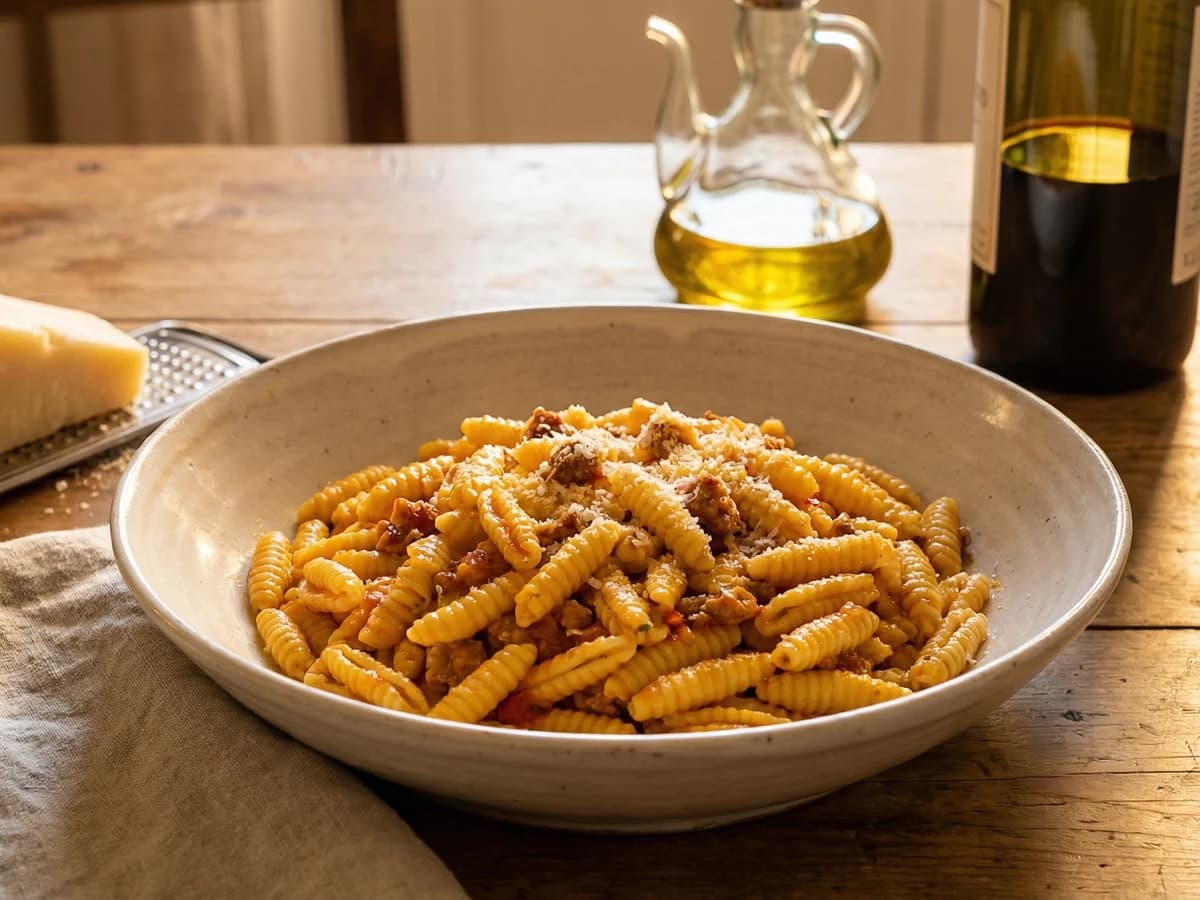
The golden gnocchetti of Sardinia, shaped by hand against ridged baskets the way Sardinian grandmothers have done for centuries. Saffron colors the dough. Your thumb creates the curl.
Chef Graziella
The proud pasta of Sardinia's Campidano plain, where saffron-gold gnocchetti meet fennel-scented sausage in a sauce that speaks of shepherds, wheat fields, and an island that answers to no one.