Culinary Explorer

A cooking platform built around craft, culture, and the stories behind what we eat.
Discover Culinary Explorer
Crumpets with Butter

Crumpets with Butter

Created by Chef Thomas

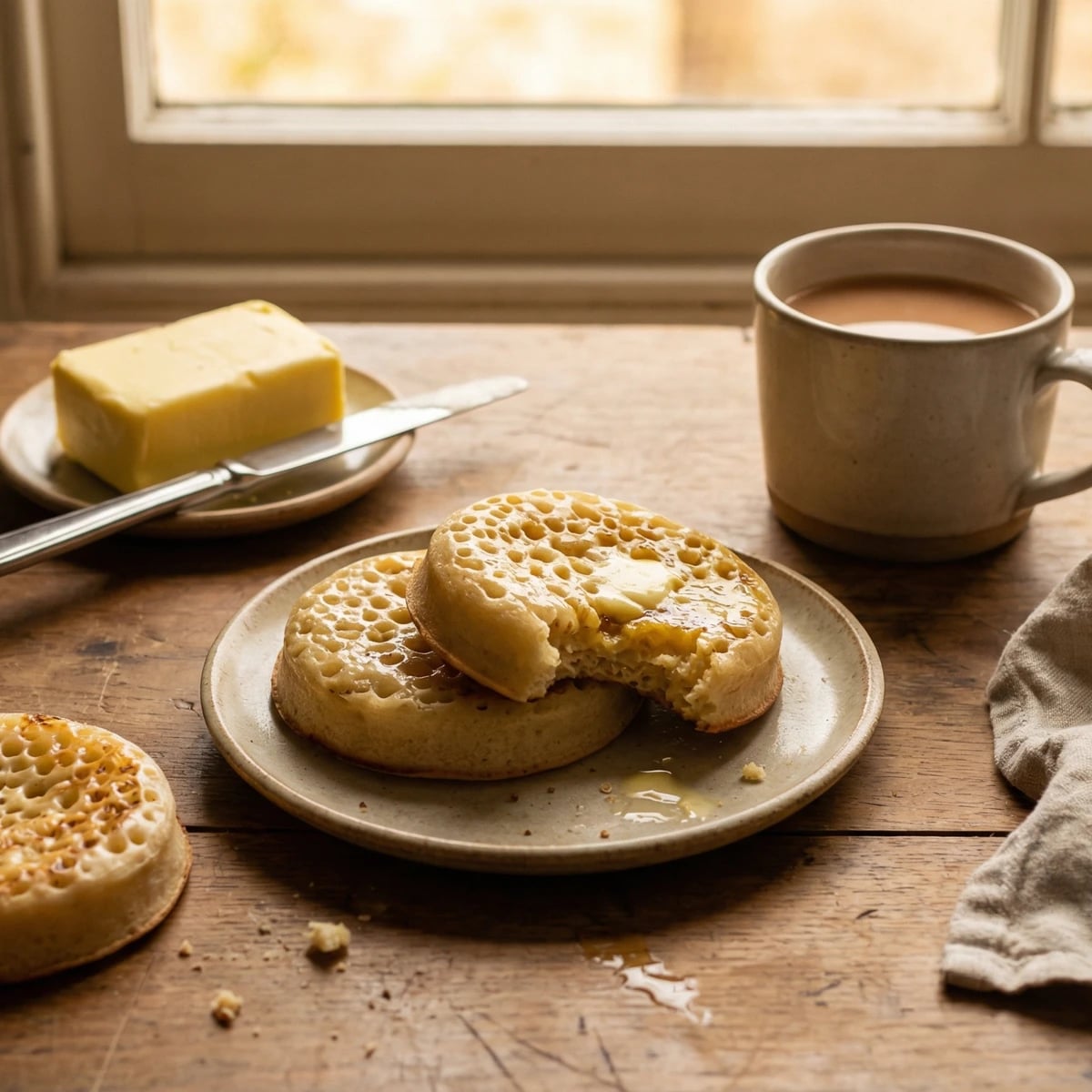
Homemade crumpets, riddled with holes and toasted until the edges crisp, then spread thickly with salted butter that melts through to the base. A Saturday morning made simple and good.

Breakfast & Brunch
British
Quick Meal
Comfort Food
15 min
Active Time
25 min cook1 hr 40 min total
Yield8-10 crumpets

The kitchen smells of warm yeast and milk. The batter has been sitting in a bowl by the window for an hour, rising quietly, doing its work without supervision. A few bubbles break the surface now and then, like a thought half-formed. This is how crumpets begin. Not with effort, but with patience.

I don't know why more people don't make these at home. The ingredients are flour, yeast, milk, salt. The method is a batter and a pan. The only thing you need that you might not have is a set of metal rings, and even those can be improvised from a clean tin. The result is something so far removed from the plastic-wrapped packet in the supermarket that it barely qualifies as the same food. Homemade crumpets are thicker, softer, full of deep honeycomb holes that hold butter like tiny reservoirs. They smell of something alive.

I make them on Saturday mornings when there's no reason to rush. The batter rises while I make tea and read the paper. The pan heats. The rings go in. And for twenty minutes, the only sound is the gentle bubbling of the batter as it finds its shape. A recipe is a conversation, not a contract, and this one is a quiet one. Toast them. Butter them. Sit down. That's all it asks of you.

The technique, the tradition, and the story behind every dish.

Discover Culinary Explorer

Ingredients

strong white bread flour

Quantity

250g

fine sea salt

Quantity

1 teaspoon

caster sugar

Quantity

1 teaspoon

fast-action dried yeast

Quantity

7g

warm whole milk

Quantity

200ml

warm water

Quantity

150ml

bicarbonate of soda

Quantity

half teaspoon

dissolved in 2 tablespoons warm water

butter or oil

Quantity

a little

for greasing pan and rings

good salted butter

Quantity

generously, to serve

Equipment Needed

  • Heavy frying pan or flat griddle
  • 8cm metal crumpet rings or egg rings
  • Wire cooling rack

Instructions

  1. 1

    Make the batter

    Put the flour, salt, sugar, and yeast into a large bowl and stir them together. Warm the milk and water until it feels like a comfortable bath, no hotter. Pour it into the dry ingredients and beat with a wooden spoon until you have a smooth, thick batter with no lumps. It should be thicker than pancake batter but loose enough to pour slowly, something like double cream. Cover the bowl with a tea towel and leave it somewhere warm for an hour. The kitchen counter is fine if the heating is on.

    The milk should be warm to the touch, not hot. Too hot and you'll kill the yeast before it has a chance to do anything. Blood temperature. If you can hold your finger in it comfortably, it's right.
  2. 2

    Let the yeast work

    After an hour the batter should have risen noticeably, with bubbles breaking on the surface and a smell that's warm and beery and slightly sweet. This is the yeast telling you it's ready. Dissolve the bicarbonate of soda in the warm water and stir it through the batter. It will fizz gently. Give it another ten minutes under the tea towel. The bicarb is what gives crumpets their holes, so don't skip this step and don't rush it.

    If the batter looks too thick after rising, add a splash more warm water. You want it to flow slowly when poured, settling into the ring and finding its own level. Too thick and you won't get holes. Too thin and it'll leak under the rings.
  3. 3

    Cook the crumpets

    Set a heavy frying pan or flat griddle over a low to medium heat. This is important: too hot and the bottoms burn before the tops set; too cool and the batter just sits there looking pale and sorry. Grease the inside of your crumpet rings and the surface of the pan with a little butter or oil. Place the rings in the pan and pour batter into each one, filling them about a centimetre deep. Leave them alone. After a few minutes, bubbles will start to rise through the batter, bursting on the surface and leaving holes behind. This is the moment. Wait until the top has set and gone from glossy to matte, the edges have pulled away from the ring slightly, and the underside is a deep golden brown. It takes seven to eight minutes, but watch the crumpets, not the clock.

    If you don't have crumpet rings, clean tuna tins with both ends removed work just as well. Greased pastry cutters will do at a push. The ring is what gives a crumpet its shape and its height.
  4. 4

    Flip and finish

    Ease the rings off with a cloth. Flip the crumpets and give the tops a minute, just enough to set them and take off the raw look, but not so long that they colour. The top should stay pale and holey. Transfer to a wire rack and repeat with the remaining batter, greasing the rings and pan each time.

  5. 5

    Toast and butter

    When you're ready to eat, toast the crumpets until the edges crisp and the surface turns a light gold. The holey side goes up under the grill or into the toaster. Butter them immediately, while they're still hot, with good salted butter, as much as feels right. The butter will melt and pool into every hole, soaking through to the base. This is the whole point. There are few better feelings than putting a warm plate of these in front of someone on a slow morning.

Chef Tips

  • The heat of the pan is the only real skill here. Low and steady. If the first crumpet browns too fast on the bottom before the holes have formed on top, turn the heat down and wait a minute before trying the next one. The pan needs to be patient, and so do you.
  • Good salted butter is not negotiable. This is a dish of two ingredients: crumpet and butter. If the butter isn't good, you've lost half the recipe. Something from a proper dairy, with colour and flavour and a little crystalline crunch of salt. It matters here more than almost anywhere else.
  • They freeze beautifully. Make a full batch, let them cool completely, and freeze in a bag. Toast them from frozen when you want them. A freezer full of homemade crumpets is a quiet form of wealth.
  • If you want to take them somewhere slightly different, a thin slick of honey over the butter is good. Or Marmite, if you're that way inclined. But plain butter, melting into those holes, is the purest version, and the one I come back to.

Advance Preparation

  • Crumpets keep in an airtight container for two days and toast well from the fridge. They are better retoasted than eaten fresh from the pan, so making them ahead is no compromise at all.
  • Freeze cooked, cooled crumpets for up to two months. Toast directly from frozen, giving them an extra minute under the heat.

Frequently Asked Questions

Nutrition Information

1 serving (about 80g)

Calories
200 calories
Total Fat
10 g
Saturated Fat
6 g
Trans Fat
0 g
Unsaturated Fat
3 g
Cholesterol
26 mg
Sodium
410 mg
Total Carbohydrates
22 g
Dietary Fiber
1 g
Sugars
2 g
Protein
4 g

Note: Chef personas and recipes are created with AI assistance. Cook with care: follow safe food-handling practices, check doneness with a thermometer when needed, and adapt for allergies and your kitchen.

Where cooking meets culture.

Culinary guides, cultural storytelling, and the editorial depth that makes cooking meaningful.

Discover Culinary Explorer

More from British Breakfast & Brunch

Browse the full collection