Culinary Explorer

A cooking platform built around craft, culture, and the stories behind what we eat.
Discover Culinary Explorer
Crumbl-Style Pink Sugar Cookies

Crumbl-Style Pink Sugar Cookies

Created by

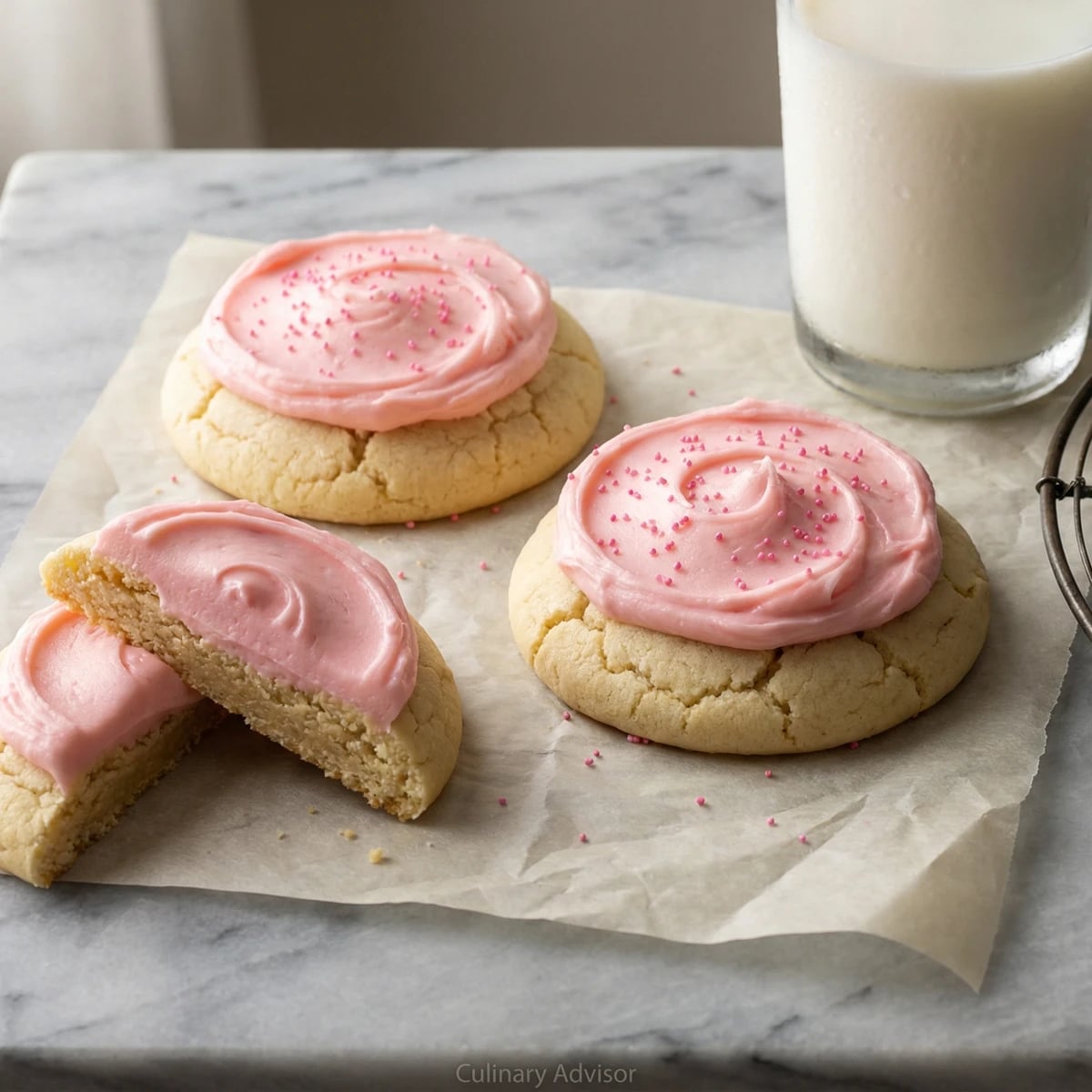
Impossibly thick sugar cookies topped with a generous swirl of pink almond buttercream, capturing the viral bakery phenomenon in your own kitchen without the drive-through line.

Pastries & Cookies
American
Make Ahead
Birthday
25 min
Active Time
12 min cook2 hr total
Yield12 large cookies

The Crumbl cookie empire emerged from Utah in 2017, and within a few years these oversized, frosting-loaded sugar cookies had become a cultural phenomenon. People wait in lines that wrap around strip malls. They post videos of the first bite. The pink sugar cookie is their flagship, and I'll tell you something: the hype is not entirely undeserved.

What Crumbl understood is that Americans have always loved a substantial cookie. We don't want dainty. We want something that fills the hand, that requires two bites minimum to get through. These cookies deliver that experience. They're thick as a hockey puck, soft as a featherbed in the center, with just enough chew at the edges to remind you this is baked goods, not confection.

The frosting matters as much as the cookie. It's a proper buttercream, not the shortening-laden stuff that coats grocery store cakes. Almond extract gives it that distinctive bakery flavor. The pink is purely aesthetic, but aesthetics matter. We eat with our eyes first, and these cookies know exactly what they're doing.

I've tested this recipe against the original more times than my waistline appreciates. The secret lives in cream cheese, which keeps the center soft for days, and in resisting the urge to overbake. Pull them when they look underdone. They'll set as they cool. Trust the process.

The technique, the tradition, and the story behind every dish.

Discover Culinary Explorer

Ingredients

all-purpose flour

Quantity

3 cups (390g)

baking soda

Quantity

1 teaspoon

baking powder

Quantity

1/2 teaspoon

fine sea salt

Quantity

1/2 teaspoon

unsalted butter, softened

Quantity

1 cup (2 sticks/226g)

for cookie dough

cream cheese, softened

Quantity

4 ounces (113g)

granulated sugar

Quantity

1 1/2 cups (300g)

large egg

Quantity

1

room temperature

pure vanilla extract

Quantity

2 teaspoons

for cookie dough

almond extract

Quantity

1/2 teaspoon

for cookie dough

unsalted butter, softened

Quantity

1 cup (2 sticks/226g)

for frosting

powdered sugar

Quantity

4 cups (480g)

sifted

heavy cream

Quantity

3 tablespoons

pure vanilla extract

Quantity

1 teaspoon

for frosting

almond extract

Quantity

1/2 teaspoon

for frosting

pink gel food coloring

Quantity

as needed

Equipment Needed

  • Stand mixer with paddle attachment
  • 3-tablespoon cookie scoop or 1/4 cup measure
  • Kitchen scale
  • Piping bag with large round tip (1A or 2A)
  • Baking sheets
  • Wire cooling rack

Instructions

  1. 1

    Combine dry ingredients

    Whisk together the flour, baking soda, baking powder, and salt in a medium bowl. Set aside. This takes thirty seconds and prevents pockets of leavening that would create uneven texture.

    Sift your flour if it's been sitting in the pantry awhile. Compacted flour throws off the ratio and yields dense cookies.
  2. 2

    Cream butter and cream cheese

    In a stand mixer fitted with the paddle attachment, beat the softened butter and cream cheese on medium-high speed until completely smooth and pale, about 3 minutes. Scrape down the sides twice during this process. The mixture should look fluffy and hold soft peaks when you lift the paddle. This aeration is everything.

    Truly softened butter yields to gentle pressure but holds its shape. If your finger sinks in completely, it's too warm. Refrigerate for 10 minutes.
  3. 3

    Add sugar and beat thoroughly

    Add the granulated sugar and beat on medium-high for another 4 full minutes. Don't shortcut this. You're dissolving sugar crystals and incorporating air. The mixture will become noticeably lighter in color and increase in volume. This is the foundation of a tender cookie.

  4. 4

    Incorporate egg and extracts

    Add the egg, vanilla extract, and almond extract. Beat on medium speed until fully combined, about 1 minute. The mixture may look slightly curdled. This is normal and will resolve when you add flour.

  5. 5

    Add dry ingredients

    Reduce mixer speed to low. Add the flour mixture in three additions, mixing just until each addition disappears before adding the next. Stop the moment you no longer see dry flour. Overmixing develops gluten and turns soft cookies into tough ones.

  6. 6

    Portion the dough

    Using a 3-tablespoon cookie scoop (or a quarter-cup measure), portion the dough into 12 equal balls, each weighing approximately 85 grams. These are large. That's the point. Roll each portion between your palms to form smooth spheres.

    A kitchen scale removes all guesswork. Consistent portions mean consistent baking times, which means no burnt edges or raw centers.
  7. 7

    Chill the dough

    Arrange dough balls on a parchment-lined baking sheet, spacing them at least 2 inches apart. Refrigerate for at least 1 hour, or up to 3 days. This firms the butter, which means cookies spread less and stay thick. Cold dough also develops better flavor as the flour hydrates.

  8. 8

    Preheat and prepare

    Position a rack in the center of your oven and preheat to 350°F (175°C). Line two baking sheets with parchment paper or silicone mats. Let chilled dough balls sit at room temperature for 10 minutes while the oven heats. They should still feel cold to the touch but no longer rock-hard.

  9. 9

    Bake the cookies

    Place 4 to 6 dough balls per sheet, allowing 3 inches between each. These spread. Bake for 10 to 12 minutes, rotating the pan halfway through. The cookies are done when the edges are barely set and just starting to turn golden, while the centers still look pale and slightly underdone. They will appear puffy and cracked on top.

    Every oven lies. Check at 9 minutes for the first batch. The center should wobble like set custard when you gently shake the pan.
  10. 10

    Cool completely

    Let cookies cool on the baking sheet for 10 minutes. They'll deflate slightly and the centers will set. Transfer to a wire rack and cool completely, at least 45 minutes. Frosting warm cookies creates a melted mess and soggy tops. Patience.

  11. 11

    Make the buttercream

    In a clean stand mixer bowl with the paddle attachment, beat the softened butter on medium-high speed until pale and creamy, about 2 minutes. Add the sifted powdered sugar one cup at a time, mixing on low after each addition. Scrape down the sides. Add the heavy cream, vanilla, and almond extract. Beat on medium-high for 3 minutes until light and fluffy. The frosting should hold stiff peaks.

  12. 12

    Color the frosting

    Add pink gel food coloring, starting with a small amount on the end of a toothpick. Beat to combine. Continue adding color gradually until you achieve that signature Crumbl pink: a soft, rosy shade, not neon. Gel coloring provides vibrant color without thinning the frosting the way liquid dye would.

  13. 13

    Frost the cookies

    Transfer frosting to a piping bag fitted with a large round tip (Wilton 1A or 2A works perfectly). Starting at the outer edge of each cookie, pipe a continuous spiral toward the center, building up height as you go. The classic Crumbl swirl is generous, using roughly 2 tablespoons of frosting per cookie. Don't be stingy. The frosting-to-cookie ratio is part of the experience.

    No piping bag? Spread frosting with an offset spatula in a thick layer, then drag the tip through to create decorative swirls.

Chef Tips

  • The cream cheese is non-negotiable. It creates that distinctively tender crumb and keeps the cookies soft for days. Full-fat brick-style cream cheese only. Never use the spreadable kind in a tub.
  • Weigh your flour. American home bakers who scoop and level often pack in an extra ounce per cup, leading to dense, dry cookies. Three cups should weigh 390 grams, give or take.
  • Almond extract is what gives these that 'bakery' flavor people can't quite identify. Use pure extract, not imitation. The difference is stark.
  • For cleaner swirls, refrigerate the frosted cookies for 15 minutes. The buttercream sets slightly and develops that polished bakery appearance.
  • These cookies travel well. The thick frosting layer actually protects the soft cookie underneath. Pack them in a single layer with parchment between if stacking.

Advance Preparation

  • Cookie dough can be portioned and refrigerated for up to 3 days, or frozen for up to 3 months. Bake frozen dough balls directly from the freezer, adding 2 to 3 minutes to the baking time.
  • Unfrosted cookies keep in an airtight container at room temperature for up to 4 days.
  • Frosted cookies are best eaten within 2 days but will keep refrigerated for up to 5 days. Bring to room temperature before serving for the best texture.
  • Buttercream can be made up to 1 week ahead and refrigerated. Let it come to room temperature, then re-whip for 2 minutes before using.

Frequently Asked Questions

Nutrition Information

1 cookie (about 65g)

Calories
690 calories
Total Fat
35 g
Saturated Fat
21 g
Trans Fat
0 g
Unsaturated Fat
13 g
Cholesterol
95 mg
Sodium
175 mg
Total Carbohydrates
87 g
Dietary Fiber
1 g
Sugars
78 g
Protein
5 g

Note: Chef personas and recipes are created with AI assistance. Cook with care: follow safe food-handling practices, check doneness with a thermometer when needed, and adapt for allergies and your kitchen.

Where cooking meets culture.

Culinary guides, cultural storytelling, and the editorial depth that makes cooking meaningful.

Discover Culinary Explorer

More from The Great American Cookie Collection

Browse the full collection