
Chef Margarida
Caracóis à Portuguesa
Há caracóis! The signs appear in May and all of Lisbon knows summer has arrived. Tiny snails in spiced broth, sucked from shells at plastic tables, washed down with imperial after imperial.
A cooking platform built around craft, culture, and the stories behind what we eat.
Created by
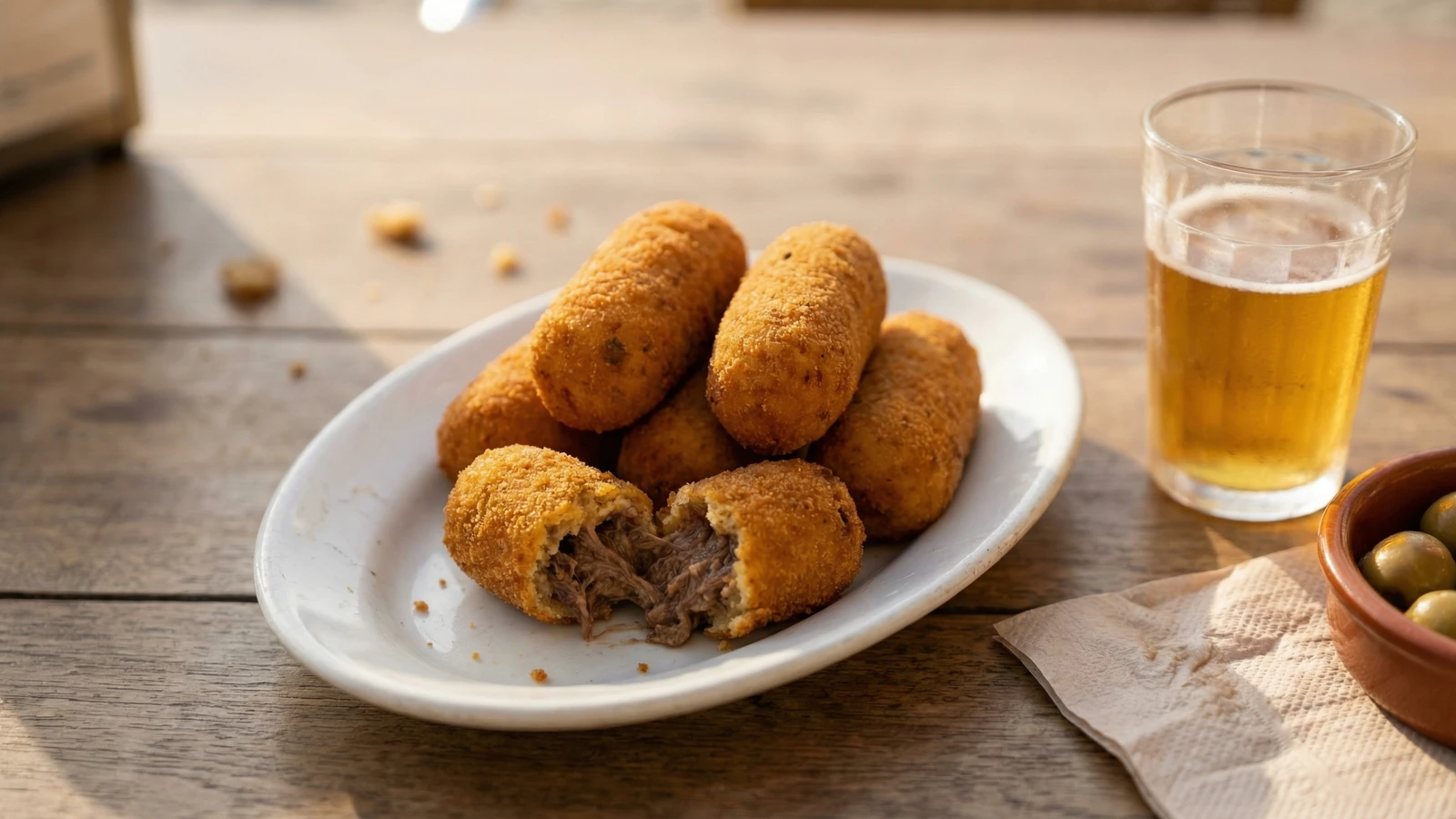
The cylinder-shaped beef croquettes on every café counter in Portugal, proof that the simplest foods done right become the ones you crave most. Crisp outside, soft inside, perfect with a cold imperial.
Every tasca in Portugal has a glass case by the register. Inside: pastéis de bacalhau, rissóis, and always, always croquetes de carne. Lined up like little soldiers, golden and waiting. You point, they warm them slightly, and you eat them standing at the counter with a cold beer. That's Portugal.
These aren't fancy. They're not trying to be. A good croquete is honest food: shredded beef bound in thick bechamel, rolled into cylinders, breaded, and fried until the outside shatters and the inside stays soft. The contrast is everything. Too much filling and they're heavy. Too little and you're just eating breadcrumbs. The balance takes practice.
Avó Leonor made croquetes for every family gathering. She'd spend half a day braising the beef, shredding it by hand, making the bechamel thick enough to hold its shape. Then into the fridge overnight. "Têm de descansar," she'd say. They have to rest. The next morning, she'd shape them before anyone was awake. By afternoon, they'd be fried and cooling on paper, ready for whoever walked through the door.
This is make-ahead food. Prepare-for-a-crowd food. The kind of cooking that rewards patience. Shape them, freeze them, fry them straight from frozen when you need them. A freezer full of croquetes is a Portuguese grandmother's insurance policy against unexpected guests.
Croquetes arrived in Portugal through French culinary influence in the 19th century, but the Portuguese made them entirely their own. The distinctive cylinder shape (rather than the French oval) and the shredded beef filling became standard in Lisbon's cafés by the early 20th century. Today they're inseparable from tasca culture, the perfect companion to an imperial or a glass of vinho verde.
Quantity
500g
in one piece
Quantity
1 medium
quartered
Quantity
2
Quantity
4
Quantity
to taste
Quantity
80g
Quantity
1 medium
finely minced
Quantity
2 cloves
minced
Quantity
80g
Quantity
400ml
warmed
Quantity
1/4 teaspoon
freshly grated
Quantity
to taste
freshly ground
Quantity
1 tablespoon
finely chopped
Quantity
150g
Quantity
3 large
beaten
Quantity
250g
Quantity
for deep frying
| Ingredient | Quantity |
|---|---|
| beef chuck or brisketin one piece | 500g |
| onion (for braising)quartered | 1 medium |
| bay leaves | 2 |
| black peppercorns | 4 |
| salt | to taste |
| butter | 80g |
| onion (for bechamel)finely minced | 1 medium |
| garlicminced | 2 cloves |
| all-purpose flour (for bechamel) | 80g |
| whole milkwarmed | 400ml |
| nutmegfreshly grated | 1/4 teaspoon |
| black pepperfreshly ground | to taste |
| fresh parsleyfinely chopped | 1 tablespoon |
| all-purpose flour (for breading) | 150g |
| eggsbeaten | 3 large |
| fine dry breadcrumbs | 250g |
| vegetable oil | for deep frying |
Place the beef in a pot with the quartered onion, bay leaves, peppercorns, and a generous pinch of salt. Cover with cold water. Bring to a boil, then reduce to a gentle simmer. Skim any foam that rises. Cook until the meat is completely tender and falling apart, about 2 hours. You're not in a hurry here. Tough cuts need time to become tender.
Remove the beef from the liquid and let it cool slightly. Using two forks, shred the meat finely. You want thin strands, not chunks. Pick out any fat or gristle as you go. The finer you shred, the smoother your croquetes will be. Avó Leonor shredded until her arms were tired, then shredded some more.
Melt the butter in a heavy saucepan over medium heat. Add the minced onion and cook slowly until completely soft and translucent, about 10 minutes. Add the garlic in the last minute. The onion should have no bite left. Add the flour and stir constantly for 2 minutes to cook out the raw taste. The mixture will look like wet sand.
Pour in the warm milk gradually, whisking constantly to prevent lumps. Keep whisking over medium heat until the mixture becomes very thick, almost like mashed potatoes. This takes about 5 minutes. It should pull away from the sides of the pan when you stir. Season with nutmeg, salt, and pepper. Taste it. The bechamel should be well-seasoned on its own.
Remove from heat. Fold in the shredded beef and parsley until everything is evenly combined. Taste again and adjust seasoning. The mixture should be cohesive and thick enough to hold a shape. Spread it onto a baking sheet or shallow dish, pressing it flat. Cover with plastic wrap pressed directly onto the surface to prevent a skin from forming. Refrigerate overnight, or at least 6 hours. Têm de descansar. They have to rest.
Set up your breading station: flour in one shallow dish, beaten eggs in another, breadcrumbs in a third. With slightly wet hands, take about 2 tablespoons of the chilled mixture and roll it into a cylinder about 6cm long and 2cm thick. Work quickly; the mixture softens as it warms. Place shaped croquetes on a parchment-lined tray.
Roll each cylinder in flour, shaking off excess. Dip in beaten egg, letting excess drip off. Roll in breadcrumbs, pressing gently so they adhere. Place back on the tray. Once all are breaded, refrigerate for at least 30 minutes to set the coating. This step is not optional. Skip it and the breading falls off in the oil.
Heat oil in a deep pot or fryer to 180°C (350°F). Fry the croquetes in batches of 4 or 5, turning occasionally, until deep golden brown all over, about 3 to 4 minutes. Don't crowd the pot or the temperature drops and they absorb oil. Remove with a slotted spoon and drain on paper towels. Season with a light sprinkle of salt while still hot.
Let the croquetes rest for a few minutes before serving. They're best at room temperature, when the filling has settled and the outside has stayed crisp. Serve them the way every tasca does: on a small plate, maybe with a wedge of lemon, definitely with cold beer. This is snack food. Standing-at-the-counter food. The kind of eating that turns into conversation.
1 serving (about 40g)
Culinary guides, cultural storytelling, and the editorial depth that makes cooking meaningful.
Discover Culinary ExplorerChef Margarida
Há caracóis! The signs appear in May and all of Lisbon knows summer has arrived. Tiny snails in spiced broth, sucked from shells at plastic tables, washed down with imperial after imperial.

Chef Margarida
Crispy triangles of spiced meat wrapped in golden pastry, carrying the flavors of Goa across the ocean to every Portuguese tasca and family gathering. Colonial history you can eat.
Chef Margarida
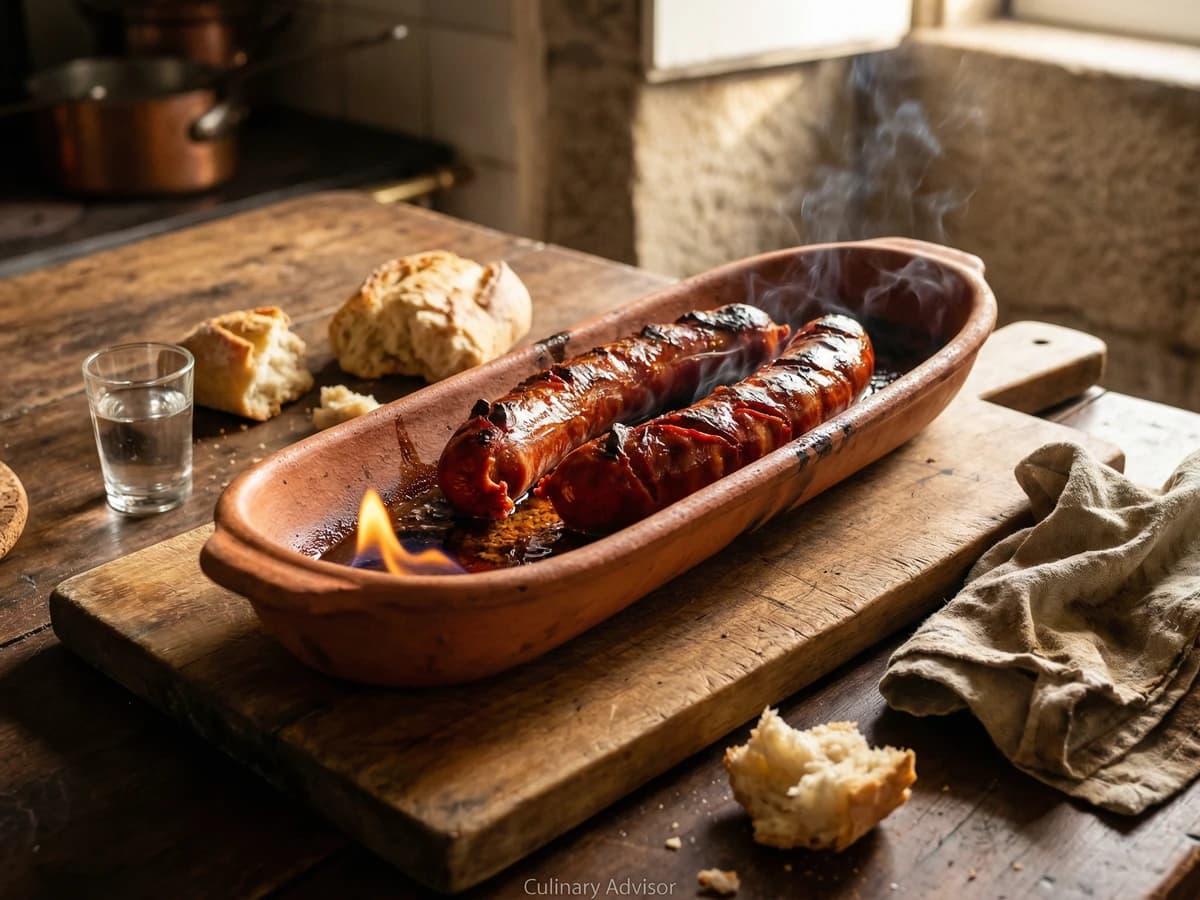
The theater of the tasca: chouriço set ablaze in its clay vessel, aguardente flames dancing blue and orange until the casing splits and the smoky fat runs. This is how we gather.

Chef Margarida
Mushrooms stuffed with chouriço and baked until the cheese bubbles and browns, the kind of petisco that disappears from the table before you've finished pouring the wine. Tasca food for your home.