
Chef Takumi
Arare (あられ, small mochi rice crackers)
Arare begins as firm mochi, cut small and dried until patient enough to puff. Brush it with soy at the end, and the little hailstones turn crisp and savory.
A cooking platform built around craft, culture, and the stories behind what we eat.
Created by
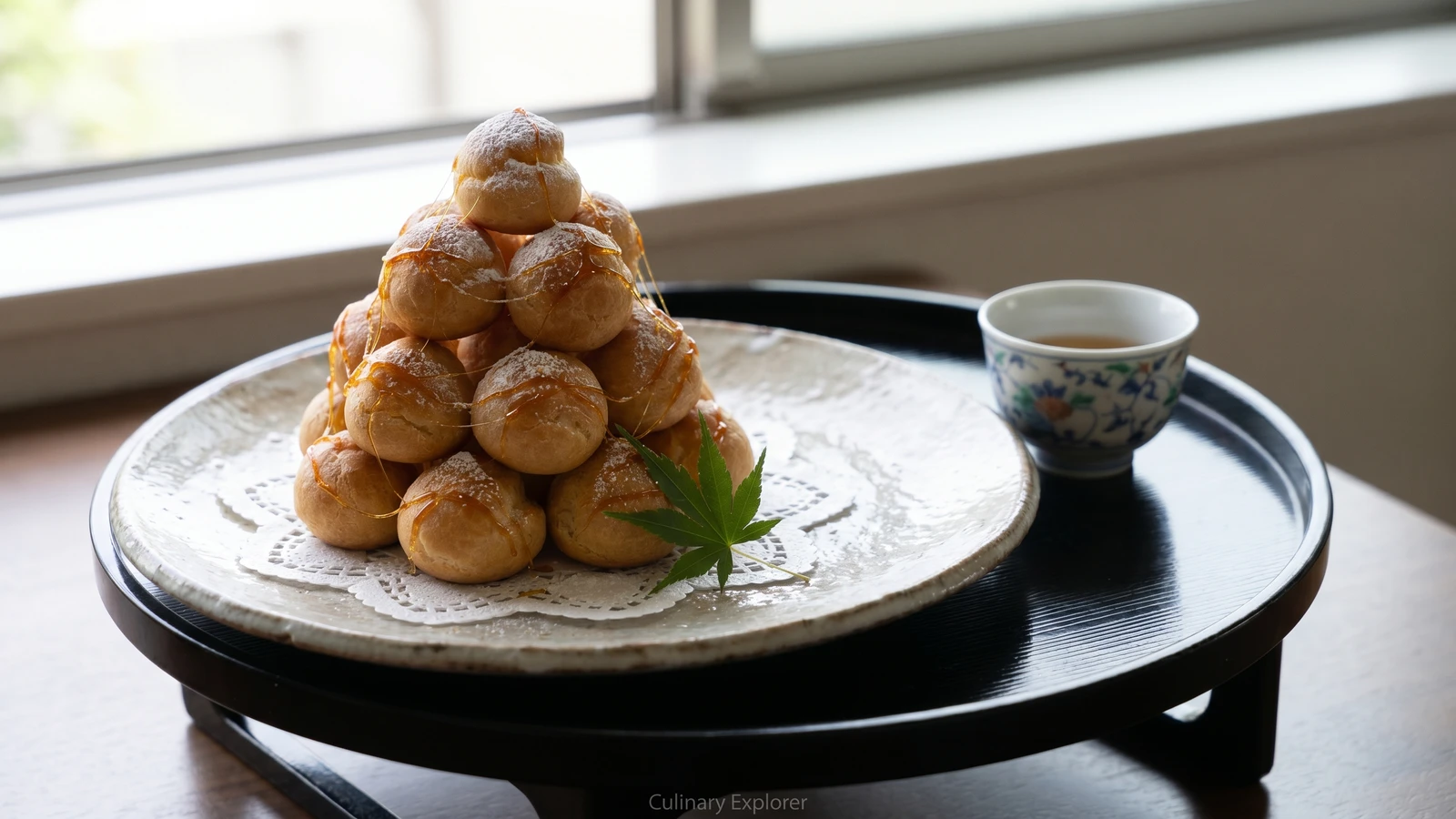
A croquembouche looks like architecture, but it is only small cream puffs, good custard, and caramel handled with respect. Build slowly and the tower will stand.
This is the pastry that makes sensible cooks suddenly look for an exit. A tower of cream puffs, each one filled, then fixed in place with hot caramel. It sounds like a test. It isn't. The puffs are friendly; the caramel is the discipline.
The first secret is the choux. You cook the flour paste over the heat before adding eggs because the dough needs to dry enough to take them in. Too wet, and it spreads flat. Dried properly, it holds steam inside the oven, and that steam inflates each puff into a hollow shell. Hollow is not an accident here. Hollow is the room you made for cream.
Let the shells cool completely before filling. Warm pastry softens the cream and traps dampness inside, and a proud little puff becomes a tired one. Then comes the caramel, amber and quick-tempered. Dip with care, place each puff at once, and keep your tower narrow enough to obey you. We serve this at Japanese wedding receptions because it carries celebration without heaviness, a little height, a little sweetness, and nothing hidden under decoration.
Croquembouche entered Japan through the wider adoption of yōgashi, Western-style confectionery, which grew rapidly in the Meiji period and became established in hotel and department-store pastry culture during the twentieth century. In Japan it is especially associated with wedding receptions, where the stacked cream puffs can stand in for or accompany the ceremonial cake. The Japanese name クロカンブッシュ is a katakana rendering of the original pastry name, kept as a celebratory yōgashi rather than folded into washoku.
Quantity
120ml
Quantity
120ml
Quantity
100g
cut into cubes
Quantity
1 teaspoon
Quantity
1/2 teaspoon
Quantity
140g
sifted
Quantity
4
beaten, plus more if needed
Quantity
500ml
Quantity
1 bean or 1 teaspoon
Quantity
5
Quantity
100g
Quantity
40g
Quantity
30g
Quantity
200ml
whipped to soft peaks
Quantity
300g
Quantity
60ml
Quantity
1 tablespoon
Quantity
for finishing
| Ingredient | Quantity |
|---|---|
| water | 120ml |
| whole milk | 120ml |
| unsalted buttercut into cubes | 100g |
| sugar | 1 teaspoon |
| fine salt | 1/2 teaspoon |
| cake flour or all-purpose floursifted | 140g |
| large eggsbeaten, plus more if needed | 4 |
| whole milk, for custard cream | 500ml |
| vanilla bean or vanilla extract | 1 bean or 1 teaspoon |
| large egg yolks | 5 |
| granulated sugar, for custard cream | 100g |
| cake flour or cornstarch | 40g |
| unsalted butter, for custard cream | 30g |
| heavy creamwhipped to soft peaks | 200ml |
| granulated sugar, for caramel | 300g |
| water, for caramel | 60ml |
| mizuame or light corn syrup (optional) | 1 tablespoon |
| powdered sugar (optional) | for finishing |
Heat the water, milk, butter, sugar, and salt in a saucepan until the butter melts and the liquid reaches a full boil. Add the sifted flour all at once and stir hard with a wooden spoon. The flour must meet the hot liquid together, not by timid spoonfuls, so it gelatinizes evenly and forms one paste instead of lumps.
Keep the pan over medium heat and stir for 2 to 3 minutes, pressing and turning the dough until it pulls cleanly from the sides and leaves a thin film on the bottom. This drying matters. The dough must lose enough water to accept the eggs, but keep enough moisture to make steam in the oven. That steam is what lifts the shell and leaves it hollow.
Move the dough to a bowl and let it cool for 3 minutes, just so it no longer cooks the eggs on contact. Beat in the eggs a little at a time. Stop when the dough turns glossy and drops from the spoon in a thick ribbon that bends into a V. You may not need every drop, because flour, weather, and egg size all have their own opinions.
Heat the oven to 200 C. Pipe small mounds, about 3cm wide, onto a parchment-lined tray, leaving space between them. Smooth any points with a damp fingertip so they don't burn before the puff has set. Small puffs build a steadier tower than large ones, and they eat more gracefully at a celebration table.
Bake for 15 minutes at 200 C, then lower to 180 C and bake 15 to 20 minutes more, until the puffs are deeply golden, light in the hand, and dry at the seams. Don't open the oven early. The shell must set before the steam escapes, or the puff collapses like a paper lantern in the rain.
Warm the milk with the vanilla until fragrant. In a bowl, whisk the yolks, sugar, and flour or cornstarch until pale, then whisk in the hot milk slowly. Return everything to the pan and cook over medium heat, whisking constantly, until it thickens and bubbles for one full minute. That minute cooks out the raw starch taste and gives the cream enough body to sit inside the shell.
Take the custard off the heat, whisk in the butter, and spread it in a shallow tray. Press plastic wrap directly onto the surface and chill completely. Fold in the whipped cream once cold. If the custard is warm, the cream melts and the filling slackens, and there is no dignity in a leaking puff.
Pierce the underside of each cooled puff with a small piping tip and pipe in the cream until the puff feels heavier but not swollen. The shell must be fully cool first, because trapped warmth turns crisp pastry damp from the inside. Fill gently. A puff should be generous, not bursting.
Put the sugar, water, and mizuame or corn syrup, if using, in a clean saucepan. Cook without stirring until the syrup turns clear amber. Swirl the pan only if the color is uneven. Stirring throws sugar crystals onto the side of the pan, and crystals turn smooth caramel grainy. When it reaches amber, set the pan briefly in cold water to stop the cooking.
Dip the side or base of each puff lightly in caramel and set them in a tight ring on a parchment-lined plate or low cake board. Build upward in smaller rings, leaning each puff slightly inward. Work slowly and keep the tower narrow. Caramel sets fast, which is both the nuisance and the blessing: it gives you very little time to fuss, then holds the work for you.
If the caramel hardens in the pan, warm it gently until fluid again. Finish with a few fine caramel threads or a light dusting of powdered sugar. Serve the same day, ideally within 3 hours, while the shells still have their clean bite and the cream is cold.
1 serving (about 200g)
Culinary guides, cultural storytelling, and the editorial depth that makes cooking meaningful.
Discover Culinary ExplorerChef Takumi
Arare begins as firm mochi, cut small and dried until patient enough to puff. Brush it with soy at the end, and the little hailstones turn crisp and savory.

Chef Takumi
Chocolate shu cream is judged twice: first by the hollow shell, then by the custard. Dry the dough properly, choose chocolate with backbone, and the little puff behaves.

Chef Takumi
Start with the lightest choux: tiny unfilled puffs, properly dried over heat, loosened with eggs, and baked until the shell lifts hollow under a coat of pearl sugar.

Chef Takumi
Zarame senbei is not a cookie wearing a Japanese coat. It is a rice cracker, dried well, baked crisp, brushed with soy, then caught while hot with coarse sugar.