
Chef Dean
Apple Cinnamon Pancakes
Tender buttermilk pancakes folded with butter-glazed apple pieces and warm cinnamon, stacked high and drowning in maple syrup. This is Sunday morning the way it ought to be.
A cooking platform built around craft, culture, and the stories behind what we eat.
Created by
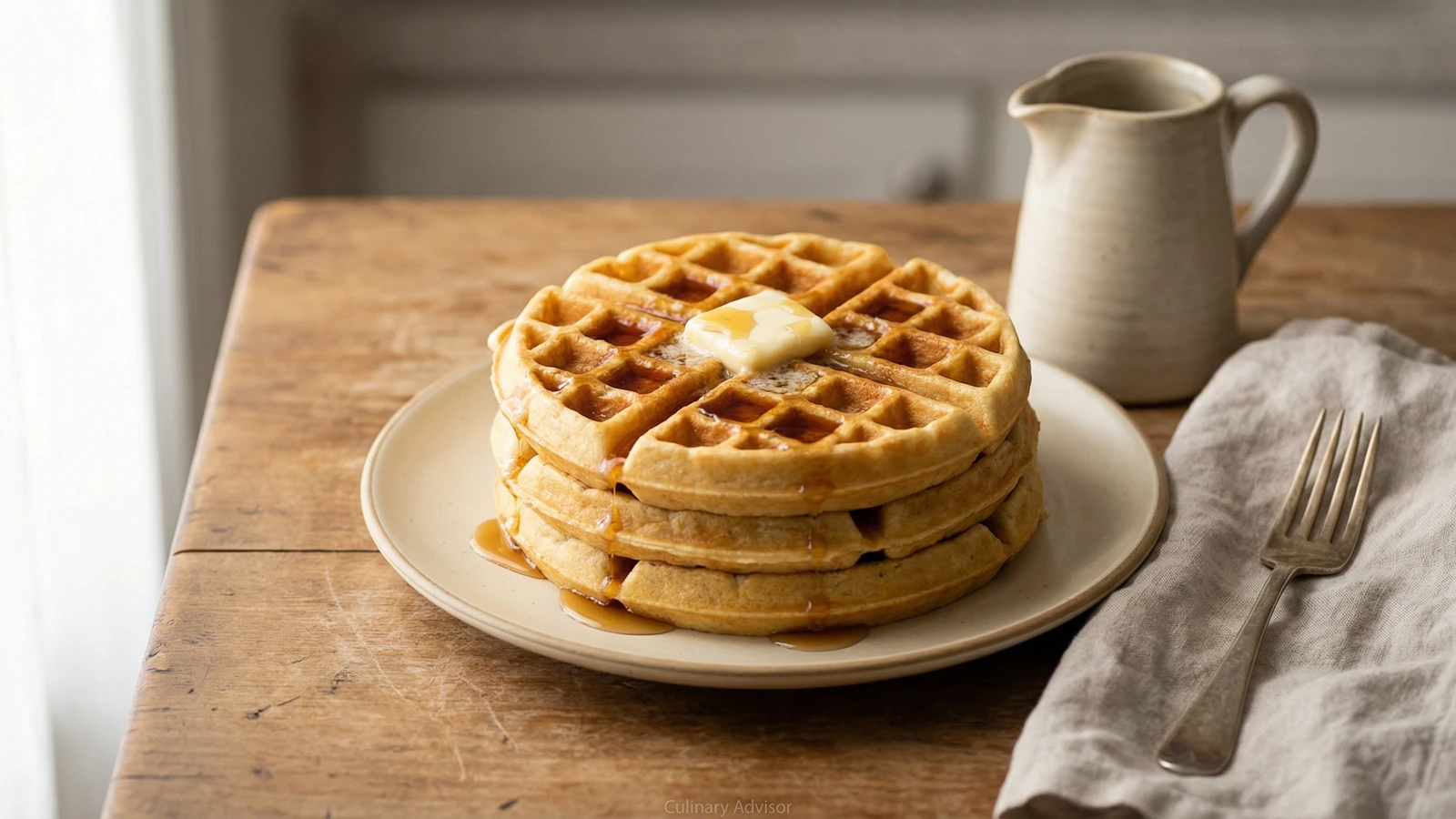
Shatteringly crisp on the outside, impossibly tender within, these buttermilk waffles emerge from a hot iron with deep golden pockets begging for butter and maple syrup. This is the recipe worth waking up for.
The waffle iron in my grandmother's kitchen was a beast of black cast iron that took twenty minutes to heat and weighed enough to anchor a small boat. She made waffles every Sunday morning without measuring a thing, working by feel and memory, producing golden squares so crisp they crackled when you cut them. The secret, she told me once, was the buttermilk and the patience to let the batter rest.
Buttermilk does two things that regular milk cannot. Its acidity tenderizes the gluten in the flour, preventing toughness, while reacting with baking soda to produce those airy pockets that make a waffle worth eating. The tang it provides balances the sweetness of maple syrup in a way that transforms breakfast into something approaching sublime.
I've taught this recipe to three generations of students, and I always tell them the same thing: respect the resting time. That thirty minutes while the batter sits allows the flour to hydrate fully and the leavening to activate slowly. Rush it and you'll have decent waffles. Wait and you'll have extraordinary ones.
This is weekend food, meant to be made without hurry while coffee brews and the morning paper waits. The batter can be mixed the night before and left to work its magic in the refrigerator. By morning, you need only heat your iron and pour.
Quantity
2 cups (240g)
Quantity
2 tablespoons
Quantity
1 teaspoon
Quantity
1/2 teaspoon
Quantity
1/2 teaspoon
Quantity
2 cups
at room temperature
Quantity
1/3 cup (75g)
melted and slightly cooled
Quantity
2
at room temperature
Quantity
1 teaspoon
Quantity
for serving
Quantity
for serving
warmed
| Ingredient | Quantity |
|---|---|
| all-purpose flour | 2 cups (240g) |
| granulated sugar | 2 tablespoons |
| baking powder | 1 teaspoon |
| baking soda | 1/2 teaspoon |
| fine sea salt | 1/2 teaspoon |
| buttermilkat room temperature | 2 cups |
| unsalted buttermelted and slightly cooled | 1/3 cup (75g) |
| large eggsat room temperature | 2 |
| pure vanilla extract | 1 teaspoon |
| softened butter | for serving |
| pure maple syrupwarmed | for serving |
In a large mixing bowl, whisk together the flour, sugar, baking powder, baking soda, and salt until thoroughly combined. Create a well in the center. This takes thirty seconds and ensures your leavening distributes evenly throughout every waffle.
In a separate bowl or large measuring pitcher, whisk the buttermilk, melted butter, eggs, and vanilla until the eggs are fully incorporated and the mixture is uniform. The butter may form small clumps when it hits the cold buttermilk. This is fine. They'll disappear when mixed with flour.
Pour the wet ingredients into the well of the dry ingredients. Stir with a wooden spoon or spatula using gentle circular motions, working from the center outward. Stop the moment the flour disappears. The batter should be slightly lumpy with a few small streaks of flour still visible. Overmixing is the enemy of tender waffles.
Cover the bowl with a clean kitchen towel and let the batter rest at room temperature for thirty minutes. During this time, the flour absorbs liquid, the gluten relaxes, and the batter thickens slightly. You'll notice small bubbles forming on the surface. This is the leavening doing its work.
While the batter rests, preheat your waffle iron. For cast iron, this takes a full ten to fifteen minutes over medium heat, flipping occasionally. For electric irons, preheat to medium-high, around 375°F if your model has a temperature setting. A properly heated iron is non-negotiable for crisp waffles.
Test the iron by flicking a few drops of water onto the cooking surface. They should sizzle vigorously and evaporate within two seconds. If they sit and steam lazily, your iron needs more time. If they vaporize instantly with an angry hiss, reduce heat slightly.
Brush the hot iron lightly with melted butter or neutral oil using a pastry brush or folded paper towel. Even nonstick surfaces benefit from a thin coating of fat for that deep golden crust. Don't overdo it. Puddles of butter will make the waffle soggy rather than crisp.
Ladle batter onto the center of the iron, using about 2/3 cup for a standard Belgian waffle maker. The batter should spread to within half an inch of the edges. Close the lid firmly. Resist every urge to lift it for at least three minutes. Steam will escape from the sides. When the steam subsides significantly, your waffle is approaching done.
After four to five minutes, lift the lid carefully. The waffle should be deep golden brown, release easily from both plates, and feel light when lifted. If it sticks or looks pale, close the lid and give it another minute. A properly cooked waffle has an almost lacquered appearance, crisp to the touch.
Transfer finished waffles to a wire rack set in a 200°F oven while you cook the remaining batter. Never stack waffles or place them on a plate. They'll steam themselves soft in minutes. Serve with softened butter pressed into the pockets and warm maple syrup poured generously over top.
1 waffle (about 190g)
Culinary guides, cultural storytelling, and the editorial depth that makes cooking meaningful.
Discover Culinary ExplorerChef Dean
Tender buttermilk pancakes folded with butter-glazed apple pieces and warm cinnamon, stacked high and drowning in maple syrup. This is Sunday morning the way it ought to be.

Chef Dean
Individual breakfast packages of farm eggs nestled in smoky ham, blanketed with melted sharp cheddar, ready for Sunday morning or make-ahead weekday fuel that tastes like someone who loves you made it.

Chef Ally
Oats softened overnight in yogurt and orchard cider, then crowned with whatever fruit the morning and the season bring to your table. A breakfast that asks almost nothing of you and gives back everything.

Chef Dean
Golden, shatteringly crisp potatoes mingled with sweet roasted peppers and caramelized onions, crowned with eggs whose yolks run like liquid sunshine when you break them open.