
Chef Juliana
Ambrosia Baiana
You think curdled milk means you ruined dessert. Good. Tonight you'll do it on purpose, with lemon, yolks, cravo, and sugar, until the pot turns into golden gruminhos.
A cooking platform built around craft, culture, and the stories behind what we eat.
Created by
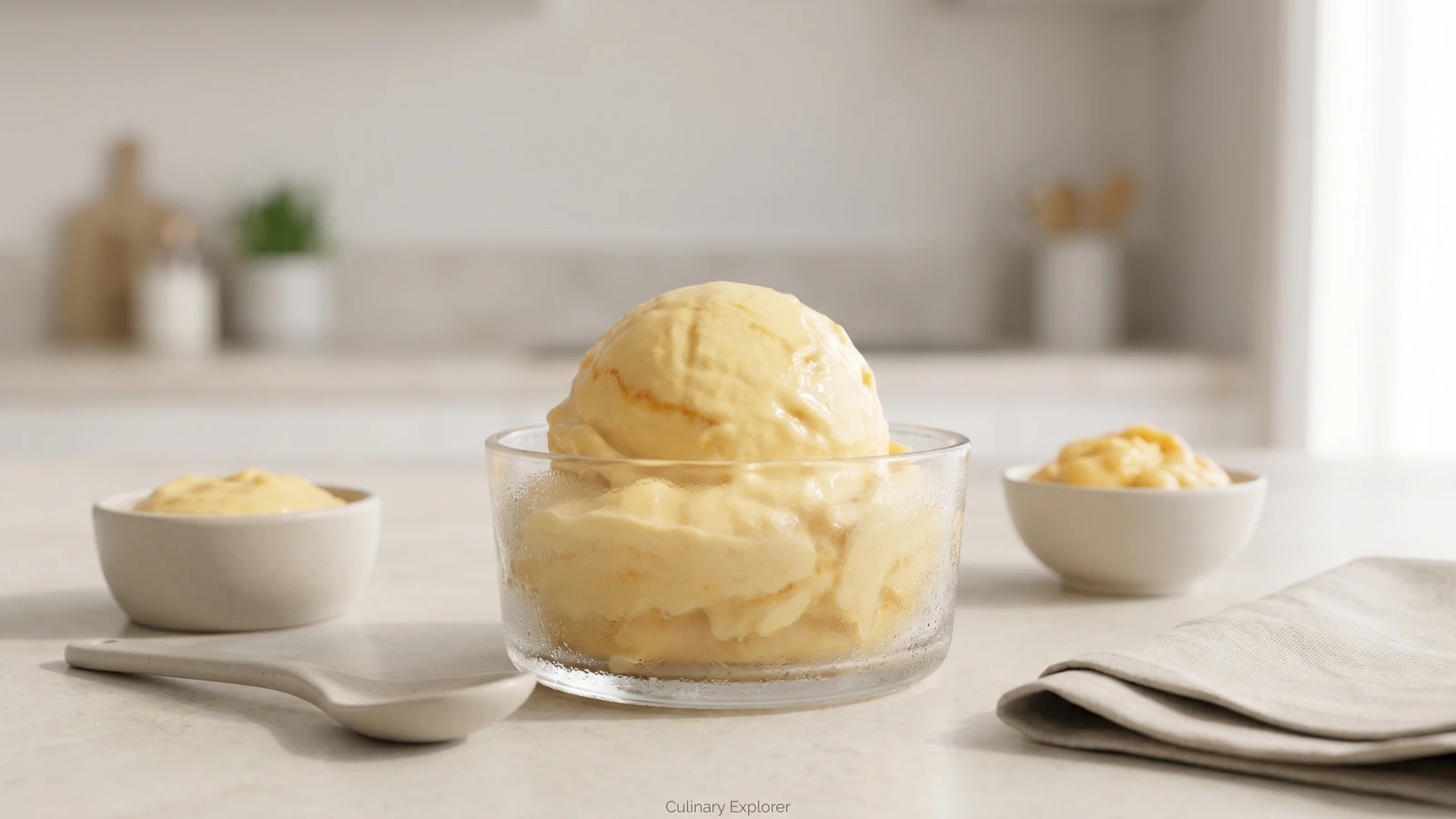
You think bacuri is too special for your freezer? It's fruit pulp, milk, and a blender. Use the real polpa, stop at thick, and dessert is solved.
You see the frozen polpa at the market and hear that quiet little voice: isso não é pra mim. Too northern, too specific, too easy to ruin. Anota aí: cooking isn't a gift, it's something you learn, and dessert can be learned too. This one asks for a blender, a bowl, and enough sense to buy the fruit, not a packet pretending to be fruit.
After the pê-efe, rice, beans, a piece of fish or chicken, something green on the plate, a cold spoonful of bacuri makes perfect sense. A gente doesn't need a show to finish lunch. We need comida de verdade that tastes like where it comes from and still fits a real kitchen on a real Tuesday.
The method is simple, but not careless. Thaw the bacuri just until scoopable so the blender can work without warming everything. Blend the dairy first so the leite em pó dissolves instead of leaving little chalky dots. Fold in part of the pulp at the end so the cream keeps those sharp, perfumed pockets of fruit. Then freeze it lightly, not into a brick. You want cold, thick, and spoonable.
And read the label. Polpa de bacuri is not polpa de cupuaçu, and it isn't a bacuri-flavored mix. The fruit is the point. The rest is just the little structure that holds it still long enough for you to get a spoon.
Bacuri is an Amazonian fruit especially associated with Pará, where its thick, fragrant pulp appears in juices, creams, ice creams, and home desserts sold from neighborhood freezers as much as from formal shops. The fruit has a short natural season, commonly around the rainy months in the Amazon, which is why frozen polpa became the practical bridge between harvest time and the rest of the year. In Belém, chilled bacuri creams sit beside cupuaçu, açaí, and taperebá in the freezer aisle, and learning those labels is part of learning the local kitchen.
Quantity
2 cups (about 500g)
thawed until scoopable
Quantity
1 can (14 ounces or 395g)
Quantity
1 cup
Quantity
1/2 cup
Quantity
1/4 cup
only if needed to blend
Quantity
1 teaspoon
| Ingredient | Quantity |
|---|---|
| frozen bacuri pulpthawed until scoopable | 2 cups (about 500g) |
| sweetened condensed milk | 1 can (14 ounces or 395g) |
| cold heavy cream or table cream | 1 cup |
| whole milk powder (leite em pó) | 1/2 cup |
| cold whole milk (optional)only if needed to blend | 1/4 cup |
| fresh lime juice (optional) | 1 teaspoon |
Check the package before you open it. It should say polpa de bacuri, with bacuri as the fruit, not cupuaçu, not a mixed nectar, not a bacuri-flavored dessert mix. Bacuri is perfumed, sweet-tart, and a little resinous in the best way. If you start with the wrong polpa, the blender can't fix it.
Leave the frozen bacuri at room temperature until it's soft enough to scoop but still cold, about 20 to 30 minutes. Press it with a spoon: it should give, not run. Too frozen and the blender struggles. Too warm and the cream loses that clean cold texture before it even reaches the freezer.
Put the condensed milk, cold cream, and leite em pó in the blender. Blend for 30 seconds, until smooth and glossy. This dissolves the leite em pó before the fruit goes in, so you get body without little dry specks. Leite em pó is doing structure here, not pretending to be bacuri. The fruit still has to be real.
Add 1 1/2 cups of the bacuri pulp and blend just until thick and even, about 20 to 30 seconds. Stop and scrape the sides if the blender leaves pale streaks. If the blade stalls, add cold milk 1 tablespoon at a time. Don't flood it. Too much milk turns a spoon dessert into a drink, and nobody asked for that.
Scrape the cream into a bowl and fold in the remaining 1/2 cup bacuri pulp with a spoon. Leave a few soft streaks. Those pockets of fruit wake up the sweetness and make each spoonful taste like bacuri, not just sweet milk with an accent.
Pour the cream into a shallow freezer-safe dish, cover, and freeze for 3 to 4 hours, stirring once after the first hour if you remember. Serve when it's cold, thick, and scoopable, like a firm mousse. If it freezes solid, let it sit on the counter for 10 to 15 minutes and stir it back to creaminess. No drama. Just ponto.
1 serving (about 160g)
Culinary guides, cultural storytelling, and the editorial depth that makes cooking meaningful.
Discover Culinary ExplorerChef Juliana
You think curdled milk means you ruined dessert. Good. Tonight you'll do it on purpose, with lemon, yolks, cravo, and sugar, until the pot turns into golden gruminhos.

Chef Juliana
You are not ruining the milk. You're curdling it on purpose, slowly, until sugar, eggs, cinnamon, and patience turn cheap ingredients into dessert.

Chef Juliana
You think curdled milk means failure. Not here. Milk, yolks, sugar, and lemon cook into golden curds in amber whey, a Minas sweet where the ponto teaches the whole recipe.

Chef Juliana
You already trust rice for dinner. Trust it for dessert: cook it gently with milk, coconut, and canela until each grain turns soft, creamy, and impossible to blame on lack of talent.