
Chef Remy
Cajun All-Purpose Seasoning
A brick-red Louisiana spice blend with layered heat, earthy herbs, and aromatic depth that transforms anything it touches into something worth fighting over at the dinner table.
A cooking platform built around craft, culture, and the stories behind what we eat.
Created by
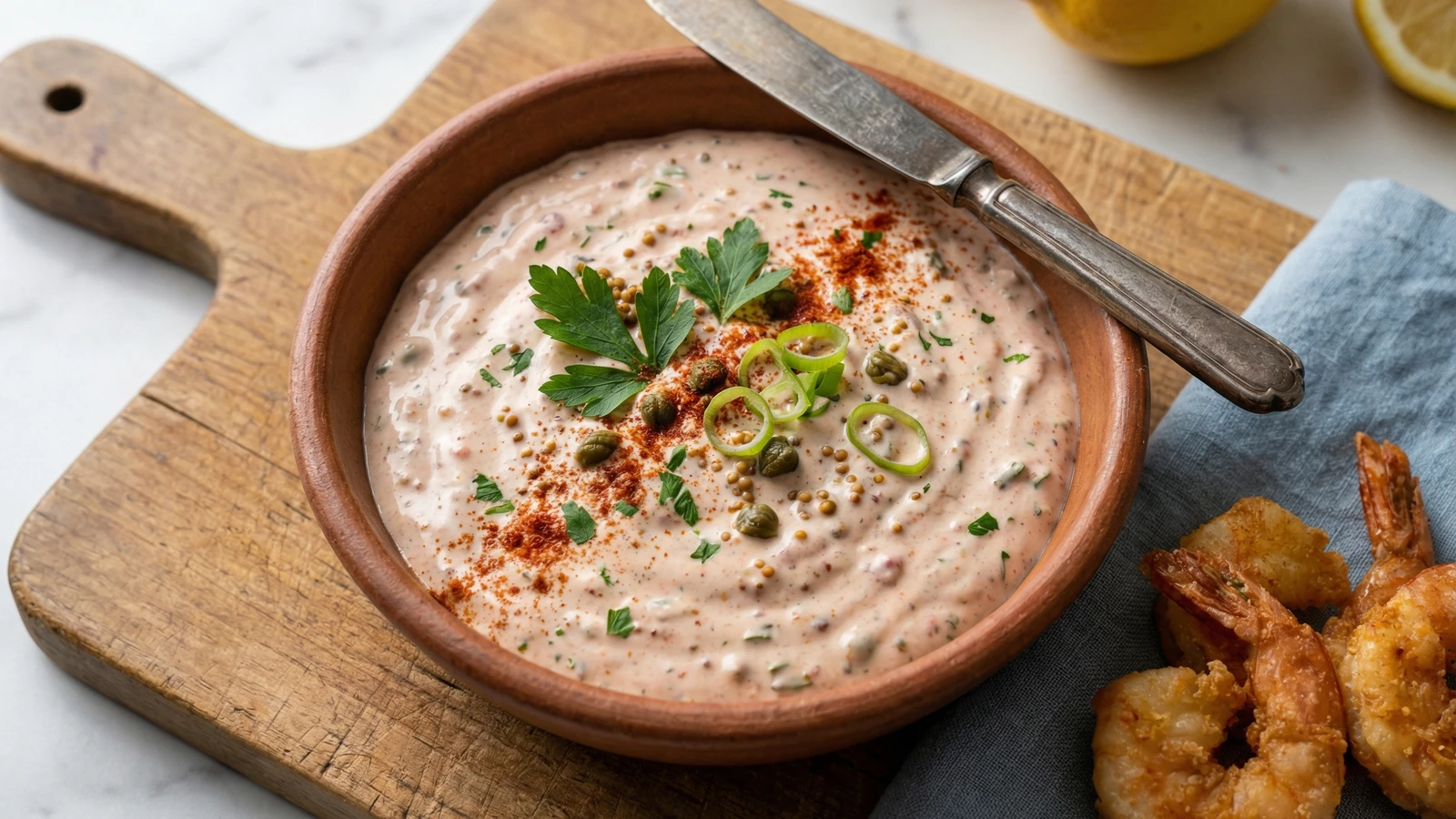
The classic Louisiana dipping sauce that transforms fried seafood into something transcendent, with Creole mustard bite, horseradish heat, and the briny pop of capers balancing rich mayonnaise.
New Orleans gave America many gifts, but remoulade might be the most underappreciated. French immigrants brought the name and the concept of a mayonnaise-based sauce. Cajun and Creole cooks transformed it into something entirely different, something bold enough to stand up to fried catfish and Gulf shrimp pulled from the water that morning.
The soul of this sauce lives in the Creole mustard. Not yellow ballpark mustard. Not smooth Dijon. You want the grainy, spicy brown mustard that New Orleans puts on everything from po'boys to red beans. It provides texture and a vinegar bite that cuts through the richness of the mayonnaise base.
I've eaten remoulade at lunch counters in the French Quarter and at white-tablecloth restaurants on Magazine Street. The best versions share one quality: restraint in consistency, boldness in flavor. The sauce should coat a shrimp, not drown it. It should announce itself without overwhelming the sweet flesh of whatever seafood you're serving. Mix it the day before if you can. Like gumbo, remoulade improves after the flavors have time to get acquainted.
Quantity
1 cup
Quantity
3 tablespoons
Quantity
2 tablespoons
Quantity
2 tablespoons
drained and roughly chopped
Quantity
2 tablespoons
Quantity
1 tablespoon
Quantity
1 tablespoon
Quantity
2 teaspoons
Quantity
3
white and light green parts, minced
Quantity
2 tablespoons
minced very fine
Quantity
2 tablespoons
minced
Quantity
2 cloves
minced to a paste
Quantity
1/2 teaspoon
Quantity
1/4 teaspoon
Quantity
1/4 teaspoon
| Ingredient | Quantity |
|---|---|
| mayonnaise, preferably Duke's or homemade | 1 cup |
| Creole mustard | 3 tablespoons |
| prepared horseradish | 2 tablespoons |
| capersdrained and roughly chopped | 2 tablespoons |
| fresh lemon juice | 2 tablespoons |
| Louisiana-style hot sauce | 1 tablespoon |
| Worcestershire sauce | 1 tablespoon |
| smoked paprika | 2 teaspoons |
| green onionswhite and light green parts, minced | 3 |
| celeryminced very fine | 2 tablespoons |
| fresh flat-leaf parsleyminced | 2 tablespoons |
| garlicminced to a paste | 2 cloves |
| kosher salt | 1/2 teaspoon |
| freshly ground black pepper | 1/4 teaspoon |
| cayenne pepper | 1/4 teaspoon |
Mince your celery as fine as your patience allows. You want it to disappear into the sauce while leaving behind its vegetal freshness. The green onions get similar treatment: slice thin, then run your knife through them twice more. Chop the capers roughly to release their brine. For the garlic, sprinkle a pinch of salt over the minced cloves and crush them with the flat of your knife, dragging and pressing until you have a smooth paste.
Scoop the mayonnaise into a medium mixing bowl. Add the Creole mustard and stir until the two become one. The color should shift from pure white to a pale tan with visible mustard seeds throughout. Now add the horseradish, hot sauce, Worcestershire, and lemon juice. Whisk until smooth. Taste. You should get immediate acid brightness followed by a slow horseradish burn in your sinuses.
Sprinkle in the smoked paprika, salt, black pepper, and cayenne. Stir thoroughly, scraping the bottom of the bowl to incorporate any spices that settle. The sauce will turn a beautiful salmon pink with flecks of red from the paprika. This is correct. This is what Louisiana remoulade looks like.
Add the garlic paste, minced celery, green onions, capers, and parsley. Fold gently with a rubber spatula rather than whisking. You want these ingredients distributed throughout the sauce without pulverizing them further. They should provide texture and small bursts of flavor in each bite.
Cover the bowl tightly and refrigerate for at least one hour. Two is better. Overnight is ideal. The resting period allows the flavors to marry and the raw edge of the garlic to mellow. Before serving, taste again and adjust. The sauce may need another squeeze of lemon to brighten it, or a few more drops of hot sauce if the heat has faded. Trust your palate. Season until it tastes alive.
1 serving (about 30g)
Culinary guides, cultural storytelling, and the editorial depth that makes cooking meaningful.
Discover Culinary ExplorerChef Remy
A brick-red Louisiana spice blend with layered heat, earthy herbs, and aromatic depth that transforms anything it touches into something worth fighting over at the dinner table.

Chef Remy
A fiery blend of paprika, cayenne, three peppers, and dried herbs that transformed American cooking in the 1980s, designed to bloom in screaming hot butter and form an unforgettable crust on fish, chicken, or anything brave enough to hit your cast iron.

Chef Remy
A dark, glossy gravy built on a patient chocolate roux, enriched with the holy trinity and Cajun spices, the kind of honest sauce that turns plain rice into a meal worth remembering.

Chef Remy
The golden foundation of Louisiana cooking, built from humble chicken bones, the holy trinity, and four patient hours of gentle simmering that transforms simple ingredients into something that makes every dish it touches sing.