
Chef Thomas
Baked Onions with Cream and Thyme
Whole onions surrendered to a low oven with cream and thyme until they collapse into something golden, sweet and yielding, the kind of side dish that quietly upstages everything else on the table.
A cooking platform built around craft, culture, and the stories behind what we eat.
Created by Chef Thomas
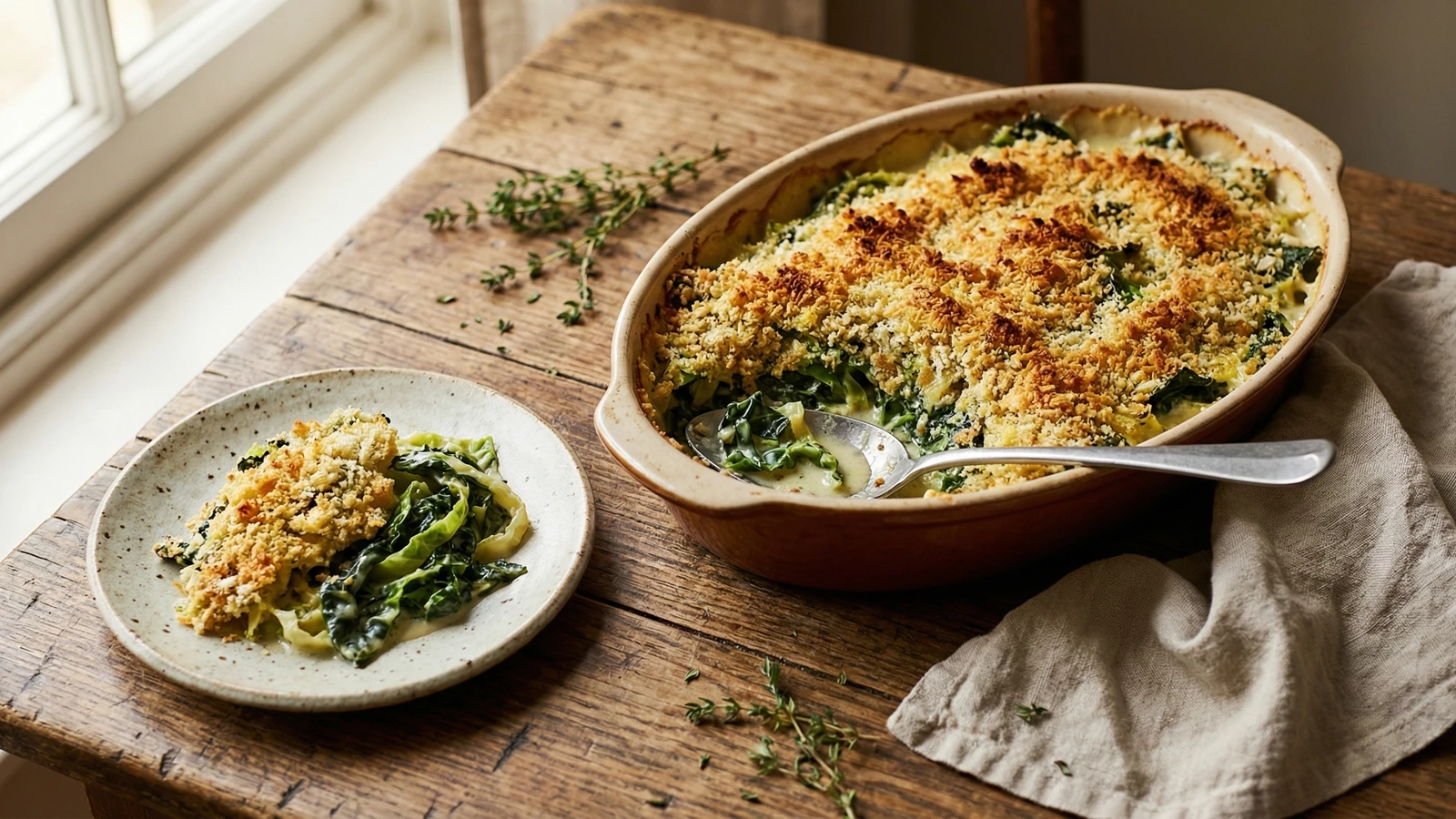
Savoy cabbage ribbons folded through cream and nutmeg, topped with cheese-scattered breadcrumbs and baked until the whole dish turns golden, bubbling, and impossible to leave alone.
January. The garden is bare and the market stalls are half what they were in September. But there's a Savoy cabbage, heavy and cool in the hand, its crinkled leaves still frosted at the edges. This is its moment. A cabbage that has been through a frost tastes sweeter than one that hasn't, and a Savoy takes to cream the way few other vegetables do.
A gratin is a generous way to cook it. You blanch the cabbage briefly, fold it through a simple cream sauce sharpened with nutmeg, and bake the whole thing under breadcrumbs until the top goes golden and the cream bubbles up at the edges. The kitchen fills with that particular smell of butter and toasting bread and warming cream that makes people wander in and ask what's for dinner.
I wrote this down in the notebook years ago, the first time I made it as a side for a roast chicken on a Sunday when the wind was rattling the window. The note said: cabbage gratin, nutmeg, good. That was enough. It's a dish that doesn't ask for much, a decent cabbage, real cream, some attention, and gives back more than it should. There are few better feelings than putting a warm plate in front of someone on a cold evening and watching them go back for a second spoonful without being asked.
A recipe is a conversation, not a contract. If you want to add a layer of leeks, do. If you prefer Gruyère to Parmesan, use it. Your kitchen, your rules.
Quantity
1 large
outer leaves removed, quartered, cored, and sliced into thick ribbons
Quantity
40g, plus extra for the dish
Quantity
2 cloves
finely sliced
Quantity
1 tablespoon
Quantity
300ml
Quantity
150ml
Quantity
generous grating
Quantity
to taste
Quantity
to taste
Quantity
80g
Quantity
40g
finely grated
Quantity
a few
| Ingredient | Quantity |
|---|---|
| Savoy cabbageouter leaves removed, quartered, cored, and sliced into thick ribbons | 1 large |
| unsalted butter | 40g, plus extra for the dish |
| garlicfinely sliced | 2 cloves |
| plain flour | 1 tablespoon |
| double cream | 300ml |
| whole milk | 150ml |
| nutmeg | generous grating |
| fine sea salt | to taste |
| black pepper | to taste |
| fresh white breadcrumbs | 80g |
| Parmesan or aged hard cheesefinely grated | 40g |
| thyme leaves (optional) | a few |
Bring a large pan of well-salted water to a rolling boil. Quarter the cabbage, cut out the core, and slice it into thick ribbons, roughly the width of two fingers. Drop them into the water and blanch for two minutes, no more. You want the leaves to soften and lose their rawness, but keep their colour and a little resistance. Drain well and spread on a clean tea towel to dry. Wet cabbage in cream is a gratin's undoing.
Melt the butter in a wide, heavy pan over a medium heat. When it foams, add the sliced garlic and let it soften for a minute. It should smell sweet and warm, not sharp. Stir in the flour and cook for another minute, just long enough to lose the raw taste. Pour in the cream and milk, stirring as it comes together into something smooth and loose. Let it simmer gently for three or four minutes until it coats the back of a spoon. Grate in the nutmeg, a generous amount, more than you think. Season with salt and pepper. Taste it. The sauce should be savoury and slightly peppery, with the nutmeg sitting warmly in the background.
Set the oven to 200C/180C fan. Butter a gratin dish, something shallow and wide that gives you plenty of surface for the crust. Fold the blanched cabbage through the cream sauce, turning it gently until every ribbon is coated. Tip the lot into the dish and spread it evenly. Don't press it down too firmly. You want some air, some unevenness, so the cream can bubble up between the layers.
Toss the breadcrumbs with the grated cheese and the thyme leaves, if using. Scatter this over the top of the gratin in an even layer. Dot with a few small pieces of butter. It doesn't need to be precise. The butter will melt and find the breadcrumbs on its own.
Bake for twenty-five to thirty minutes, until the top is deep golden and the cream is bubbling up at the edges, thick and glossy. If the breadcrumbs are browning too fast, move the dish to a lower shelf. Let it rest for five minutes out of the oven before bringing it to the table. It needs that time to settle, and the first spoonful is better when it isn't scalding.
1 serving (about 240g)
Culinary guides, cultural storytelling, and the editorial depth that makes cooking meaningful.
Discover Culinary ExplorerChef Thomas
Whole onions surrendered to a low oven with cream and thyme until they collapse into something golden, sweet and yielding, the kind of side dish that quietly upstages everything else on the table.

Chef Thomas
Celery braised long and slow in butter and good stock until it turns soft, silky, and almost sweet, the kind of quiet side dish that makes people ask what you did to it.

Chef Thomas
Leeks surrendered to butter and cream until they turn silky, sweet and yielding, the kind of side dish that quietly becomes the reason you sat down to dinner in the first place.

Chef Thomas
Peas braised in butter with wilted lettuce and spring onions, a dish that is entirely French in spirit and entirely at home on an English table in late May when the garden finally delivers.