
Chef Remy
Andouille and Potato Hash
Smoky andouille sausage nestled among golden, shatteringly crisp potatoes and the holy trinity of peppers and onions, the kind of generous Louisiana breakfast that keeps you going until dinner.
A cooking platform built around craft, culture, and the stories behind what we eat.
Created by Chef Remy
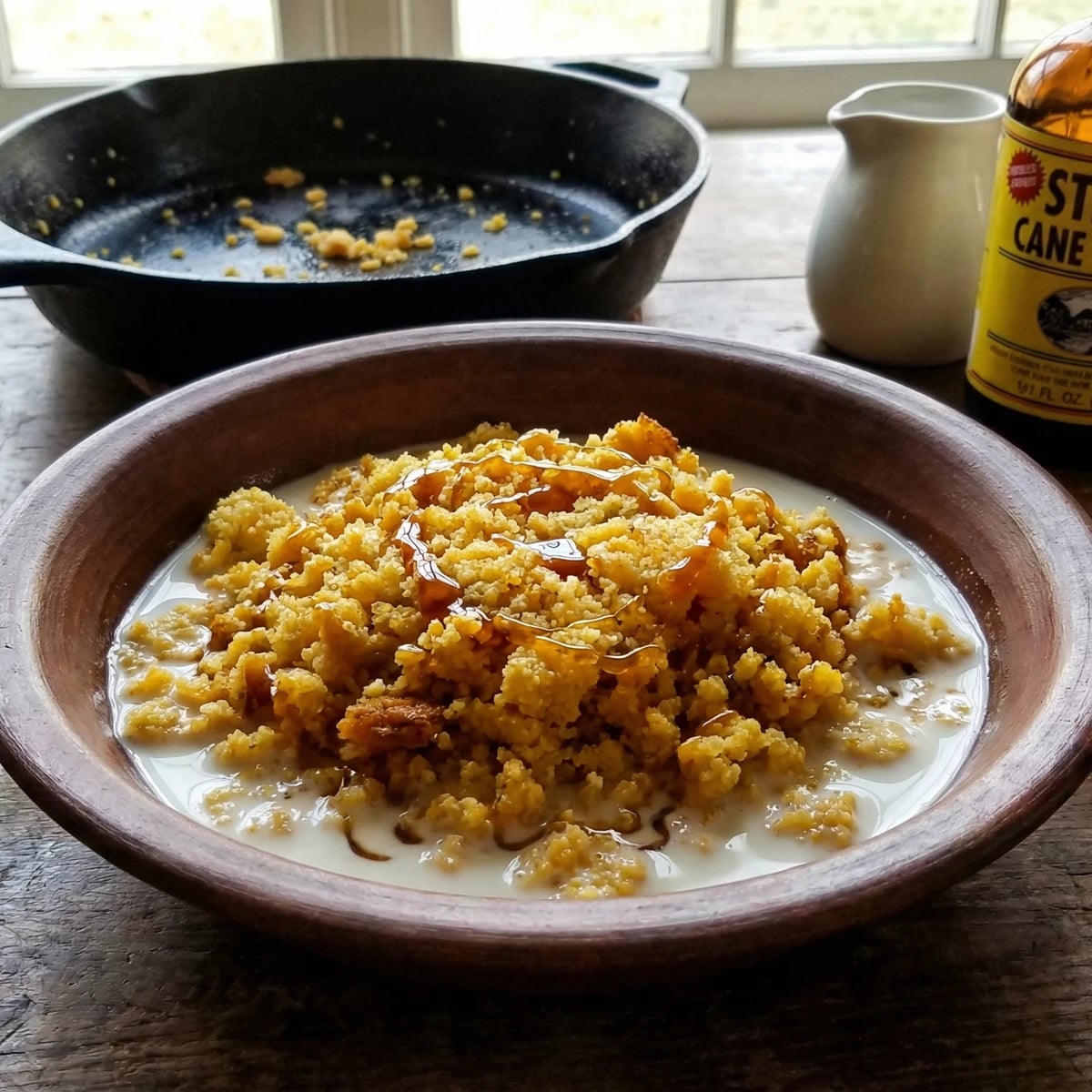
Acadian comfort at its purest: crispy fried cornmeal with the gentle sweetness of cane syrup and the cool contrast of fresh milk, the kind of humble dish that built a culture.
Some dishes tell you everything about the people who created them. Coush-coush is that kind of food. The Acadians brought this recipe down from Nova Scotia when they were expelled in the 1700s, adapting what they knew to what Louisiana offered. Cornmeal instead of wheat. Pork fat from the hogs they raised. Cane syrup from the sugarcane fields that surrounded them. Four ingredients. Four hundred years of history in every bite.
My grandmother Evangeline made coush-coush the way her grandmother taught her, in a cast iron skillet black from generations of use. She would stand at the stove in the dim morning light, scraping and turning, building those layers of crust that make this dish sing. The smell of toasting corn would pull us out of bed faster than any alarm clock. That's the bayou way: good food does the work of calling people to the table.
The technique is simple but demands your attention. You're building texture through patience, letting the cornmeal crust against the hot iron, then breaking it up and doing it again. Each cycle creates more of those golden, crispy bits that shatter against your teeth before softening in the cold milk. You don't need fancy equipment or expensive ingredients. You need a cast iron skillet, some bacon fat, and twenty minutes of standing at the stove doing honest work.
Quantity
2 cups
preferably stone-ground
Quantity
1 teaspoon
Quantity
1/2 teaspoon
Quantity
1 1/4 cups
Quantity
1/4 cup
Quantity
for serving
Quantity
for serving
| Ingredient | Quantity |
|---|---|
| yellow cornmealpreferably stone-ground | 2 cups |
| fine sea salt | 1 teaspoon |
| baking powder | 1/2 teaspoon |
| water | 1 1/4 cups |
| bacon drippings or lard | 1/4 cup |
| cold whole milk | for serving |
| pure cane syrup | for serving |
Combine the cornmeal, salt, and baking powder in a large bowl. Add the water and stir until you have a thick, slightly crumbly mixture. It should hold together when pressed but not be wet or pourable. The texture matters here: too dry and it won't form a crust, too wet and it turns to mush. You're looking for something like damp sand that clumps in your fist.
Set your cast iron skillet over medium heat and add the bacon drippings. Let it get hot, about two minutes. The fat should shimmer and move easily across the pan when you tilt it. That rendered pork fat is doing double duty: cooking the cornmeal and adding flavor you simply cannot get from vegetable oil. At Lagniappe, we save every drop of bacon fat for exactly this purpose.
Add the cornmeal mixture to the hot fat and press it into an even layer with your spatula. Here's where patience pays off. Let it cook undisturbed for three to four minutes. You're building a golden crust on the bottom, and if you stir too soon, you lose that magic. Listen for the gentle sizzle. When you smell toasted corn and see the edges starting to turn golden, you're ready for the next step.
Using your spatula, break up the cornmeal and flip the pieces over, scraping up all those beautiful crusty bits from the bottom. Press it back down into a layer. Now reduce the heat to medium-low. You'll repeat this breaking and turning every three to four minutes for the next twelve to fifteen minutes. Each time, more crust forms, more texture develops. The coush-coush will become a mixture of golden crispy pieces and tender bits. That contrast is everything.
Continue the breaking and turning process until the coush-coush is golden throughout with plenty of crispy edges. Some pieces will be deeply toasted, others softer. This variation is exactly what you want. The whole process takes about twenty minutes. Taste a piece. It should taste of sweet corn, salt, and that unmistakable richness from the pork fat. Adjust salt if needed.
Spoon the hot coush-coush into deep bowls. Pour cold milk around the edges, not over the top, so the crispy bits stay crispy where they poke above the milk. Drizzle pure cane syrup generously over everything. The combination of hot, crunchy cornmeal with cold milk and sweet syrup is one of those simple pleasures that reminds you why Cajun cooking has survived four hundred years. This is how my grandmother Evangeline served it every Sunday morning, and I wouldn't change a thing.
1 serving (about 200g)
Culinary guides, cultural storytelling, and the editorial depth that makes cooking meaningful.
Discover Culinary Explorer
Chef Remy
Smoky andouille sausage nestled among golden, shatteringly crisp potatoes and the holy trinity of peppers and onions, the kind of generous Louisiana breakfast that keeps you going until dinner.

Chef Remy
Smoky andouille sausage and melty pepper jack cheese nestled in a silky Cajun-spiced custard with the holy trinity, all wrapped in a buttery, shatteringly flaky crust that belongs on every Louisiana brunch table.

Chef Remy
Thick-cut brioche drenched in vanilla custard, griddled until golden, then crowned with rum-flambéed bananas swimming in butter and brown sugar, the kind of breakfast that makes you cancel your morning plans.

Chef Remy
Smoky andouille and the holy trinity meet fire-roasted tomatoes in this Louisiana riff on shakshuka, with eggs poached until the whites set and the yolks run golden into spicy Creole sauce.